Anchor in the Alligator

Morning Fog

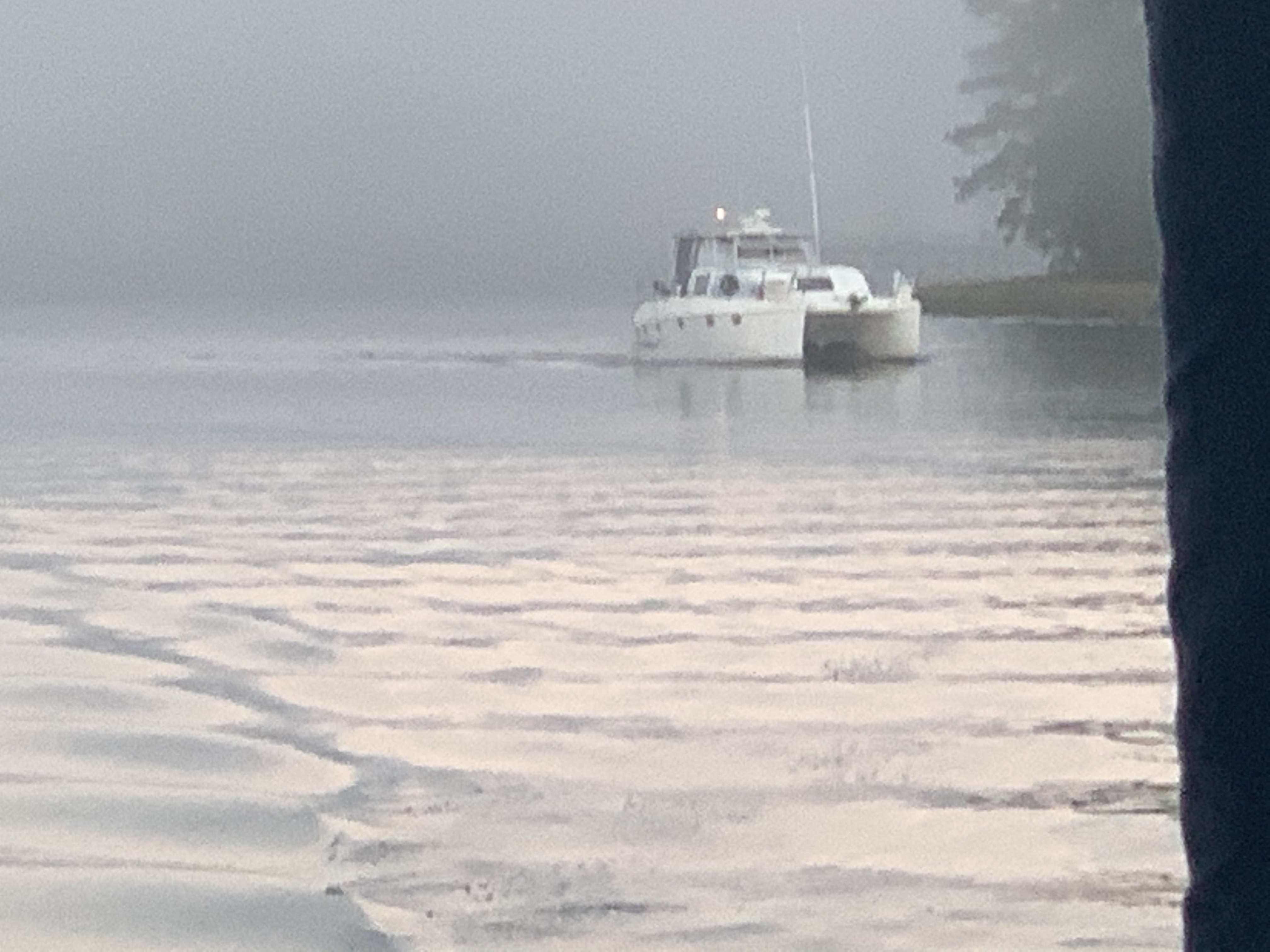
Simple Life pulled away from the dock around 6:20AM. I was drifting in the river while I stowed my lines and fenders. Once stowed I pointed the boat south through the morning’s fog. MV Effervescence IV had also pulled away from the dock and had taken up my stern .I captured a few seconds of the morning’s fog on my phone.

Morning Fog on the Elizabeth River in Virginia

Sound Signals

As we moved through the fog I had my airhorns blasting on long every two minutes.

Sound Signals for Restricted Visibility Conditions

Great Bridge Lock

We had left the dock because just a mile or two down the river is the Great Bridge Lock. We wanted to get through the lock as quick as possible so that we could maximize the nautical miles we could put behind us by using all of the daylight. When we arrived at the lock we had to wait about 30 minutes for the next opening. Once inside the lock, we tied to the rubber numbered East wall so we did not have to set our fenders.
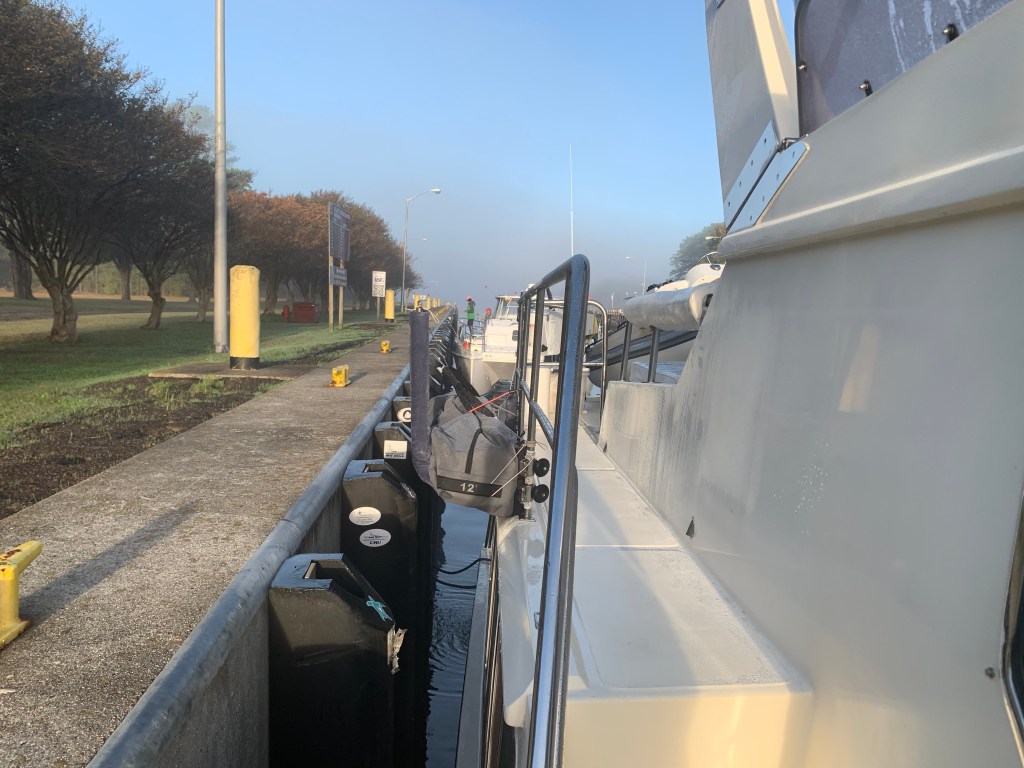
Great Bridge Lock
As I leave the lock I pass a steaming barge of dirt.

Great Bridge

You can see at the end of the above video that as soon as you exit the Great Bridge Lock you must stop and wait for the Great Bridge to open for you. I always remember the lock and the bridge being sync’d in time. When one let boats through the other was ready to let them through as well. Today however, we had to wait. More time spent not moving toward our nights proposed anchorage in the Alligator River.

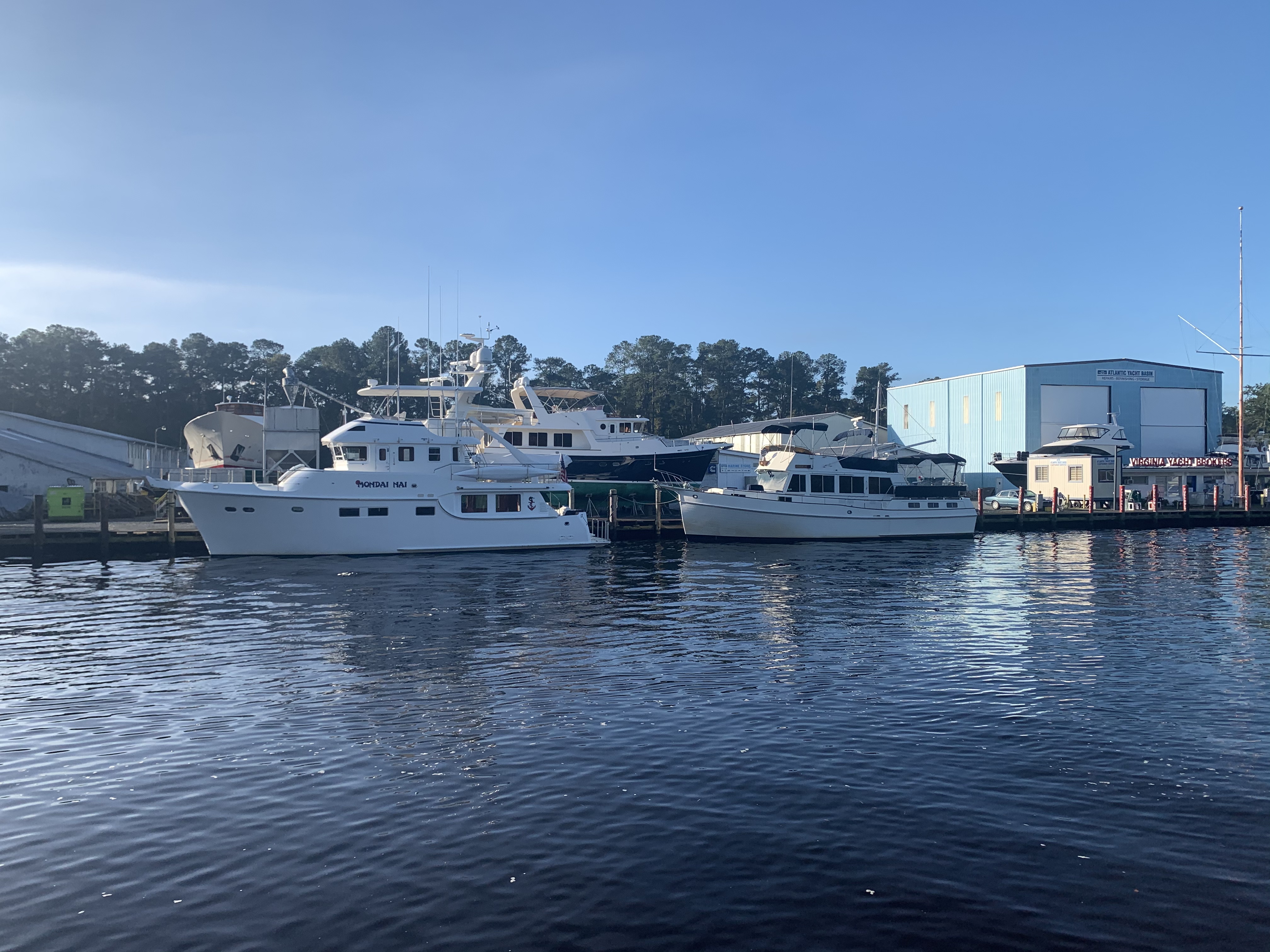
Eventually the Great Bridge opened for us and we slipped beneath it’s large raised spans to find AYB (Atlantic Yacht Basin) on just the other side.

Encountering Barges

When you travel down a river the deepest part of the river is often the visual center. As you get away from the center and near the banks or edges of the river it can often shallow quickly. The ICW is a federal waterway which is responsible for moving goods up & down the US East Coast safe from storms on the Atlantic. Wide tug and barge combos will need that depth found in the center. If you need to pass a tug pushing a barge you need to give them the center. This often pushes you uncomfortably close to the shallow banks. Some boats will stop while the barge passes but most will communicate the pass over the VHF. The tugboat captain will usually say something like “I’d like a one-whistle pass” or “I’ll meet you on the one”. This jargon comes from the fact that boats use sound signals or either one or two short blasts of the horn to indicate what side of your boat they intend to pass on.

Tug, Gold Coast, pushing a barge north past recreational boaters going south

As the tug passes I check my AIS for information about the tug.

Tug Gold Coast AIS info

Crossing State Lines

When transiting the East coast I always enjoy the moments when I cross state lines. Some states I come and go in the day, ex. RI. Other states I can spend weeks in, ex. FL.

My iPhone shows Simple Life is nearing the North Carolina state line

North Carolina

Below are some of the sights as I approach North Carolina.
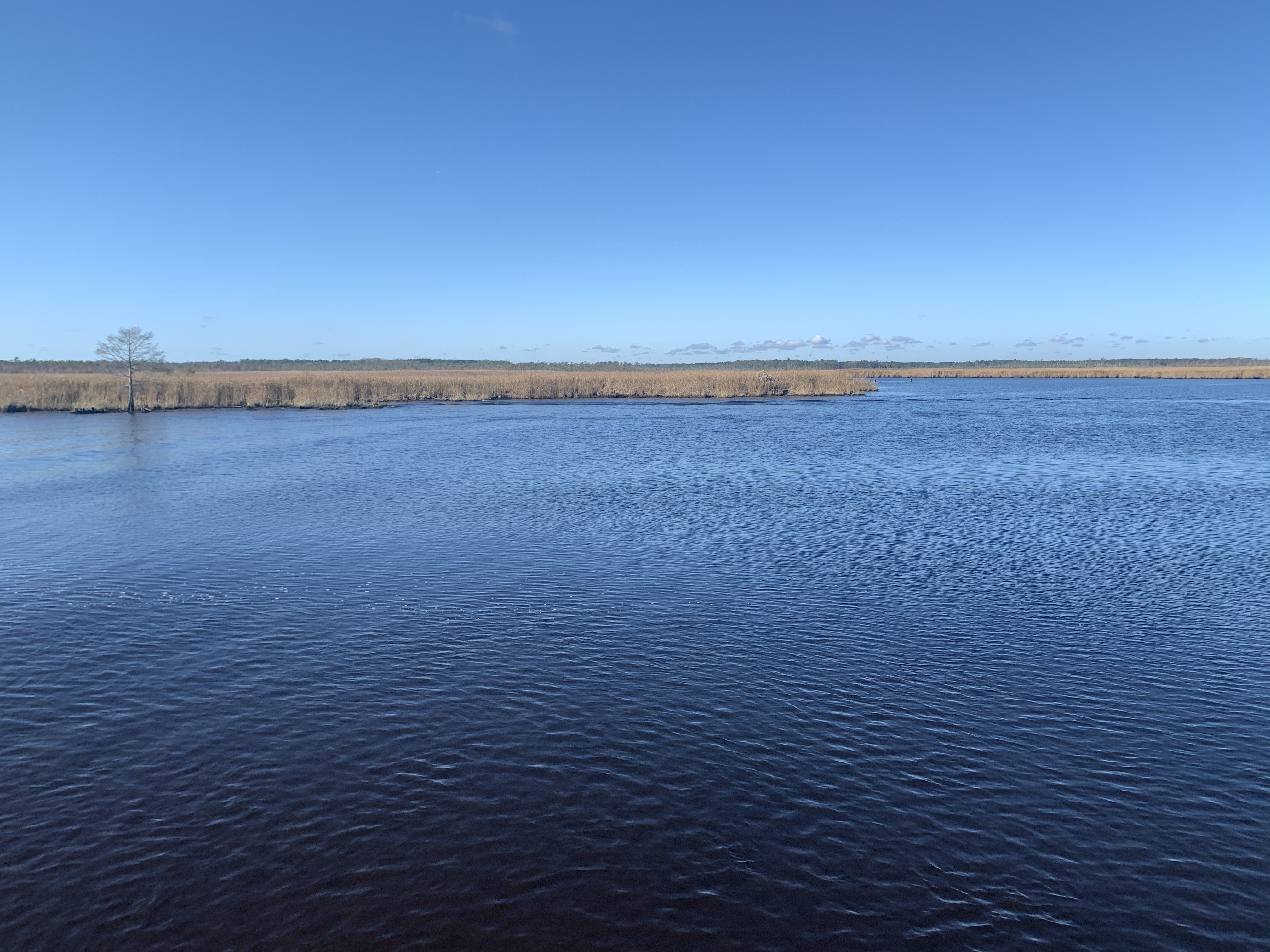
Who Doesn’t Love a Cuck?

Now passing through Coinjock, NC I spy a Chevy El Camino on the shore. I don’t know why but I feel like that car is perfect for Coinjock.
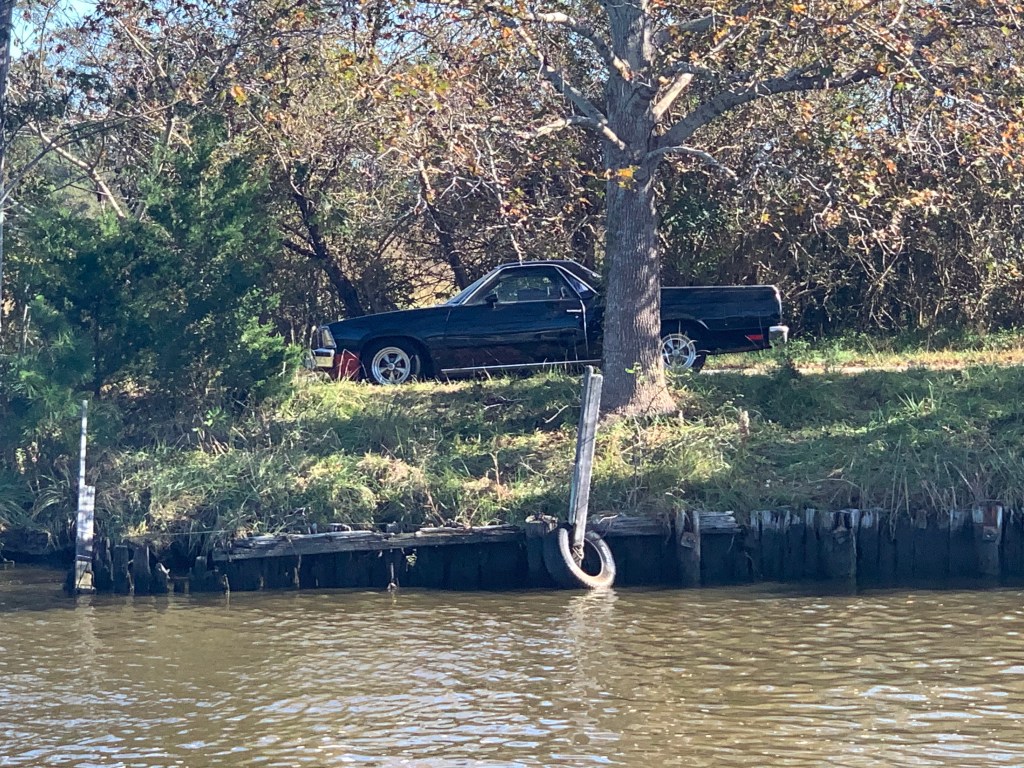
It’s a car, it’s a truck… it’s a Cuck

Get up an Go

This large yacht passed me at an amazing speed for such a large yacht. They were outside the channel while performing the pass. Their wake was not that bad as much of their hull is out of the water as they plane on top at high speed.

Wow that is fast for such a large boat


Daylight Fading

At this point in the day’s journey, we are about to cross Albemarle Sound. During the night before’s captain’s briefing, we had planned to cross Albemarle Sound and anchor just before the Alligator River Swing Bridge. Delays we encountered at the Great Bridge Lock have made it so the sun will set before we arrive at our anchorage. MV Effervescence IV has asked me if we could increase our speed so as to arrive while there is still light? The sun is setting at 5:03PM and the last quarter moon will not rise till 11:50PM. No moon makes for a dark night and nobody wants to hit a day marker piling or run over a crab pot float and get a line wrapped around your prop.
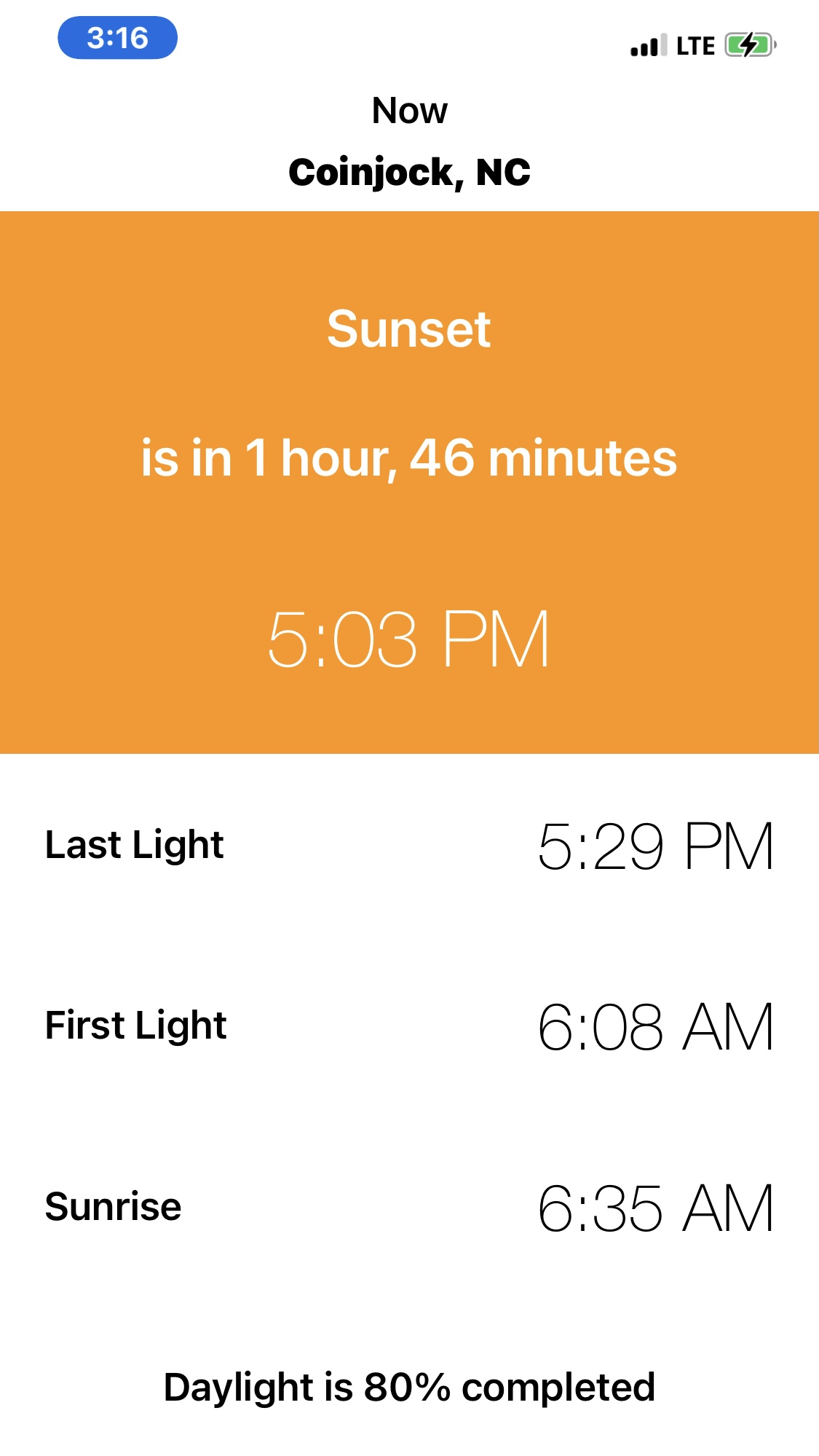
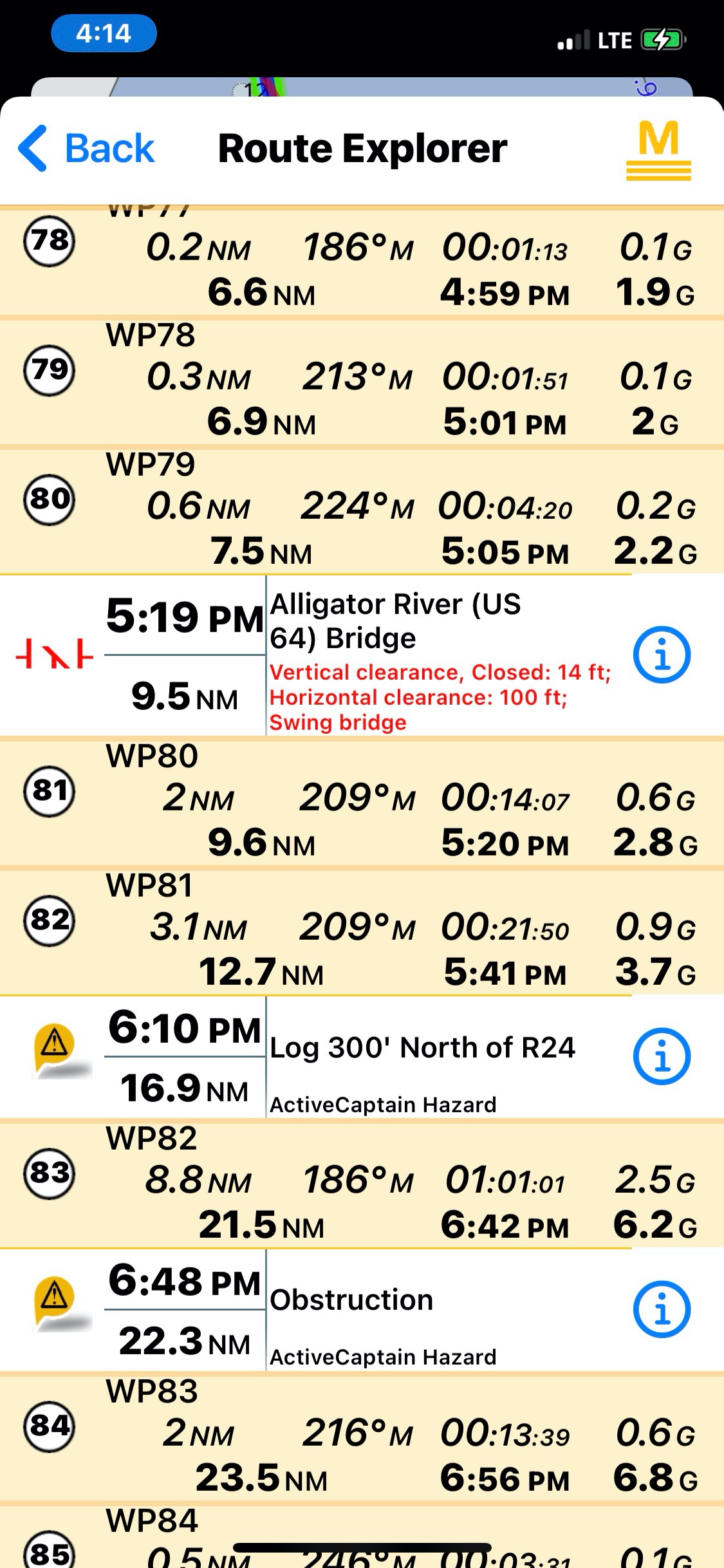
I agree to increase the speed from 6.5kts to 8.5kts.
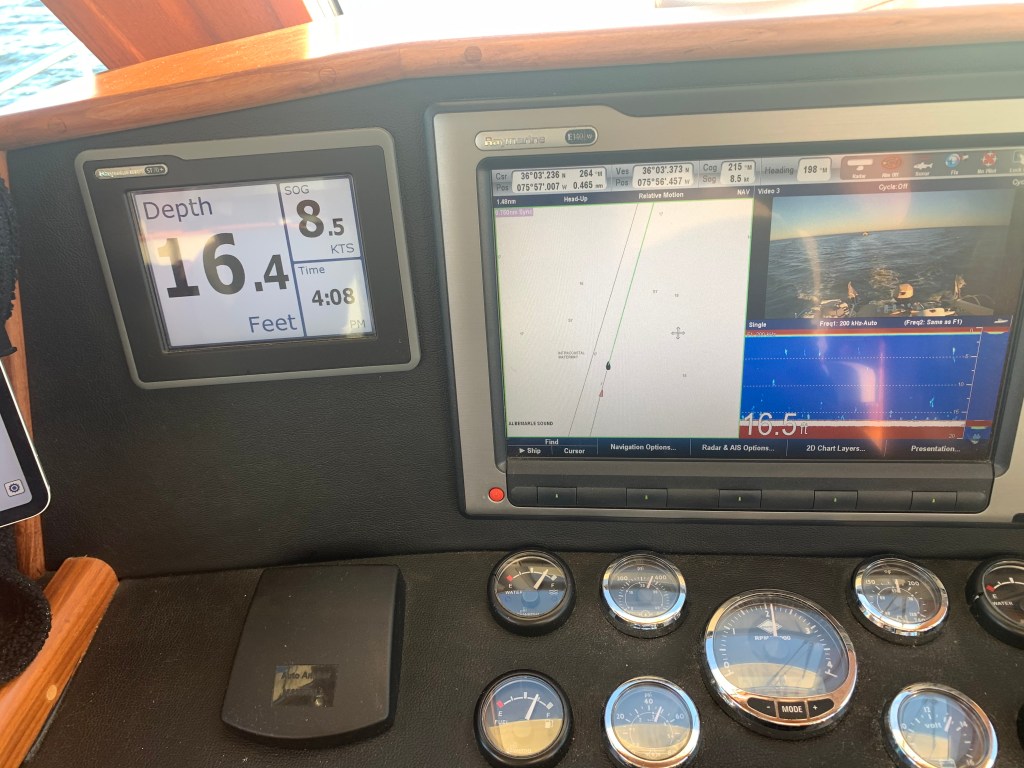
Fuel Economy

Trawlers like most boats can get great fuel milage at a slow speed. However, for every 1/10 of a knot you go above that speed the MPG starts to plummet fast. At 6.5 kts I get 3NM/gal. At 8.5kts I get 1NM/gal. If you have to increase your speed to close to your top speed you will very quickly spike your dollars paid per mile. It is better to realize the needed increase early so you don’t have to do the worst case of increasing to near max. Planning and flexibility is the key to getting down the coast and still having $ for beer 😉

Albemarle Crossing

Today’s crossing of Albemarle Sound is one of the smoothest I’ve had.

Albemarle Sound is Flat
Scanning the Horizon
Wake

I find a boat’s wake hypnotizing to watch up close.

Today’s 71NM journey looked something like this…

W04L007

Adam’s Creek Anchorage NC

Because it was a 98.8% full moon, we pulled up the anchor and got underway before the sun had even risen.

Wrightsville Beach
Wrightsville Beach Anchor Location

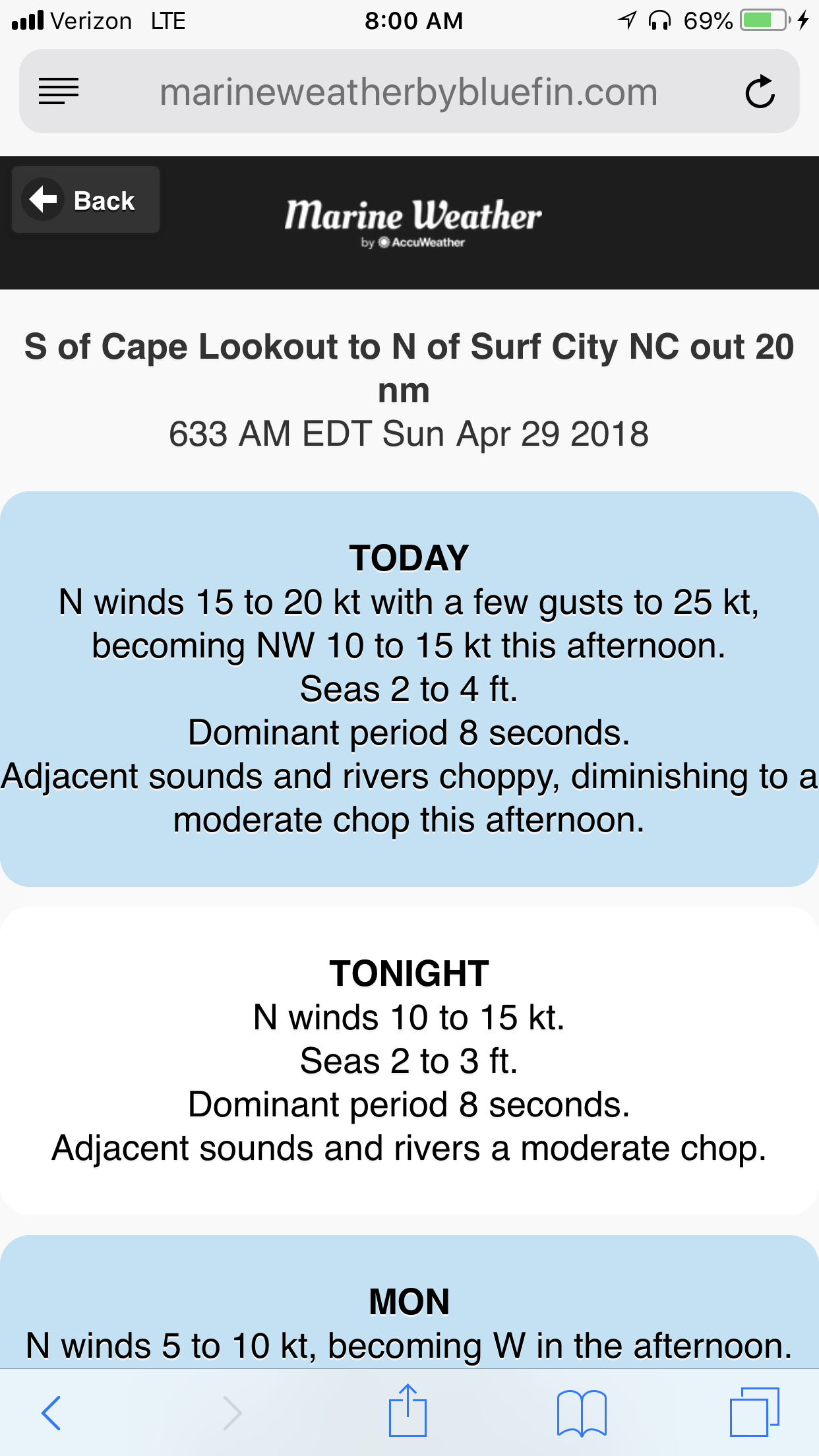
As we skirted our way up the coast, we tried to minimize the length of fetch as the winds were blowing 20 kts from the NW (with gusts to 25 kts). Recall: a fetch is a distance of water that the wind has been given to blow over the top of. Wave heights build wave heights with distance.

Sunday Forecast
25kt Gusts

Along the way we saw beach homes like these near Surf City

We saw a giant ocean-side pier near Top Sail Beach.

Top Sail Beach Pier
Top Sail Beach Pier

As we go, I’m always watching the depth sounder, ie sonar. It pings high frequency sound (like a dolphin) off the sea floor and displays the depth as a graphical chart over the last 60 seconds. It is very important to understand not just the instantaneous depth but also how the depths are trending over time. You need this info to ascertain quickly if you are running off a downhill slope or running aground. The steeper the incline, the faster in time the sea floor is rising up to meet you, metaphorically speaking. While watching the sonar,  I repeatedly saw objects between the boat and ocean floor. I believe these depictions to be “bait balls” or schools of bait fish in a tight spherical grouping. Sometimes they are formed into these ball formations by preditors such as dolphins.

I’m no expert at reading the fish finder / depth sounder’s visually displayed ping returns, however, I also saw this fishing boat hauling a net.

Bait Net
Small Trawler Netting Bait Fish

The trawler’s size makes me think that they are hauling a small net sized for bait fish.

A moment later, we were passed by this Italian designed Azimut luxury motor yacht. She clearly has some horsepower in her diesels since… as big as she was, she was just skimming over Mother Ocean.

azimut
Azimut on plane

As we approached Beaufort, NC, we passed Brown’s Inlet. The ActiveCaptain description for this inlet simply says: “Browns Inlet is unmarked and used by local boats only;  not recommended to strangers.”

Soon we were off Fort Macon State Park Beach which is just before Beaufort inlet, NC.

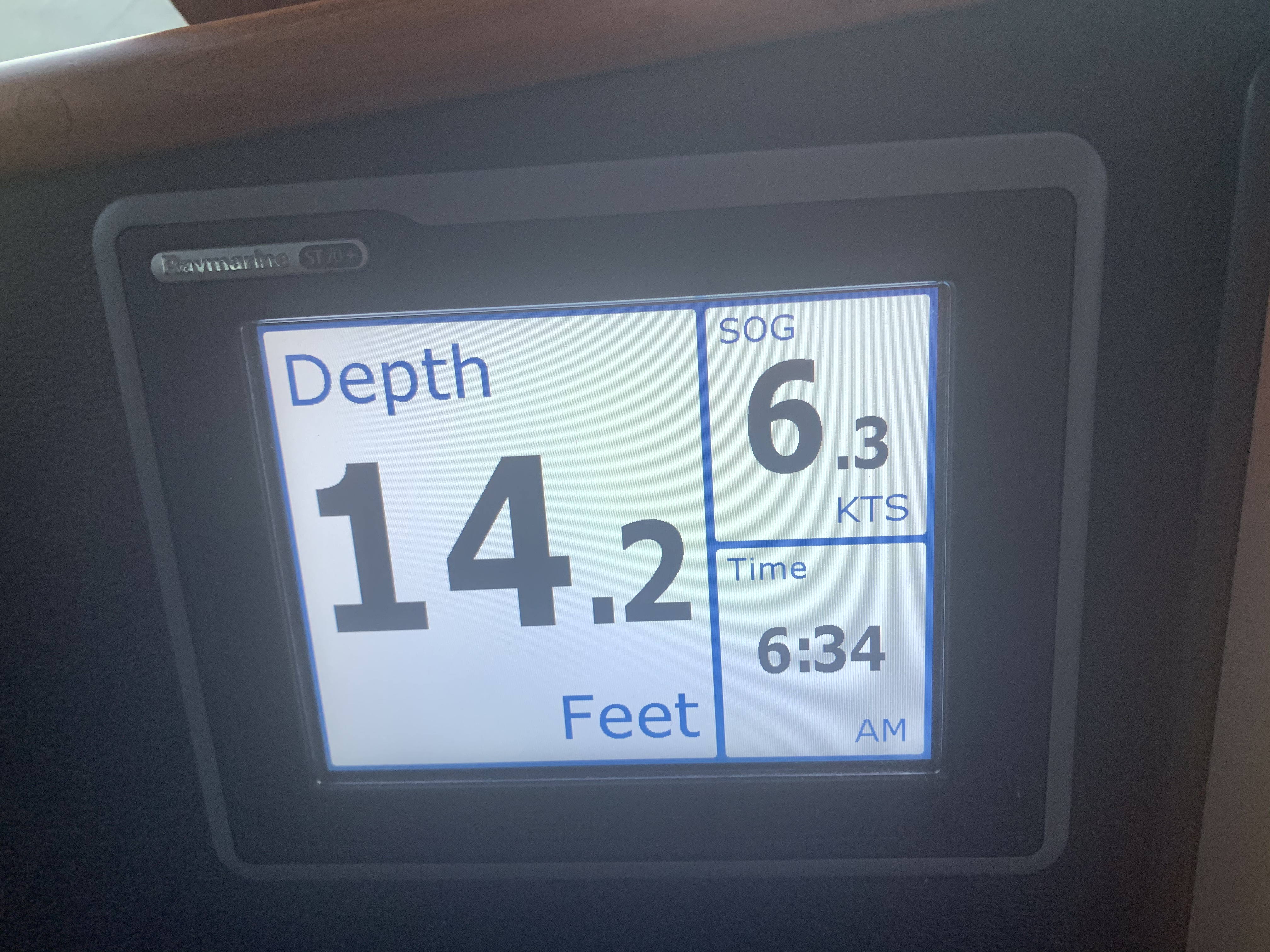
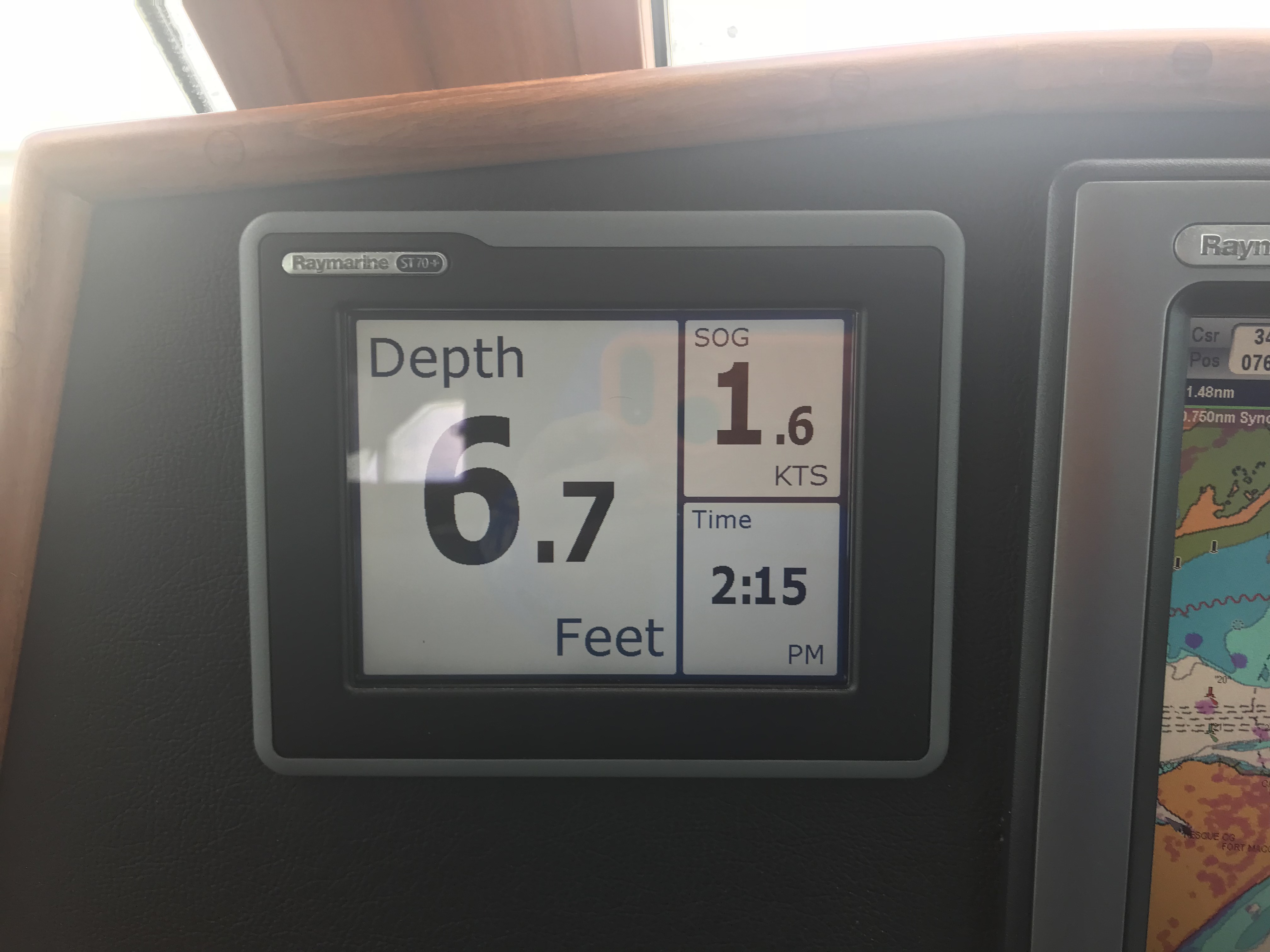
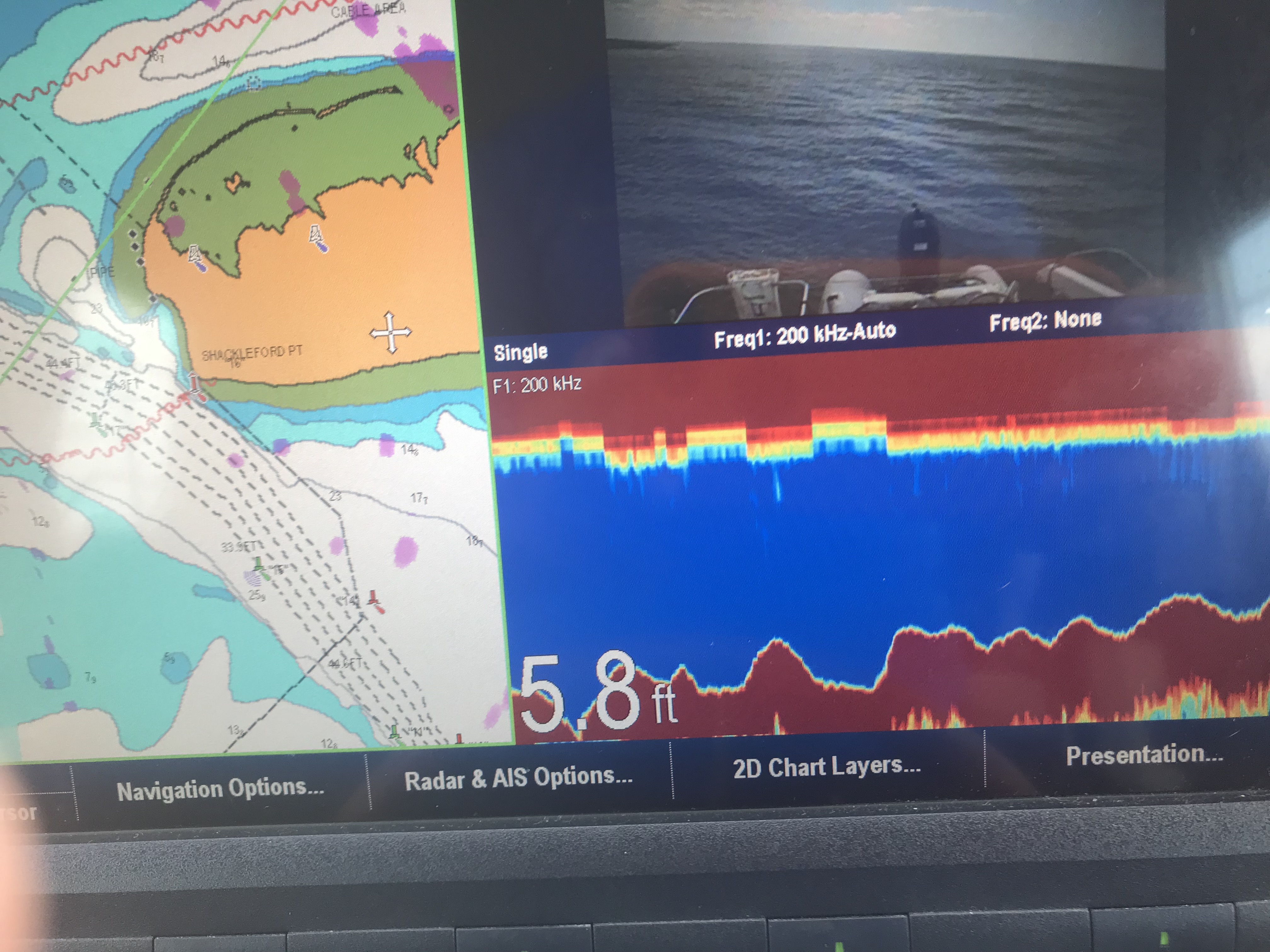
Running a dynamic inlet whose shoals change with each storm is not advisable as even the latest published charts with depth soundings will likely be incorrect. That said, we attempted to use the latest NOAA charts to sneak into Beaufort Inlet via a narrow channel close to shore. It was low tide so you don’t get any added water depth over the low water spot soudings. We entered the narrow natural channel displayed on our chartplotter.  I checked the accuracy of the spot soundings (depth numbers) and the actual depths (reported by the sonar) were 3’ shallower than what my recently updated chart displayed. That was not comforting, but I still proceeded slowly at only 1.7 kts.

Beaufort Inlet 6.7
1.6 kts is slow forward

We will run aground at about 5’ and I was already in only 6.7’. To make matters worse, there was an ocean swell that was lifting and dropping the boat above and below the static ocean surface. I was confident that however “skinny”, “thin” or simply “shallow” the depths got that we would make it. After all my charts showed a low of about 10’ and we only needed 5’.

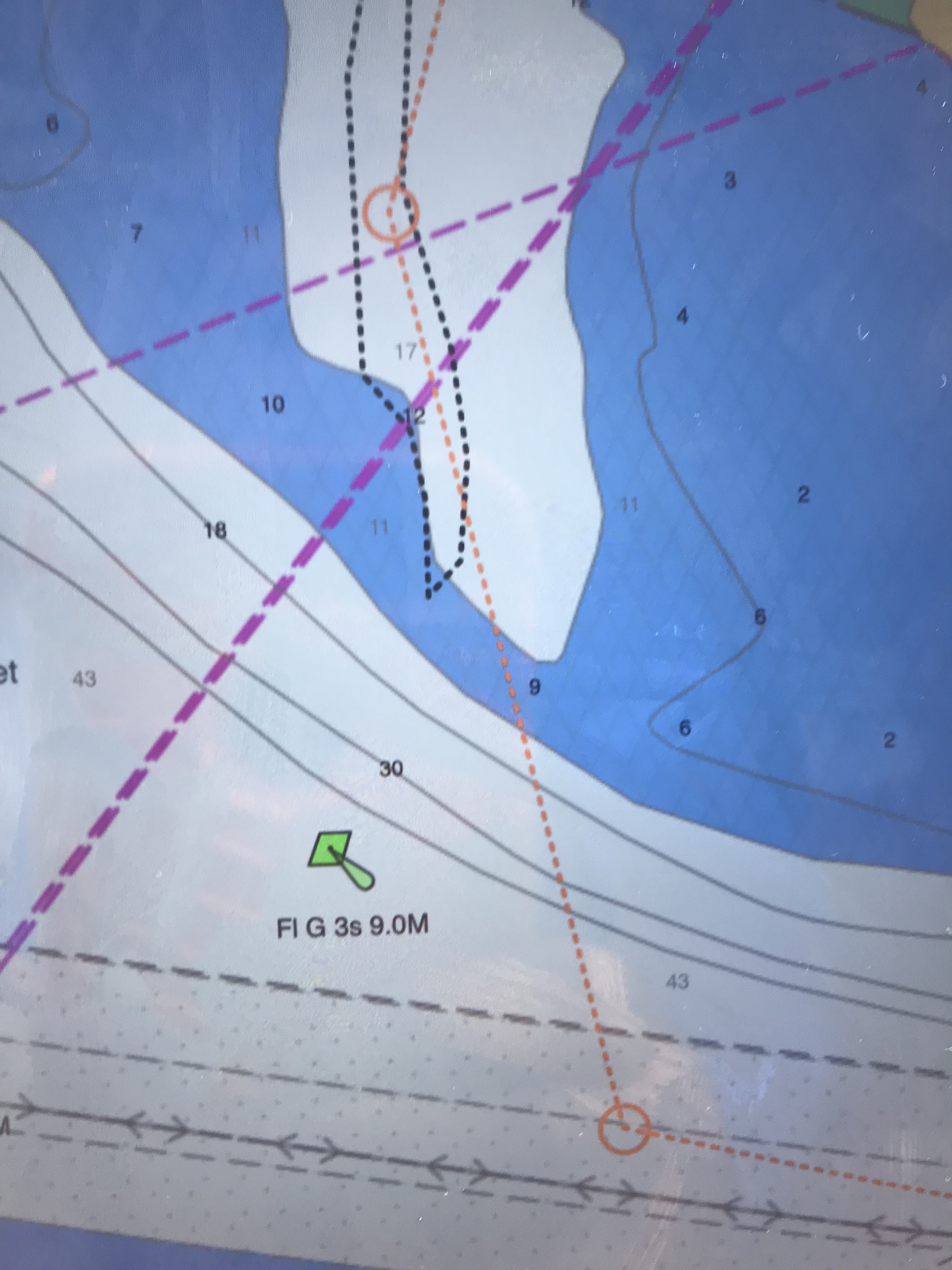
Well, we made it about 10’ from crossing into the deep channel when we bumped the bottom. You have to tell yourself: “resist the temptation to simply push the throttle forward and plow the next 10’ to the deep channel”. You just can’t know how shallow those next 10’ are. You could be pushing your boat up onto a shoal so shallow that the diesel engine / propeller combo won’t have the bite on the water needed to either push or pull you off the shoal. I opted to put her in reverse and spin her back the other way. We knew if we didn’t hit on the way in, we would not hit leaving.

Beaufort Inlet 5.8'
5.8 is Shallow

Beaufort Inlet 10 feet.JPG
10′ more and we could have made it into the deep channel

Note: The top picture showing the chart with 5.8’ depths displayed is not as recent as the chart depicted in the picture below it. We were literally 1/4 of a boat length from making it into the deep channel. You can see our track as we backed out. FYI: track = a black, dotted line or bread crumb path of where your boat has been. The dashed orange line with circular junction points is our plotted course. We backed out and came in the inlet via the mid-channel / safe water buoy. This buoy marks the center of the entrance channel.  Line up with this vertical red-white striped buoy and you are heading directly in the inlet.

Confidence is a good thing as a captain but … so is restraint 😉

I was emailing with a fellow boater who was getting ready to come North from Vero Beach. They have owned their blue water trawler and traveled up and down the coast. However, I still added the below statements to my reply. I did so because, I myself, am often curious where other sailors draw the line at the decision to “go offshore or not”?

Marty Reply: I wish you fair winds and seas however, checking your weather forecast on my favorite web app: http://www.marineweatherbybluefin.com/united-states/app

The NWS weather zone just above Vero Beach shows 3-5′ waves with a 6 second period and winds out of the East. I hear that and think…

1. If the winds were instead out of the West, you could run North tight to the coast.

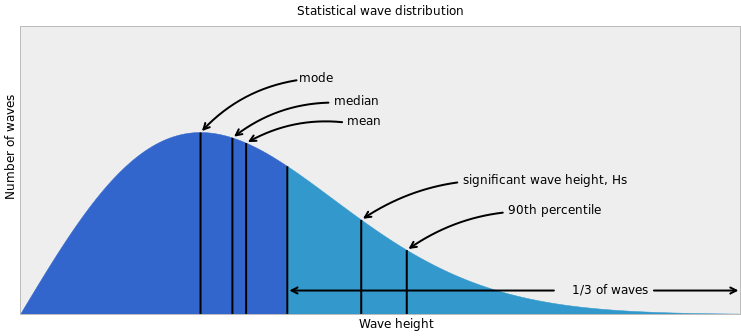
2. I prefer 2-4′ seas because 3-5 is the average wave height not the significant wave height. 

On average, about 15% of waves will equal or exceed the significant wave height. The highest 10% of waves could be 25-30% higher than the significant wave height. And on occasion (about one per hour) one can expect to see a wave nearly twice the significant wave height.

3. Six seconds is a rather short period. I’m picturing steep waves. Your boat is stabilized,  ours is not. I would not want 6 second period,  5′ possibly 7’ waves on my beam.

On my laptop, I like to use the Windfinder web app

On my smartphone, I like to use the Windfinder Pro iOS app

WindFinder
WindFinder Pro iOS App

When you study the densely displayed data given by this app, you see that the waves during the daylight hours will be… at worst 4.5’, out of the NE with a 6 second period. The tide will go low about an hour before the sun sets (read that as… “about when you are entering the shoaling inlet from the sea”).

Then you say “4.5’ waves are not that bad”. However, that wave height forecast is based on a statistical wave distribution.

Statistical Wave Distribution

Make sure not to mix up “mean, median or average

The average of the biggest 1/3 of the waves you’ll see are much larger, possibly to the height of 6.5’. That is uncomfortable to most crew in an un-stabilized trawler. Note: Blue water, top-heavy, flybridge trawlers often use active fins beneath the waterline to oppose the roll of the vessel to port or starboard. This can dramatically improve the conditions underway in a sea. Naiad is one such company who manufactures marine stabilizers.

Naiad

Here is a dated but decent overview of marine stabilizers

After making our way in the inlet we passed ICW statute mile marker 200. Note: Mile 0 starts in Norfolk, VA and the ICW milage progress to statute mile 1243 in Key West.

ICW Mile 200.JPG
ICW Mile Marker 200

We made it into Adam’s Creek before having to anchor up for the night. Adam’s creek offered us the last anchoring spot before we enter Pamlico Sound and must travel the next 25 or so nautical miles to the Goose Creek anchorages.

Our current anchorage does not offer wind or wave protection but the holding is good. The NE winds are forecast to be light, at only 10kts.

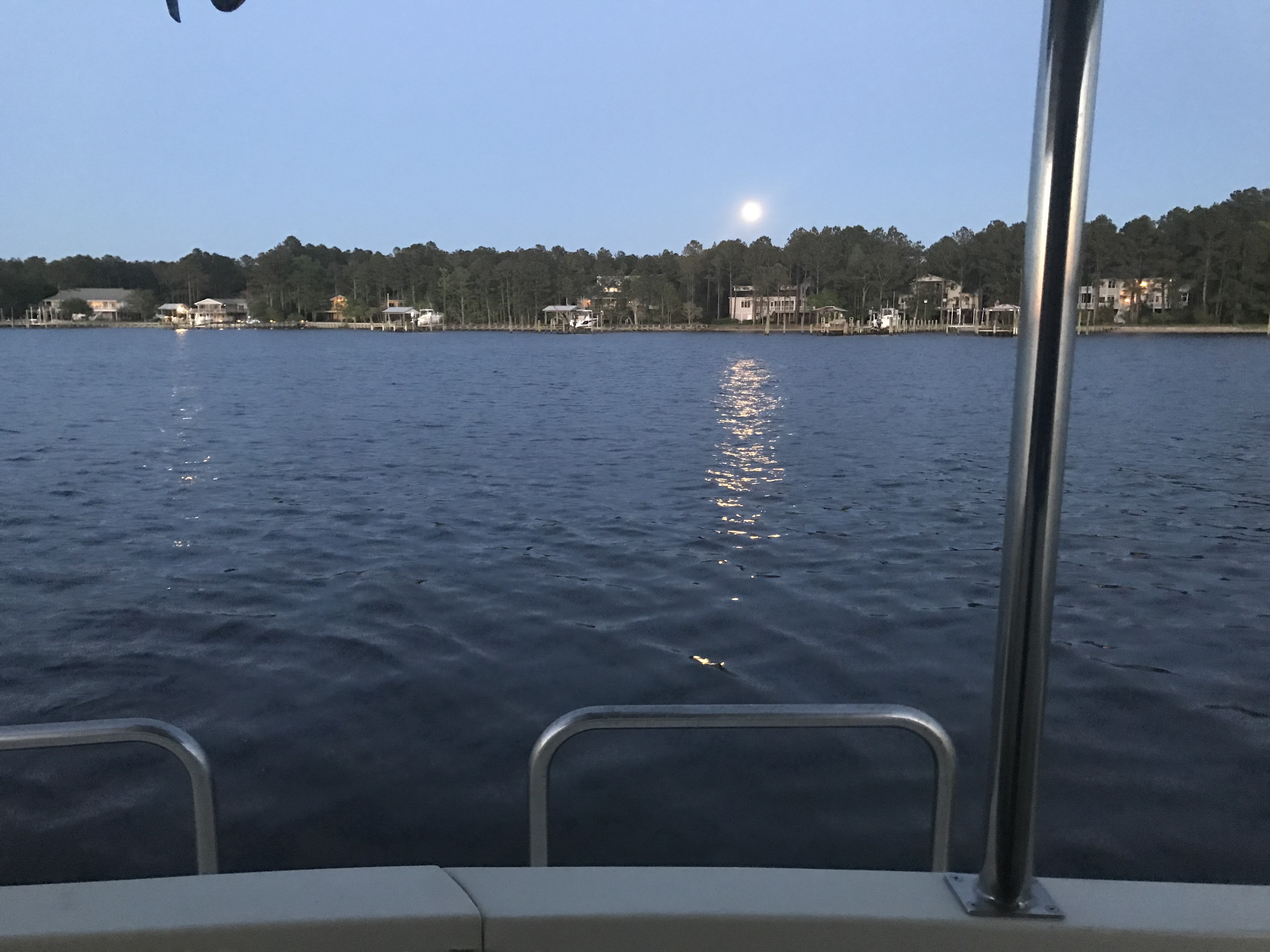
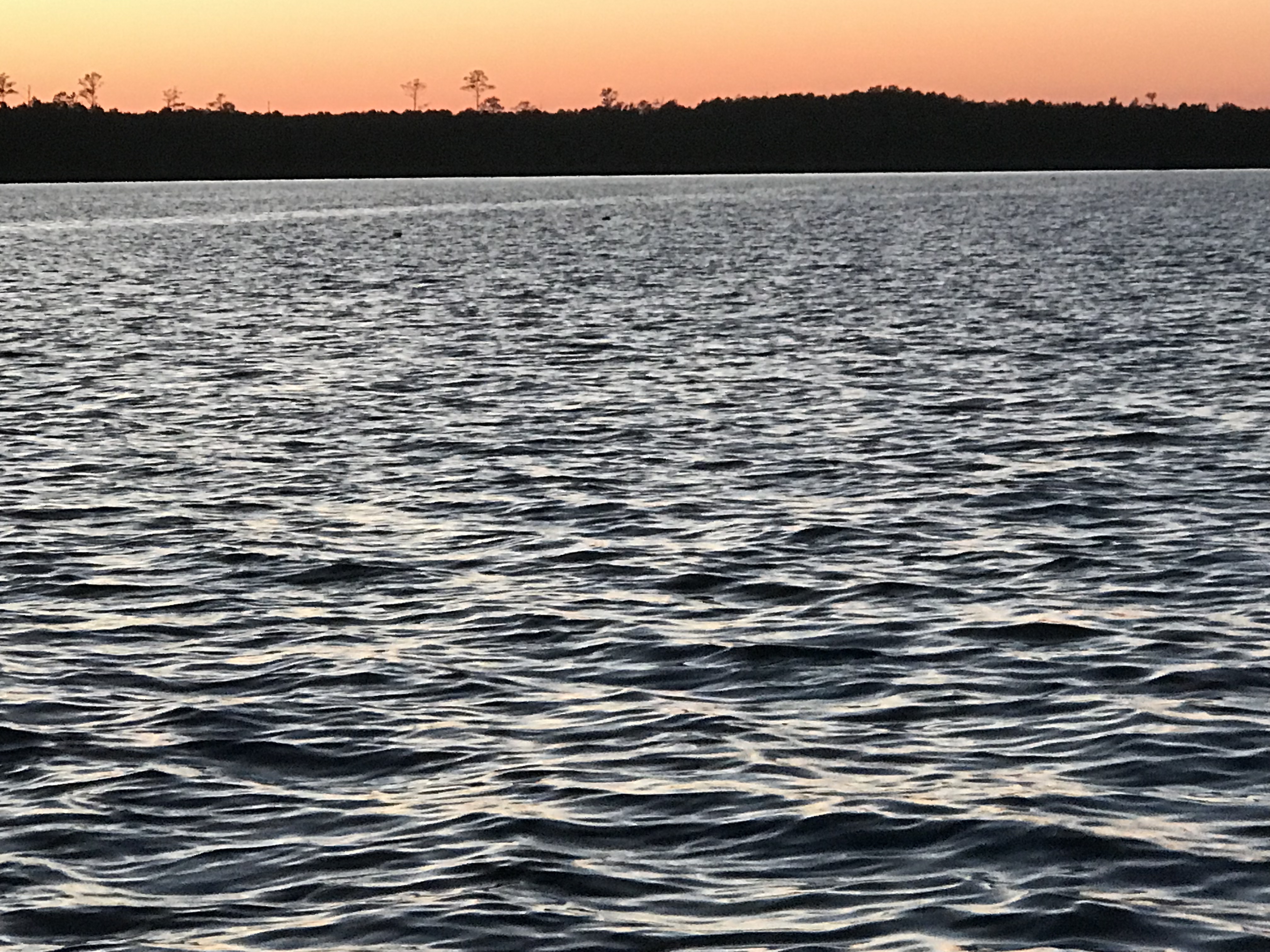
I found it interesting that we had a full moon rise off the stern and a simultaneous sunset off the bow.

Moon
Full Moon

Tonight Moon
Moonrise off the Stern

Tonight Sunset
Sunset off the Bow