
YCWe awoke while it was still dark. Checked the forecast one last time. Active gale warnings withstanding, we decided that there was a short weather window. A few hours in the early morning to make our passage South down the Jersey shore.

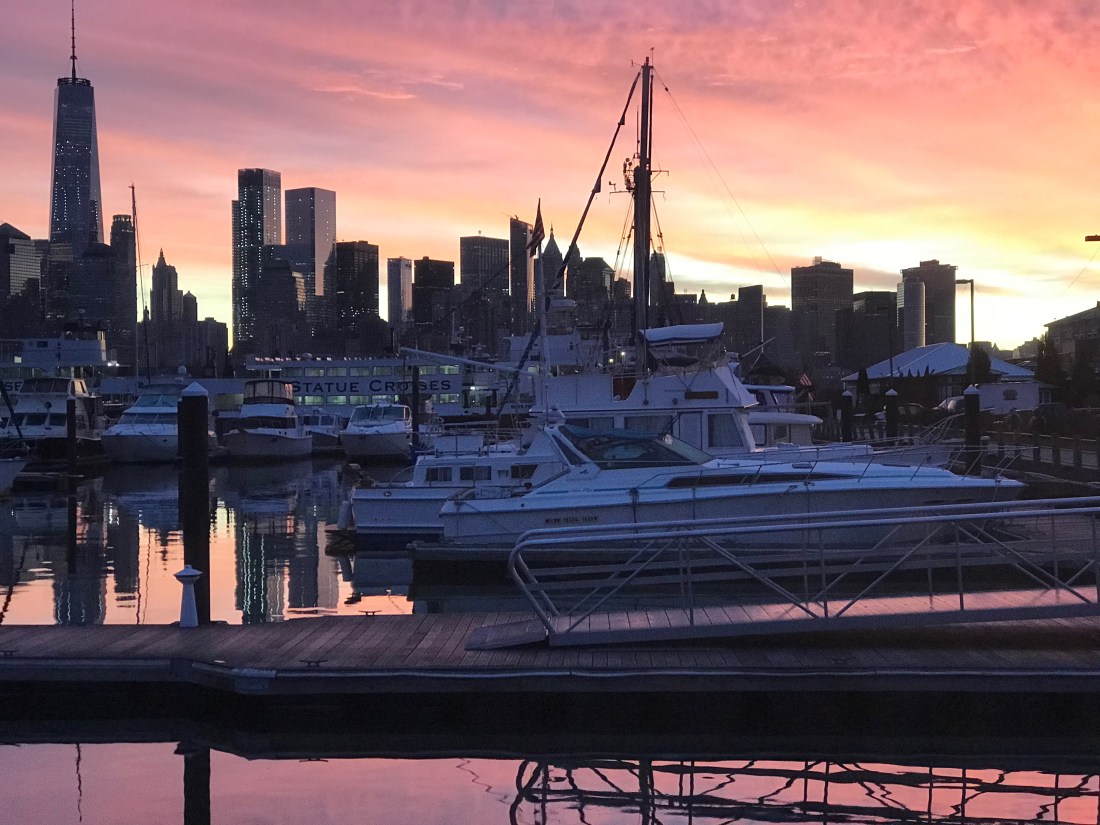
We left NYC @ Sunrise. I returned our dock key, untied our lines and crept out of our slip before anyone knew we were gone. There was a beautiful sunrise over NYC Harbor.
We quickly headed out of NYC Harbor which was littered with commercial traffic (tugs, barges, tankers, cruise ships, etc).

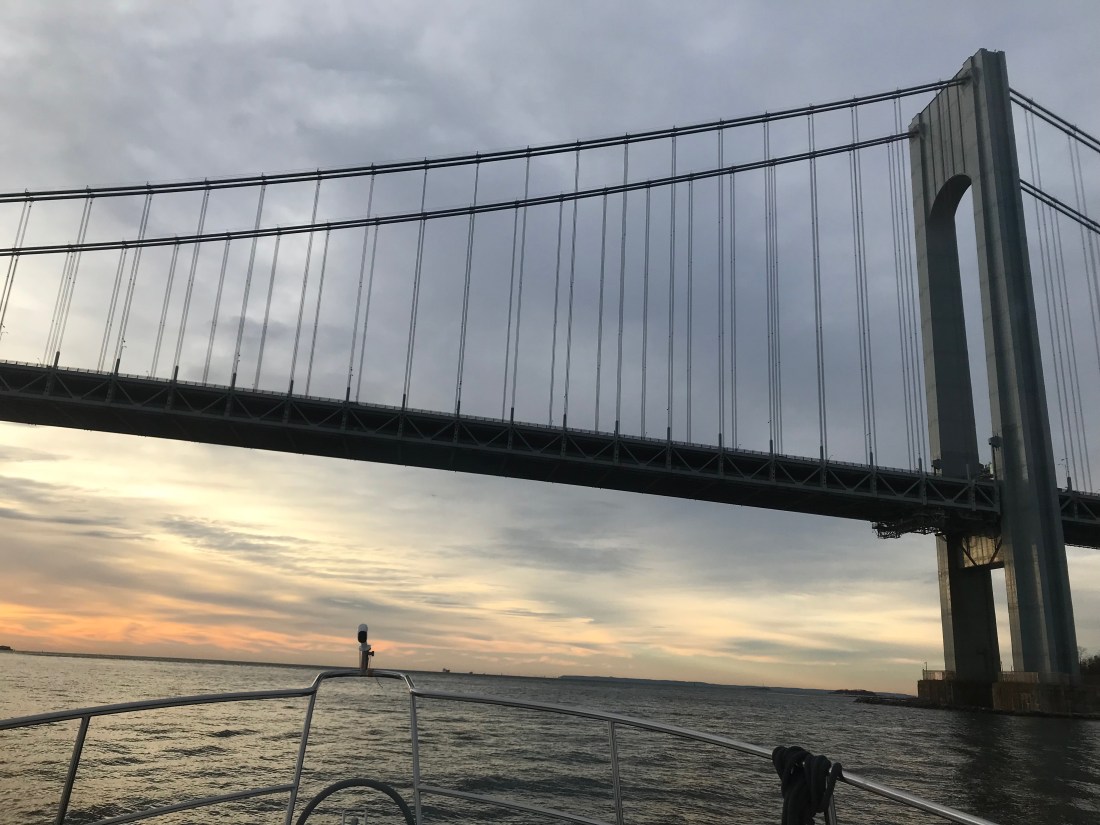
Under the Verrazano Narrows bridge and out to sea.
This was Leg 4 of our journey South looked like below

The sea conditions were great but as early morning gave way to late morning the sea state started to deteriorate a bit as the winds backed around to the South.
We made a steady 9 kts down the coast and arrived @ Manasquan River Inlet just in time for max ebb.
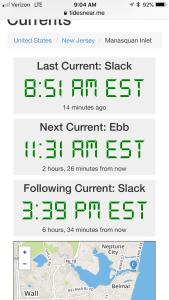
Entering an inlet off the Atlantic ocean can be hazardous due to currents, standing waves, shoaling, etc. The best time to enter most inlets is during slack current but max ebb is better than max flood. It’s better to have the current rushing under your bow and pushing you backward than running under your stern and pushing you forward.
Every boater has had that nightmare where the currents are pushing you fatefully towards a narrow or too low bridge! Piloting can get tricky.

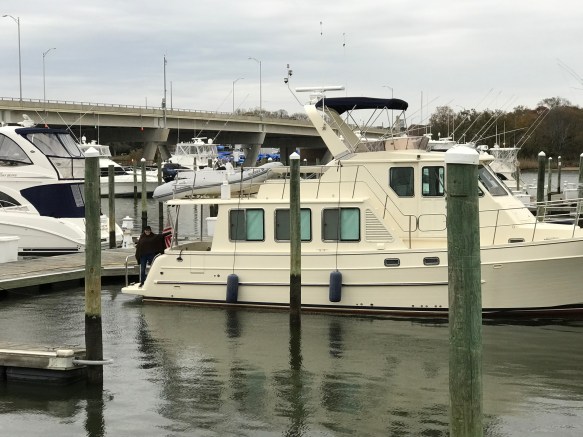
We chose a North Pacific Yachts raised pilot house 43 for many reasons but the one I’ll talk about now was the full keel. North Pacific 43 Pilothouse
A full keel is reassuring when you run the Manasquan River channel that at times almost dragged our keel on the bottom. While offshore boaters would be horrified at the though of “running aground”, in the ICW it’s simply a fact of life. Dredging the channels to keep a controlled depth of 6′ is costly and difficult to keep up with. MV Simple Life has a draft of
4’6″ dry but closer to 5′ loaded the way we are. If you must run aground, do it with a full keel and skeg like ours to protect the running gear (propeller and rudder) from damage.
That said when the current is pushing you the full keel can get caught in the current and cause the boat to veer to port & starboard. Our Raymarine auto pilot has a “response” setting that when set to “9” will turn the rudder as fast as it can to keep the bow pointed straight ahead. Switching to auto pilot to standby (off) in favor of hand steering can be even more harrowing. As we passed through the Manasquan River Railroad bridge @ max ebb we were forced to throttle up to avoid an untimely bow swing that could bring the boat close to the bridge abutments.
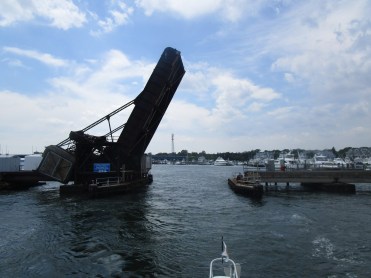
While the river is full of passing traffic and shallows we made it to Crystal Point Marina and Dockmaster Todd caught a line for us as we pulled into our slip.
After a short walk under a bridge we arrived at River Rock Bar in Brick, NJ. River Rock Bar in Brick, NJ

Right away we spotted the Captain Morgan behind the bar and knew we had landed in the right place 😉

There was a local artist playing acoustic guitar in the corner and they had Sculpin IPA on tap! We had a great dinner & drinks and made it back under the bridge to retire for the night.
 MV Simple Life
I must offer an update. You really can teach old dogs new tricks! Happy, our 7 year old Boston Terrier and Chief Brody, our 6 year old Boston Terrier have leaned to use the artificial turf! We are now referring to the companionway as the “Poop Deck!”
“From Wikipedia: In naval architecture, a poop deck is a deck that forms the roof of a cabin built in the rear, or “aft”, part of the superstructure of a ship.[1]
The name originates from the French word for stern, la poupe, from Latin puppis. Thus the poop deck is technically a stern deck, which in sailing ships was usually elevated as the roof of the stern or “after” cabin, also known as the “poop cabin”. In sailing ships, with the helmsman at the stern, an elevated position was ideal for both navigation and observation of the crew.”
However, Captain Marty is thrilled to leave the dingy on the fly bridge and let the dogs use the turf. A simple rinse and she’s as clean as before! #Winning
LikeLike