

Stop Touching Things
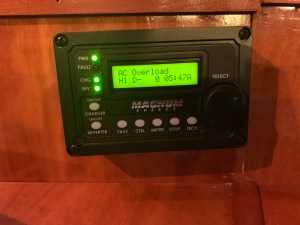
We awoke on anchor and I started the genset to recharge our house battery bank. Standing there in the pilothouse, I could not resist getting into the setup of the Magnum Energy Inverter Charger controller. There are just so many electronic gizmos aboard each with a plethora of controllable settings. Just then the power went out. Coincidence or should I stop randomly changing controller settings to observe the effect?
It took me a while of searching but I found the culprit…
a tripped circuit breaker. My guess… we are running the reverse cycle heat on the 240V AC compressors and the startup of the compressor draws a lot of juice.
Nuclear Power
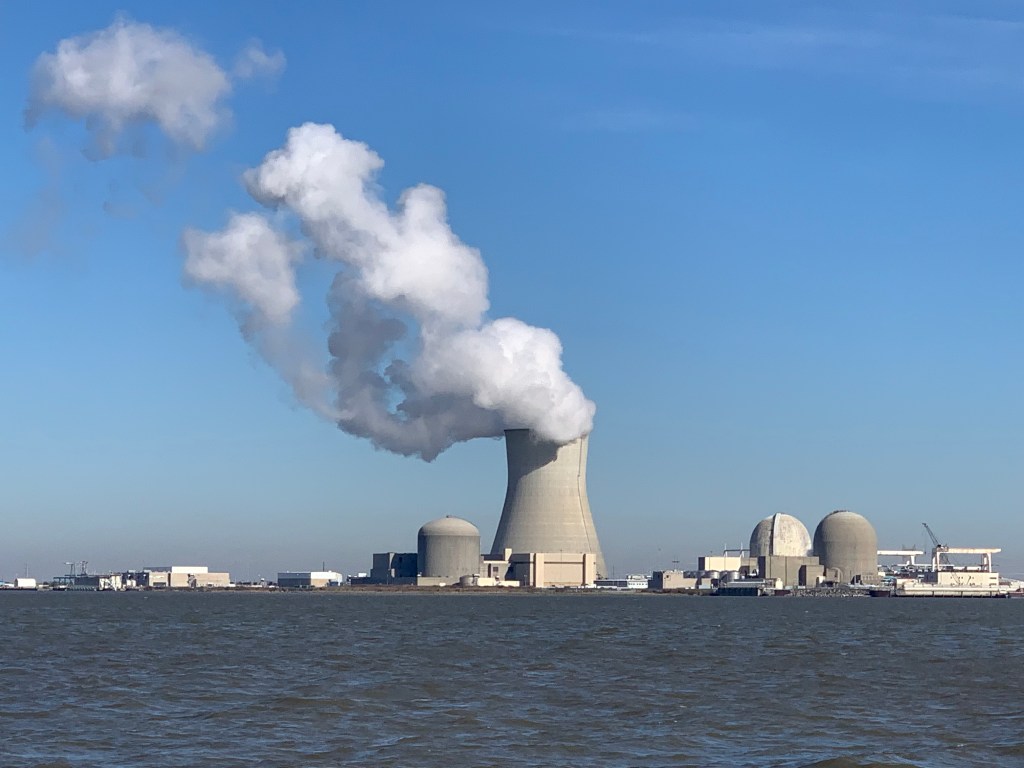
Our trip up Delaware Bay sent us by the Salem & Hope Creek nuclear power plants. Their cooling tower belching puffy steam clouds set against a blue sky. There are two different nuclear power generating plants next to one another. Salem which has two pressurized water reactors (PWR) and Hope Creek which has one boiling water reactor (BWR). The main difference between a BWR and PWR is that in a BWR, the reactor core heats water, which turns to steam and then drives a steam turbine. In a PWR, the reactor core heats water, which does not boil. This hot water then exchanges heat with a lower pressure water system, which turns to steam and drives the turbine.Together these power generation stations share a large artificial island at the head of Delaware Bay. With it’s combined output of 3,572 megawatts, the Salem-Hope Creek complex is the largest nuclear generating facility in the Eastern United States and the second largest nationwide.
C&D Canal

When you reach the head of Delaware Bay, there is a man-made land-cut called the the C&D Canal (shown as the red line in the picture on the right).
The Chesapeake and Delaware (C&D) Canal connects the Delaware River to the Chesapeake Bay. The C&D Canal system provides a continuous sea level channel (ie. no locks needed) connecting the Port of Baltimore to the ports of Wilmington (DE), Philadelphia, and the northern trade routes.
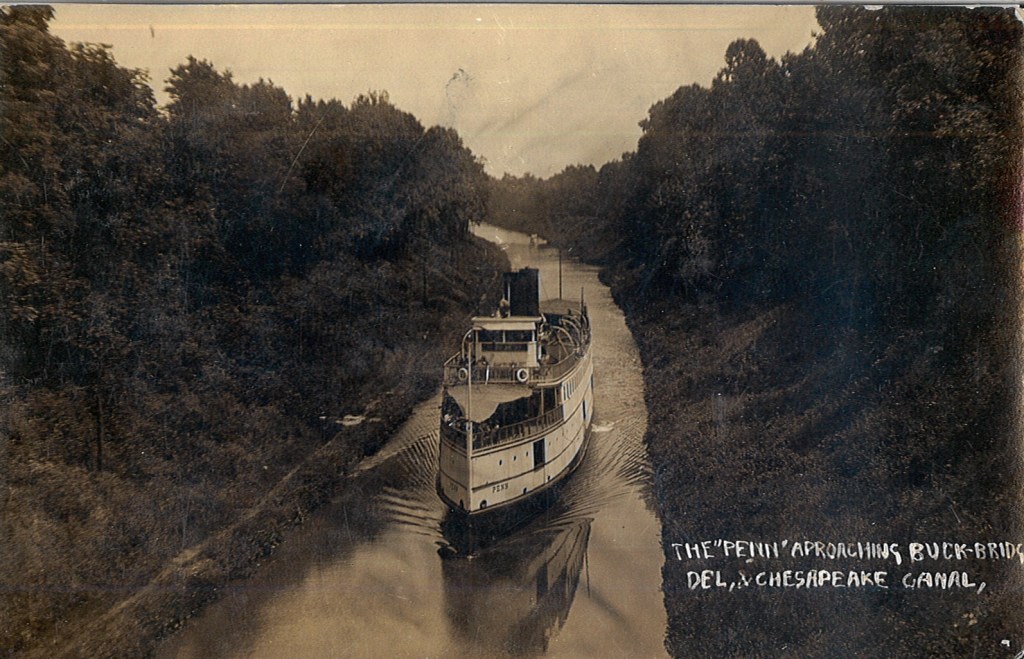
I believe the canal originally opened in 1829. I have included a picture of the steamship Penn as it traversed this early version of the C&D Canal.
Circa 1829
This canal is currently a government 1935 authorized project given to the US Army Corp of Engineers (USACE).
The waterway channel is 35 feet deep and 450 feet wide, extending from Reedy Point on the Delaware River, about 46 miles below Philadelphia, PA, through a land-cut westward to Elk River and onto deep water near Pooles Island in the upper Chesapeake Bay.
Delmarva
I suppose it makes the DelMarVa (DELeware, MARyland, VirginA) peninsula more of an island? The Delmarva is a peninsular region 180 miles (290 km) long in the eastern US that includes Delaware, the Eastern Shore of Maryland, and a small strip of Virginia; it separates Chesapeake Bay from the Atlantic Ocean.
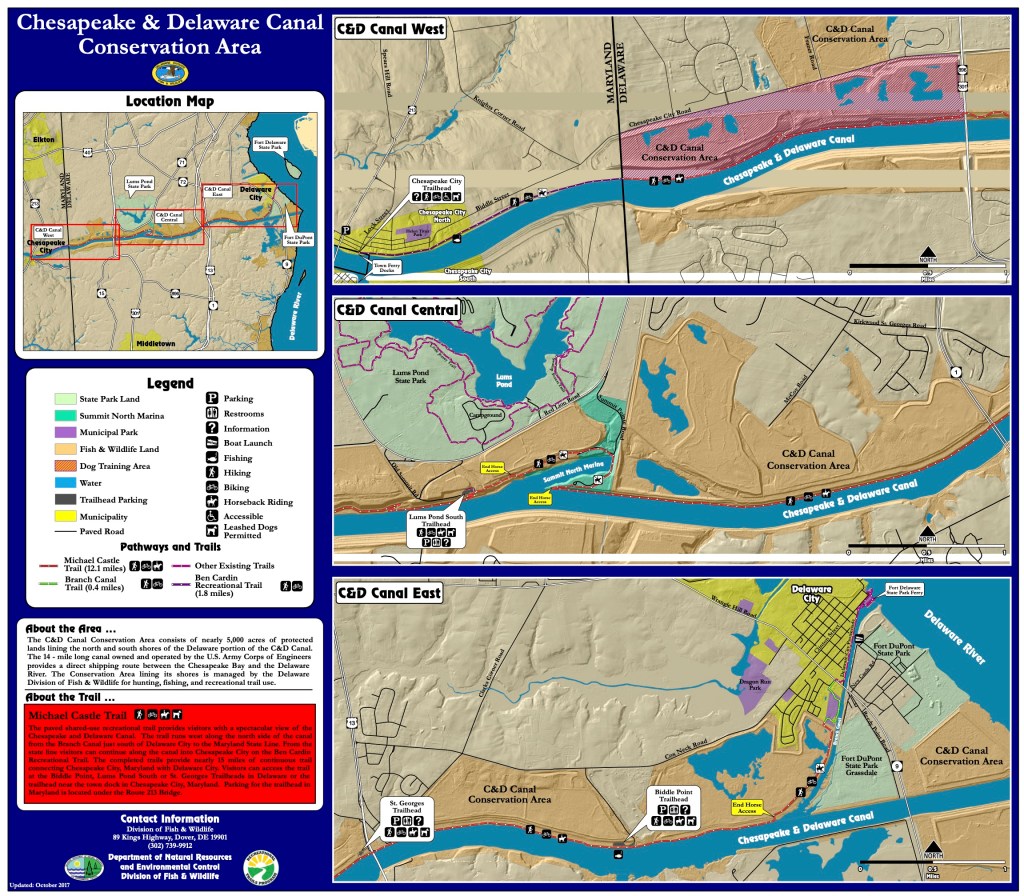

As turned to port and entered the C&D Canal. There were many locals walking the banks of the canal.
The towns have set aside the area along the bans as conservation land. It’s a peaceful area with the land high above you blocking the wind as you walk the banks waving to passing yachts.
We toot our air horns and receive waves from the locals as they stroll along.
Free Dock
We planned to dock at the free town dock in Chesapeake city. The town set this small dock aside for boating visitors to their town. Simple Life’s 58′ LOA makes her tougher than her previous namesake to slip into open space at a face dock. As luck would have it… We found an opening and eased her up to the dock and had to lasso the cleats from on board as our decks are too high to simply jump down onto the dock.

Downtown
We quickly jumped off and wandered the pocket-sized downtown area.


Where to Grab Dinner?

We walked into a restaurant called Prime 225 that a friend told us to visit but sadly… it was a 3 hour wait!
A block away we discovered a quaint local hangout call The Tap Room. I grabbed a burger and T had the chowder. Food was good but it wasn’t the right vibe and their Goose Island IPA is OK but not my favorite.
Where to next?
When we landed on the town dock we could see a marina restaurant just 400 feet away on the tiny harbor. We walked in that direction till we saw…
The Deck
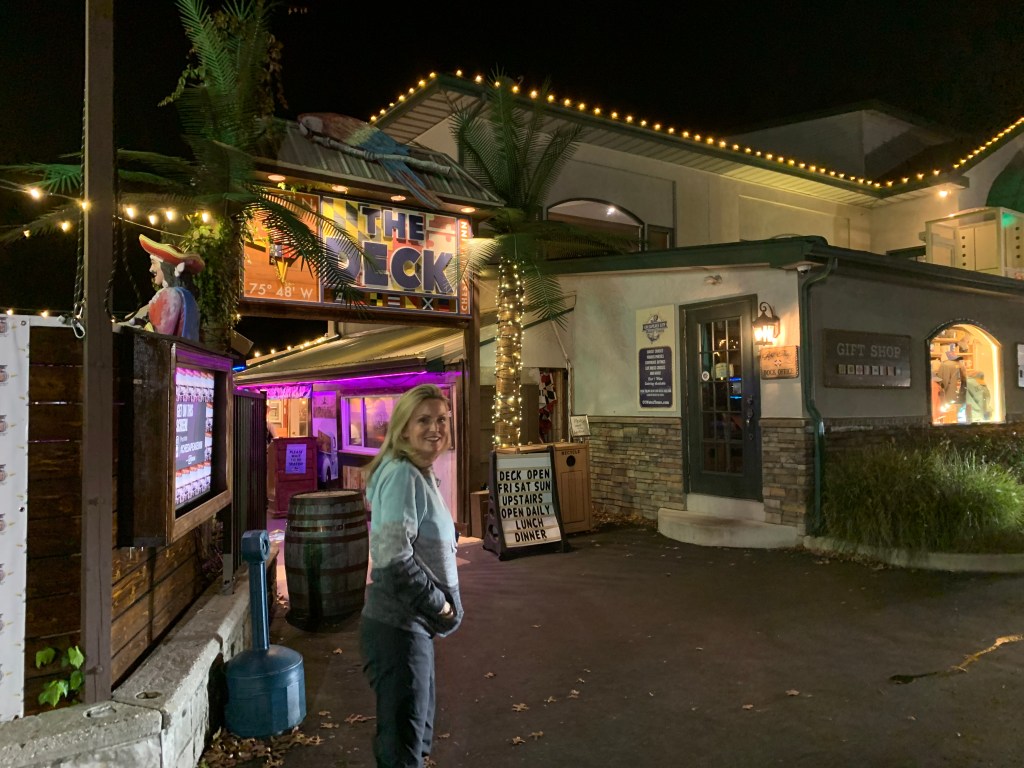

As we passed beneath the sign we were greeted with the sounds of a live band singing some Fleetwood Mac – Dreams.
We band was good and the IPA was better 😉 As the band played we played “Name that tune” while I shot out to a quick lead with Fleetwood Mac it seems the band conspired with Teresa to play her music and I believe she won by a landslide in the end.
The walk back to Simple Life was short and we where thankful for that.
La Mañana Siguiente
The town dock is free but if you plug into electricity like we did you must pay the town hall just 1 block away. So off I went to stuff an envelope of cash through their mail slot as it was Sunday.


Leg Seven
The seventh leg of our journey south looked something like this…









 MV Simple Life
You must be logged in to post a comment.