7AM this morning was cold. There was frozen water in the dock cart and frost on the car windshield.
Dock cart full of frozen water. It’s cold this morning!Frosty windshield
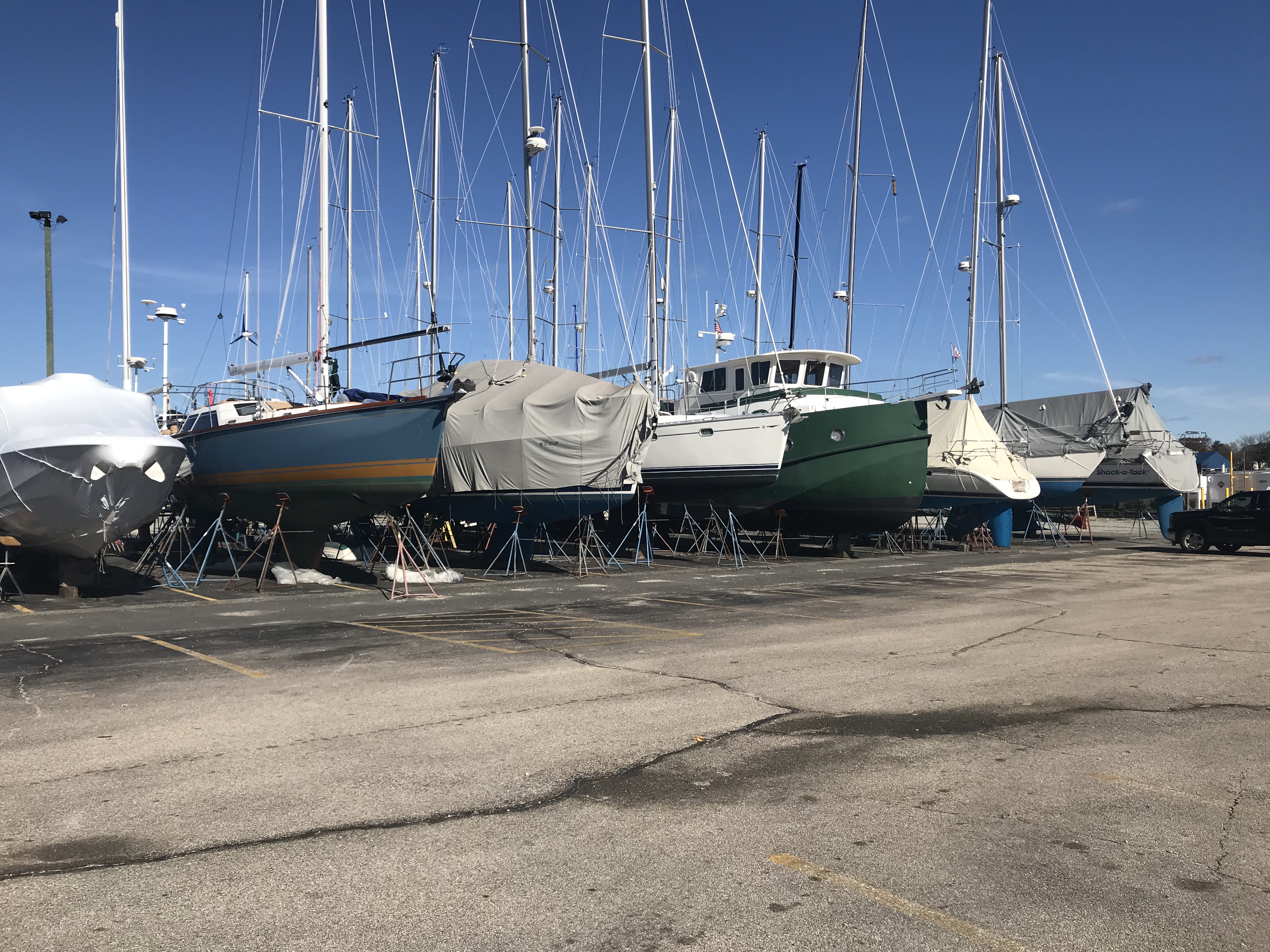
The boatyard was full of friends boats on the hard.
Buddy & Renee’s SV Star Watch with the beautiful blue hull with a gold boot stripe
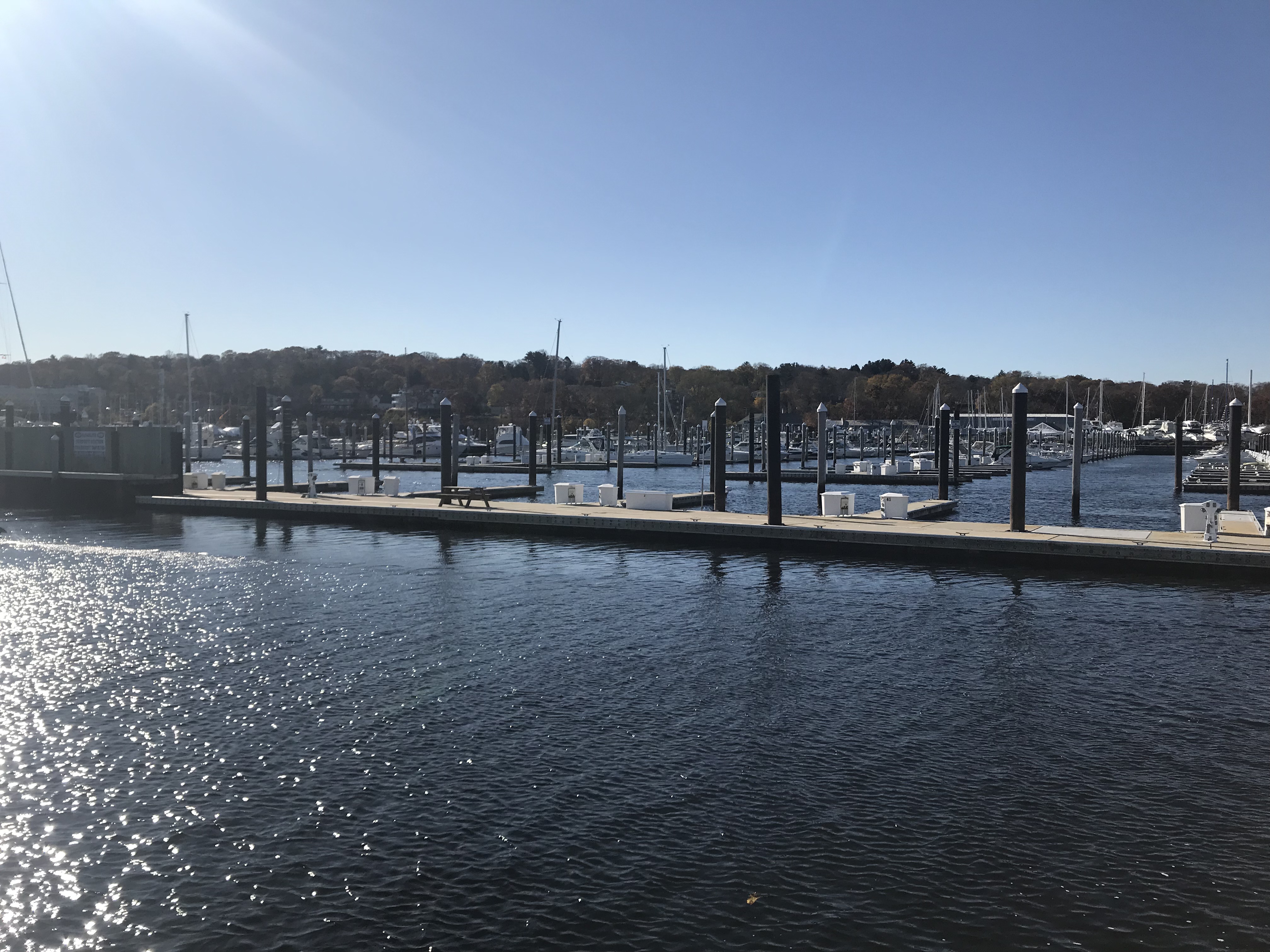
As we pulled away from the marina a look back shows just how many of the slips are empty as the boatyard crew is working overtime to get all the boats pulled and blocked on the hard for the winter.
Empty slips everywhere
Last year many people asked me questions like …
How long does it take to make it to Florida?
How many hours did you put on the diesel to get to Florida?
How many gallons of diesel did you use?
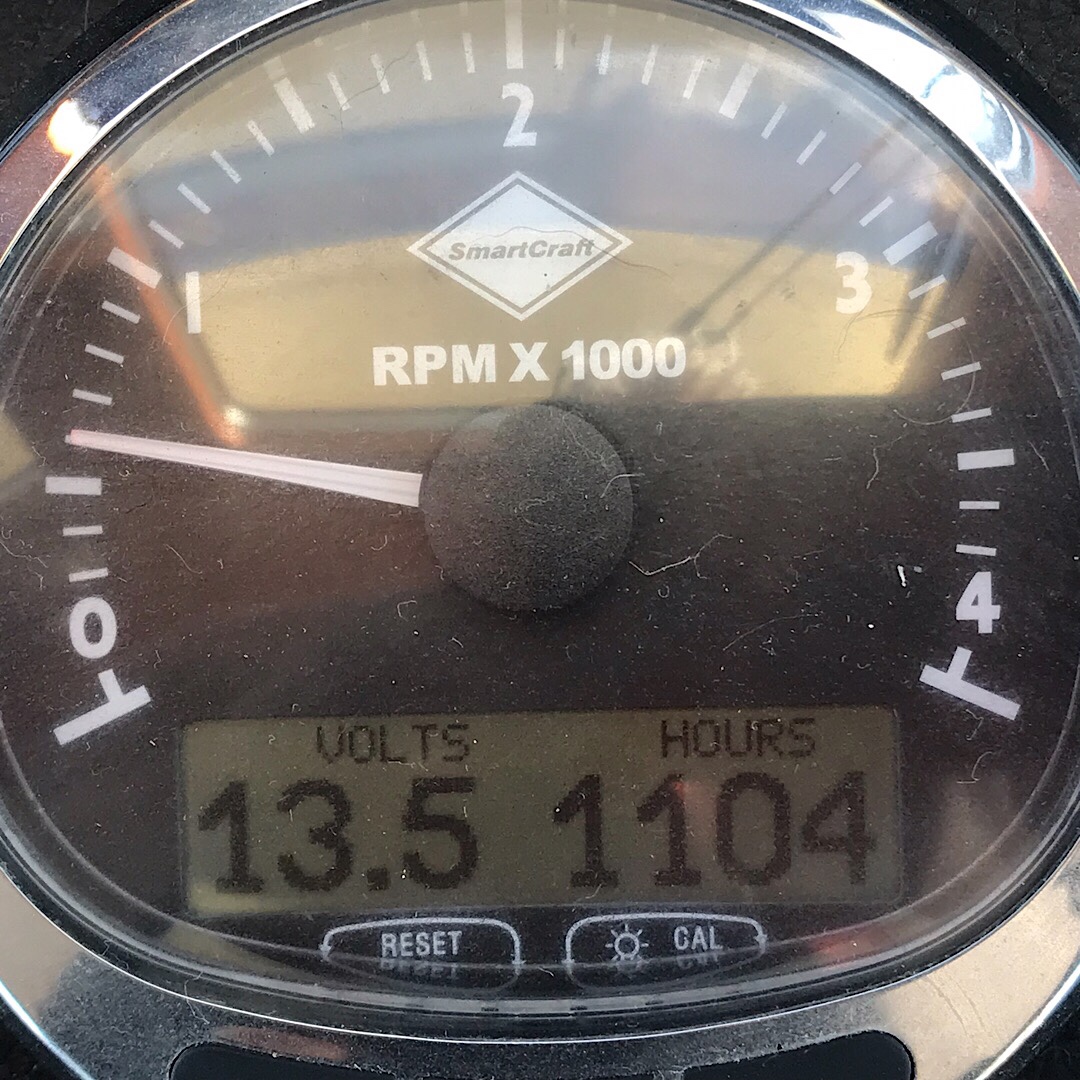
In response, I reset my “fuel used” on my Cummins Smartcraft display.
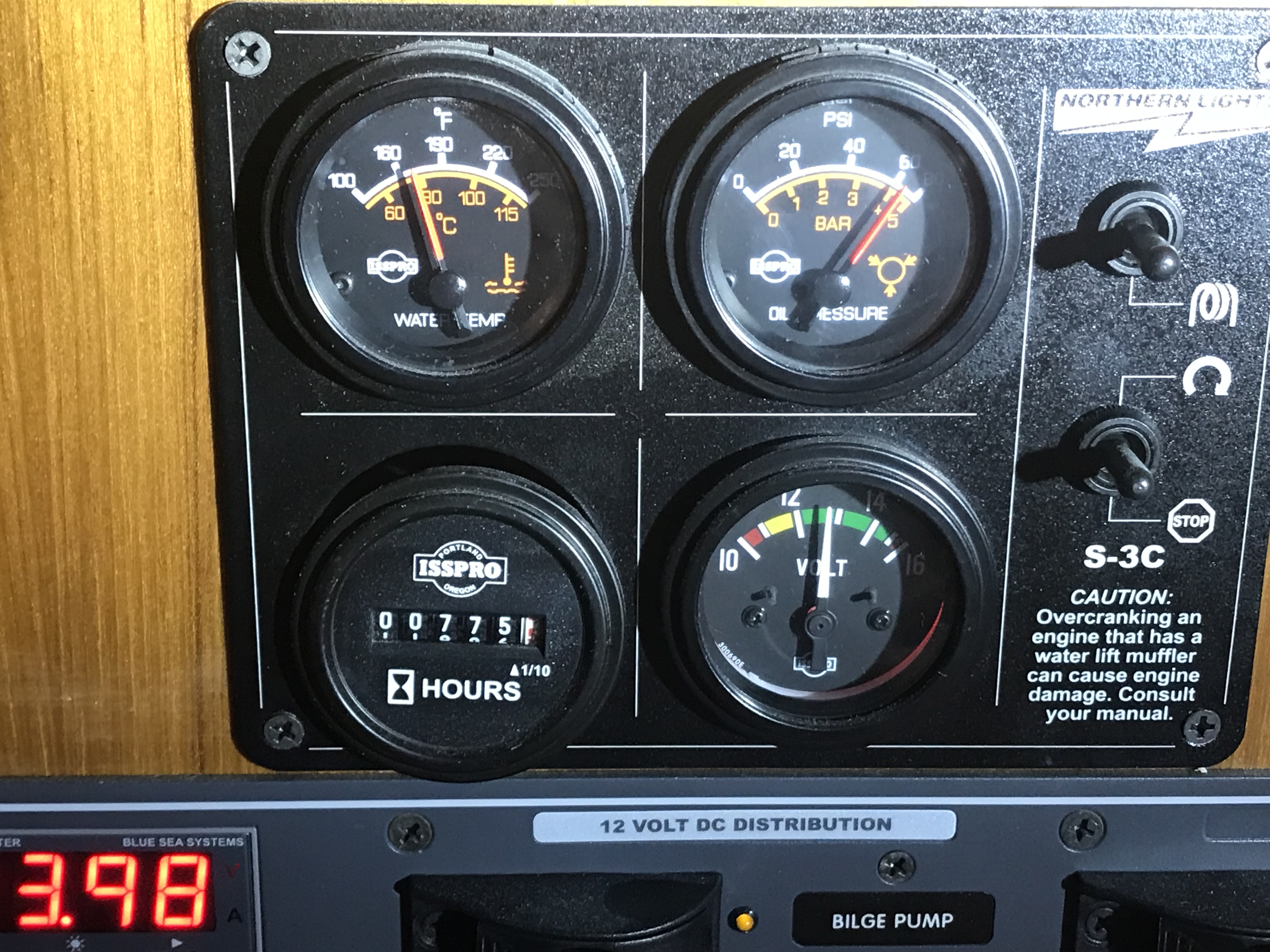
I also snapped photos below of the main and genset hour meters.
1104 hours on the Cummins QSB 5.9L 330HP diesel775 hours on the Northern Lights 9KW genset
The pilot house was warm and the sun was shining on the water.
Even on cold winter days the pilot house with all it’s windows stays toasty warm
W02L001 – Winter Season 02, Leg 001 of many looked like this…
We anchored in Point Judith’s “Harbor of Refuge” and just in time as the sun is setting.
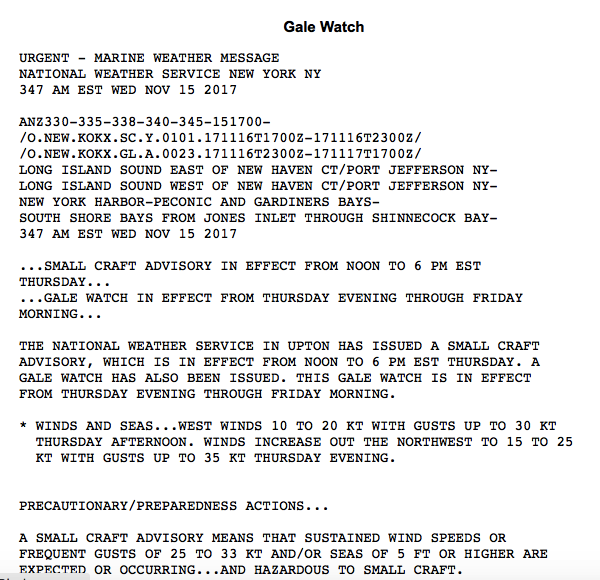
We departed Harbor of Refuge @ sunrise this morning. We felt a sense of urgency due to a gale warning (gusts to 35 knots) which is in effect beginning Thursday afternoon. The cause is two separate low pressures that are having a complex interaction West of our current location.
NWS Gale Warning NYC
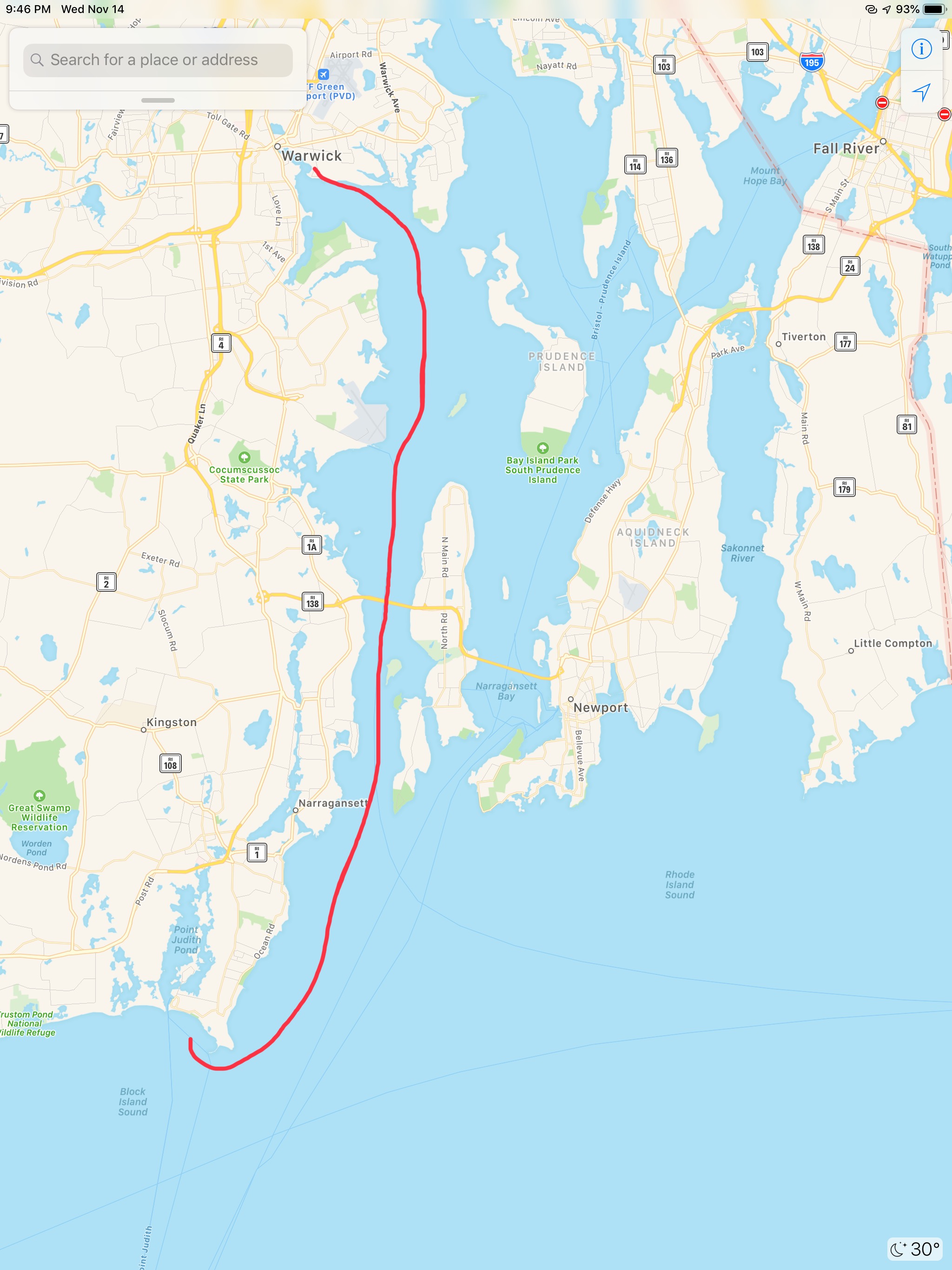
Below is a rough depiction of our second leg of our journey South. Our course took us from Pt. Judith’s Harbor of Refuge, outside Fishers Island to Morris Cove Anchorage in New Haven, CT.
Leg #2 of #Run2Sun2017
Today’s cruise was long but relaxing. The sun was streaming in windows making the pilothouse warm as we made way @ 8.5kts West down Long Island Sound.
We saw only a few sport fishing boats and had to dodge the occasional ferry crossing our path.
Ferry Crossing Long Island Sound
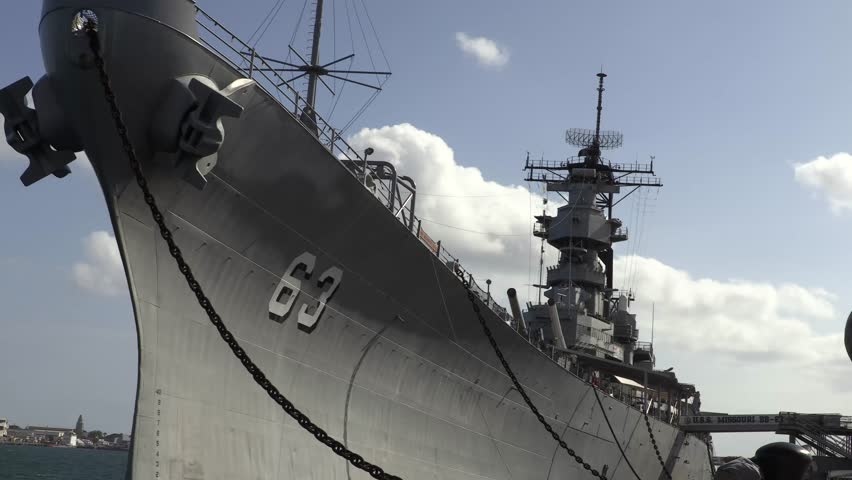
Every captain knows it’s better to take the stern of larger vessels rather than attempt to cross her bow. Ten or so years ago I had a close with a US battleship @3AM in pea-soup fog in Norfolk, Virginia’s entrance channel. Our close call was not a crossing issue but instead the warship was inbound in the channel and was not basting fog signals. After they suddenly appeared on radar from under the Chesapeake Bay bridge/tunnel we quickly blasted our horn. When they responded with their horn I swear my ears blew out. The warship quickly passed us not 100′ off our port beam (frightening in the fog). A shout out to that day’s offshore crew – Eddie, Sean and Amy who can attest to this poop-your-pants experience.
Stay Clear of Warships
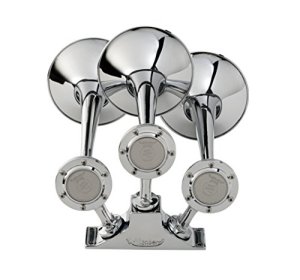
Kahlenberg Air Horns
After this harrowing experience, we installed Kahlenberg triple trumpet air horns as well as AIS (Automatic Identification System) in Simple Life.
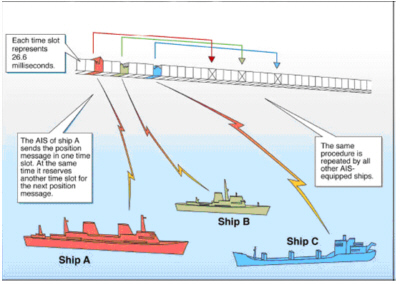
How AIS Works
AIS equipped vessels can each view on their chart plotter the other’s vessel name, size, speed, heading and course-magnetic. AIS works by sending & receiving digital data over VHF channel 70 so that two ships can see each other on their chartplotter screens even without radar. I have also learned to that programming your marine VHF with a MMSI # make ship2ship communications easier when it’s dark or foggy.
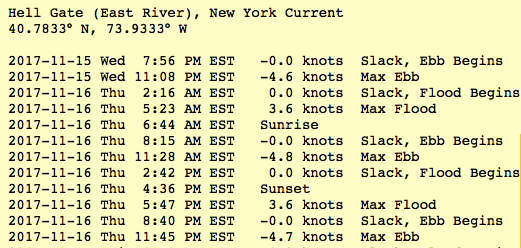
Hell’s Gate Current Table
Tomorrow our plan is to push west down the coast of Connecticut with hopes of catching the 4.8kt ebb tide through the East River (where the dead bodies are found on many Law & Order episodes). Kelly & I always enjoy the East River’s Hell’s Gate (where the Harlem River meets the East River). Hell’s Gate is infamous due to the strong currents that mix in the way a washing machine mixes water.
We hope to make the Liberty Island Marina in Jersey City by sunset on Thursday. We’ll spend two nights at the marina while we wait for more favorable weather for our trip down the Jersey coast. Until then we’ll just sit on anchor watching the lights from New Haven.
Our departure was later than expected but Steve Harding and Sean Flynn helped us get out before the sun set. Thank you both.
Before leaving the marina we stopped to fill up the water tanks with 450 gallons of water. The water was turned off on our dock due to the recent freezing temps and the next fill will have to be further South.
Taking on Water Before Departing Warwick, RI
The seas were fine in the bay, not bad (for mid-November) after taking on 350 gallons of diesel @ Wickford Cove, RI . We proceeded to run into the darkness until anchoring in Pt Judith’s Harbor of Refuge. The dogs don’t like the swell but are happy now that they are on anchor. The only issue we have is PooP.
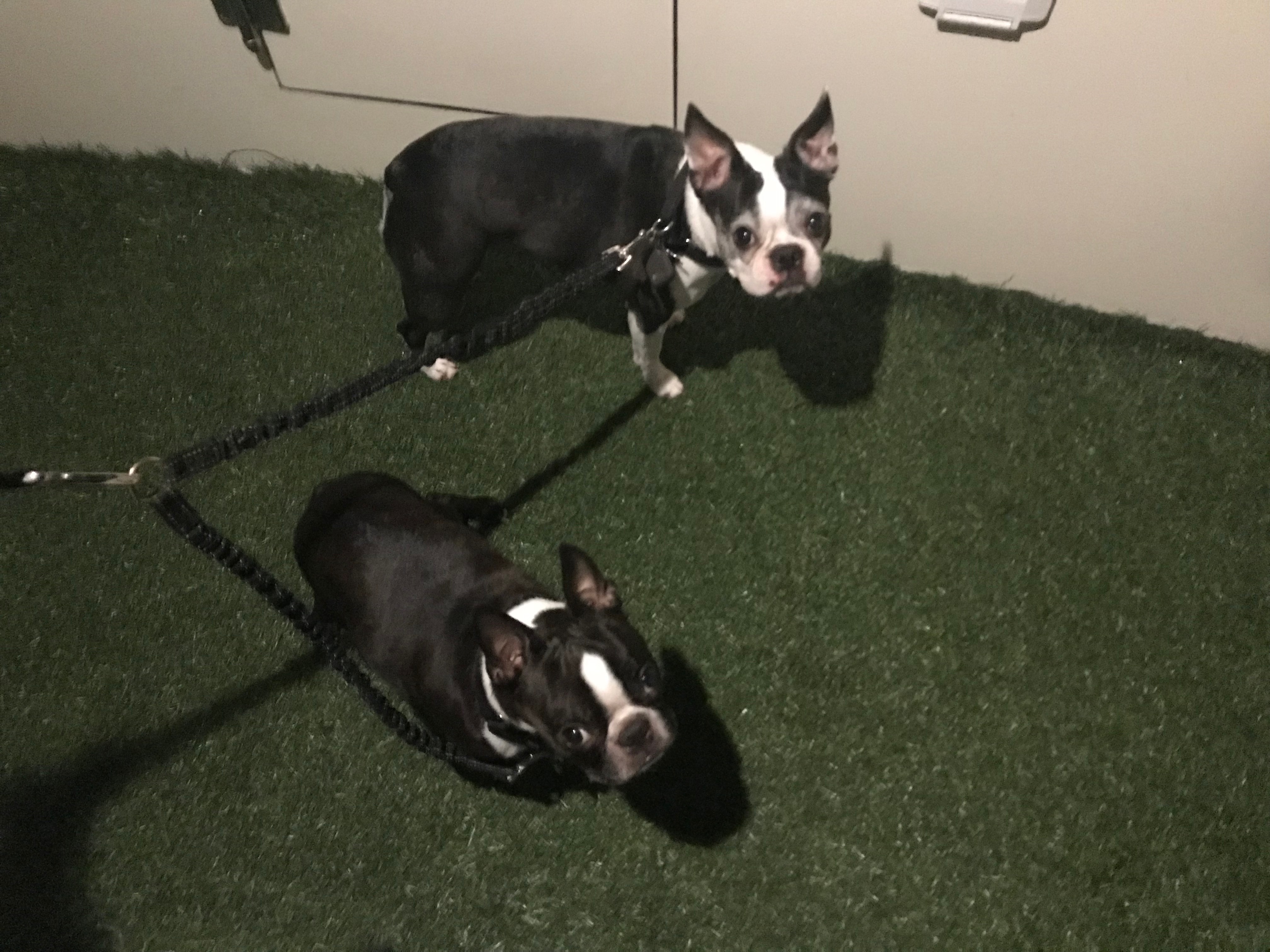
We prefer the beach for pooping
We made the decision that the dogs will do “their business” on the artificial grass we placed in the cockpit. This saves me from making beach runs every morning and night to let the dogs have their time ashore. While I usually enjoy these dinghy rides… it is November. One of the best features we added to the boat was diesel-fired forced-hot-air heating that is ducted throughout the boat. The ride here was warm and dry in the raised pilothouse. Our plan is to celebrate our first night on anchor and awake with the sunrise & get underway. We are the only boat in the anchorage and with the moon being a waning crescent and overcast skies the anchorage is dark.
Dark Anchorage lit only by the lights from shore
Tomorrow, we want to put as much water under the keel as we can.
Getting South to warmer weather is our priority. We really appreciate all the great comments from our friends & family and hope you continue to enjoy our blog. We will do our best to post as often as we can.










 MV Simple Life
You must be logged in to post a comment.