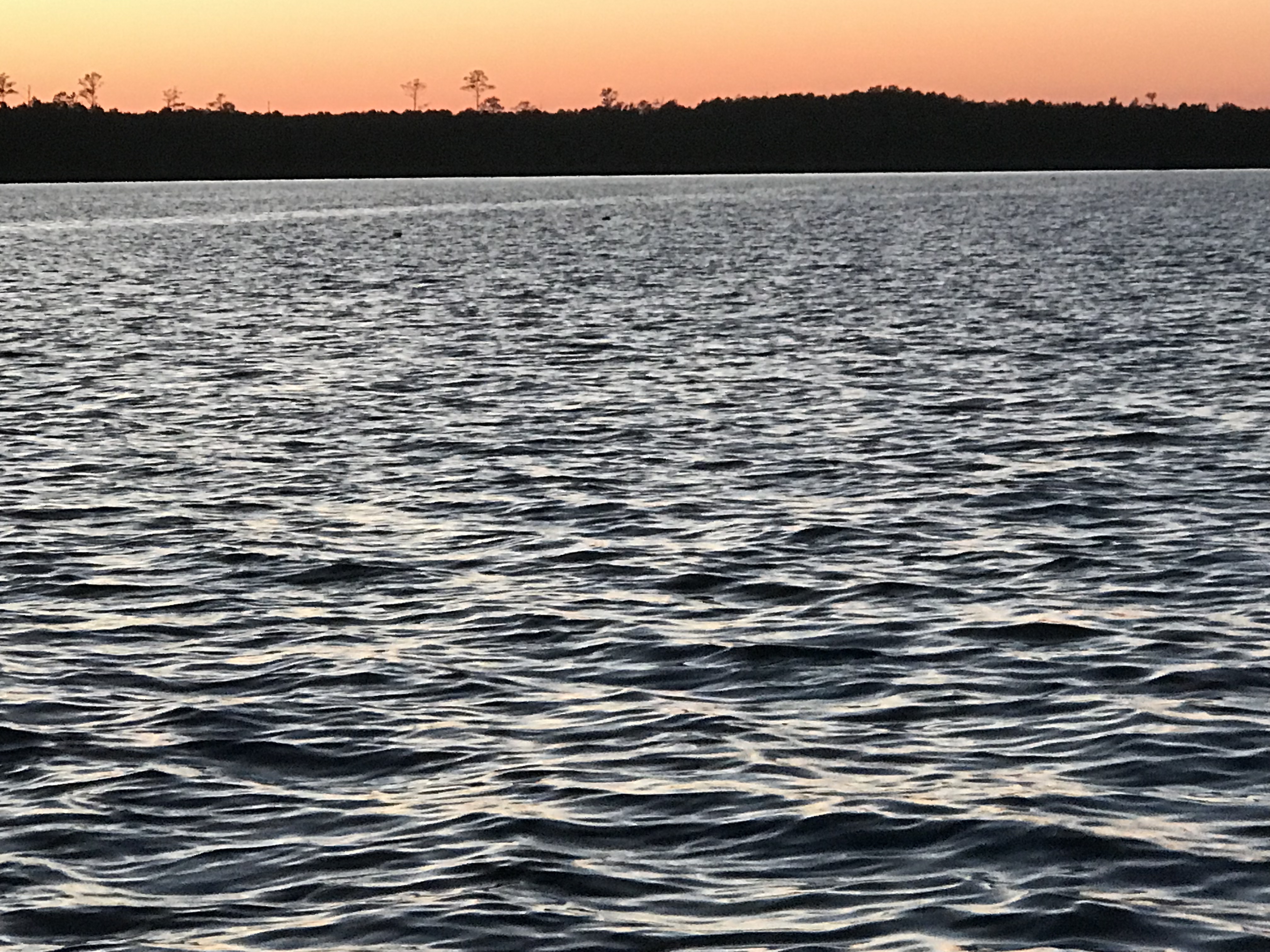
36 Hour Solo Offshore

4AM and my iPhone alarm is buzzing. I need to weigh anchor and get underway before the 4:38AM start of the Winyah Bay inlet’s flood current. Somehow I lose track of time and don’t get underway till 5AM. 

Flood Current in Winyah Bay Inlet

First light won’t occur until 6:24AM. 

First Light is 6:24AM

I weave my way through the other anchored boats quietly without shining my spotlight directly on them. It’s dark but the radar and spotlight are helping me find the daymarks and buoys that line the channel out the inlet and into the Atlantic. 

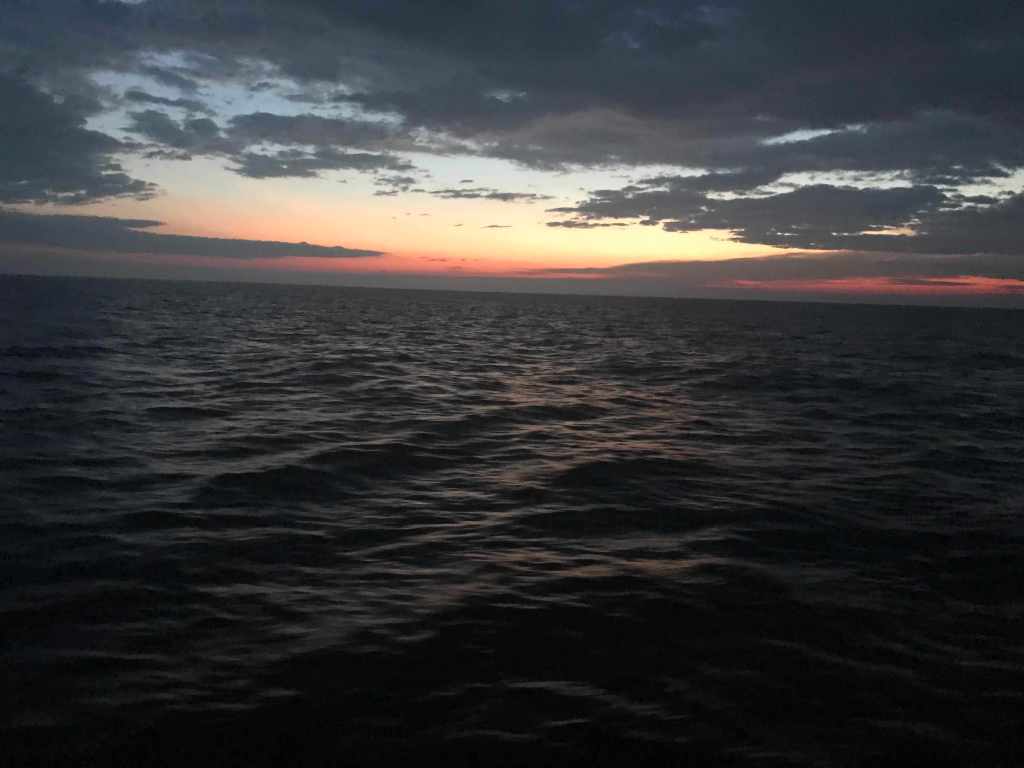
Now at 6:05, 19 minutes before first light, if I look to the east, I can differentiate sky from the sea. 

Darkness is lifting

Moments later and First Light has arrived.

First Light on the Atlantic

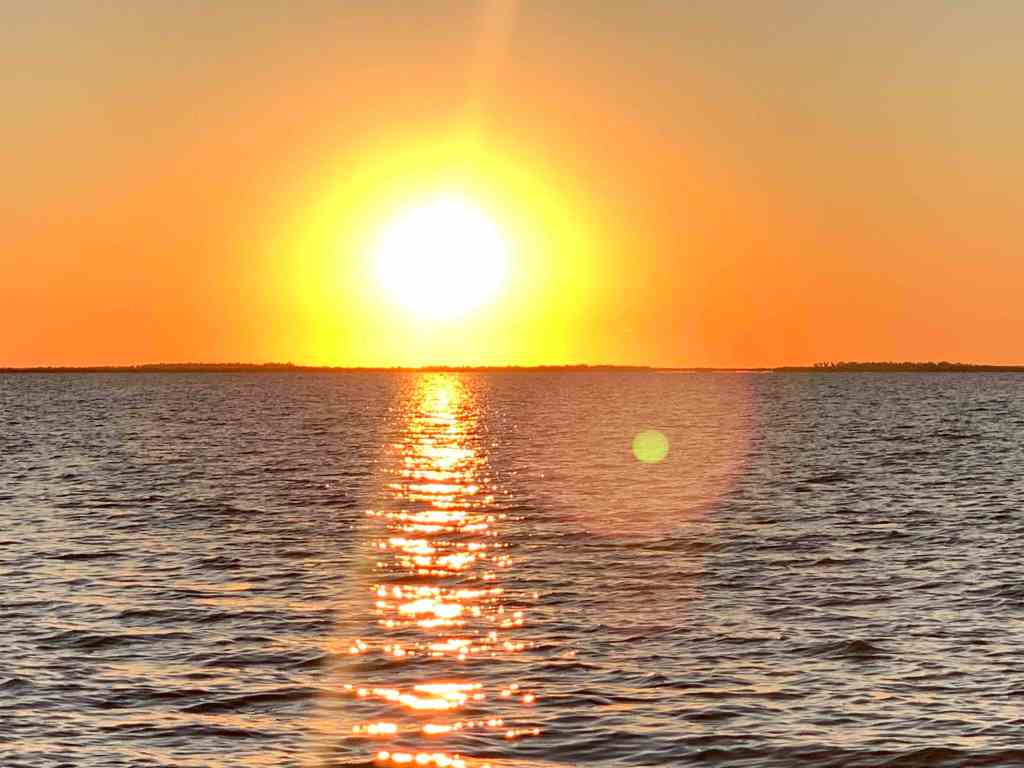
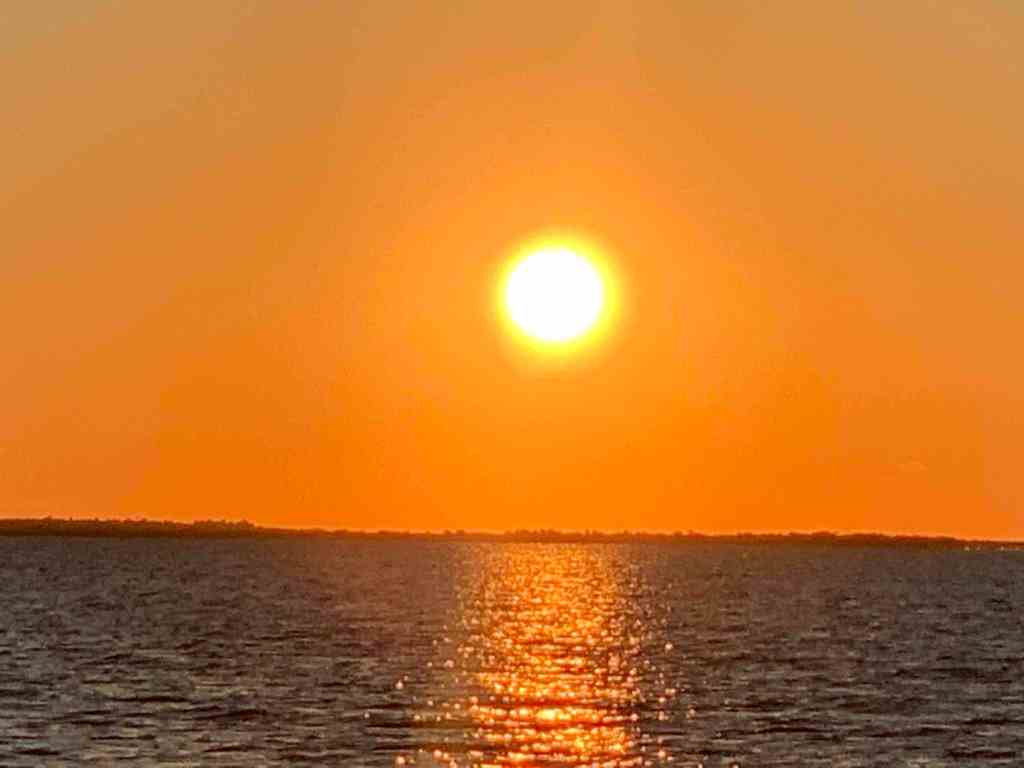
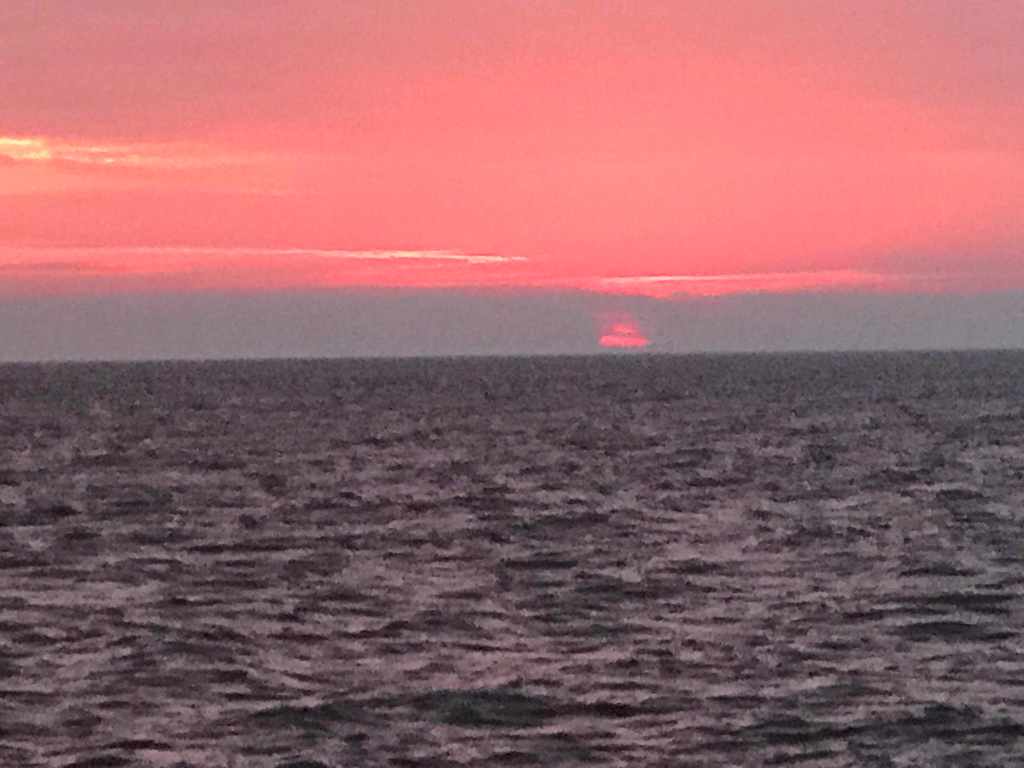
Now it’s 7AM and at the sun is looking like a giant lightbulb on the eastern horizon.

Giant glowing lightbulb

Friends have found me.

I am amazed that they appear to glide without tail movements for quite some time

As the day goes on the following sea can be felt. As I walk through the salon I can hear the rhythmic sound of my wine glasses rocking back and forth in their upside down holder.

Wine Glasses making squeaking sounds

I open the back door to get a better look at the following sea.

Following Sea is catching me

I spot my first ship around 2PM. 

First ship spotted

It’s cargo vessel Triton and it will pass less than a mile from me with our current course and speeds. 

1211′ long and moving at 20.2kts

Though I will not pass any other recreational traffic this far out I do come upon a second, equally as massive container ship on a crossing path. 
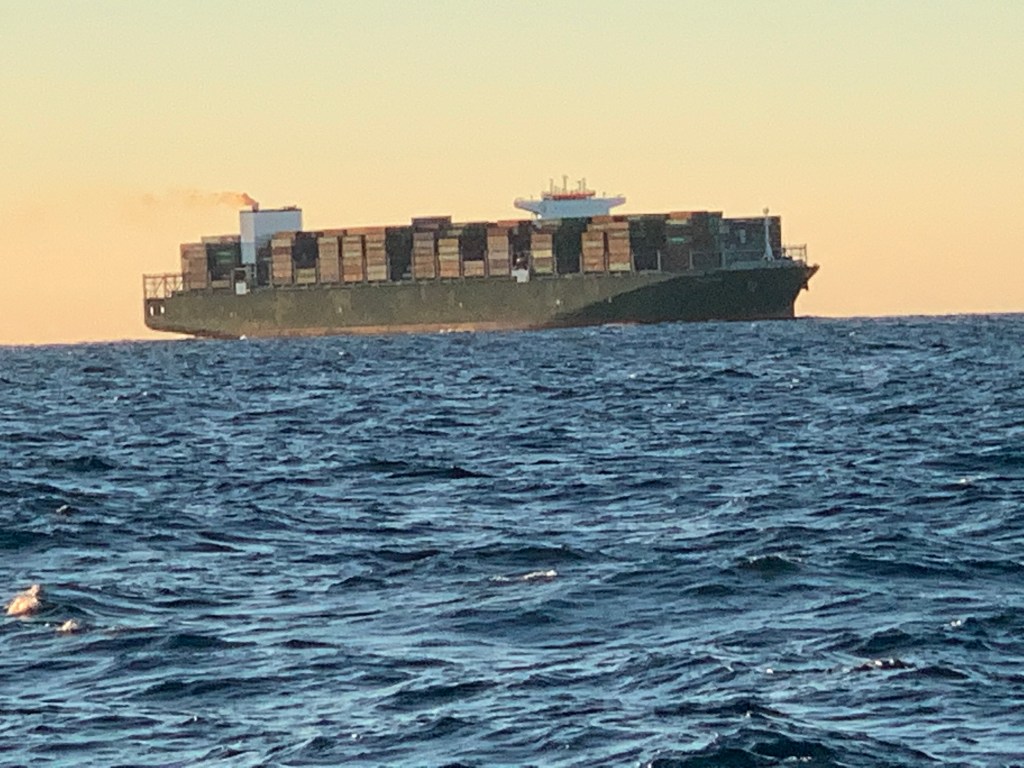
Container Ship crossing my path

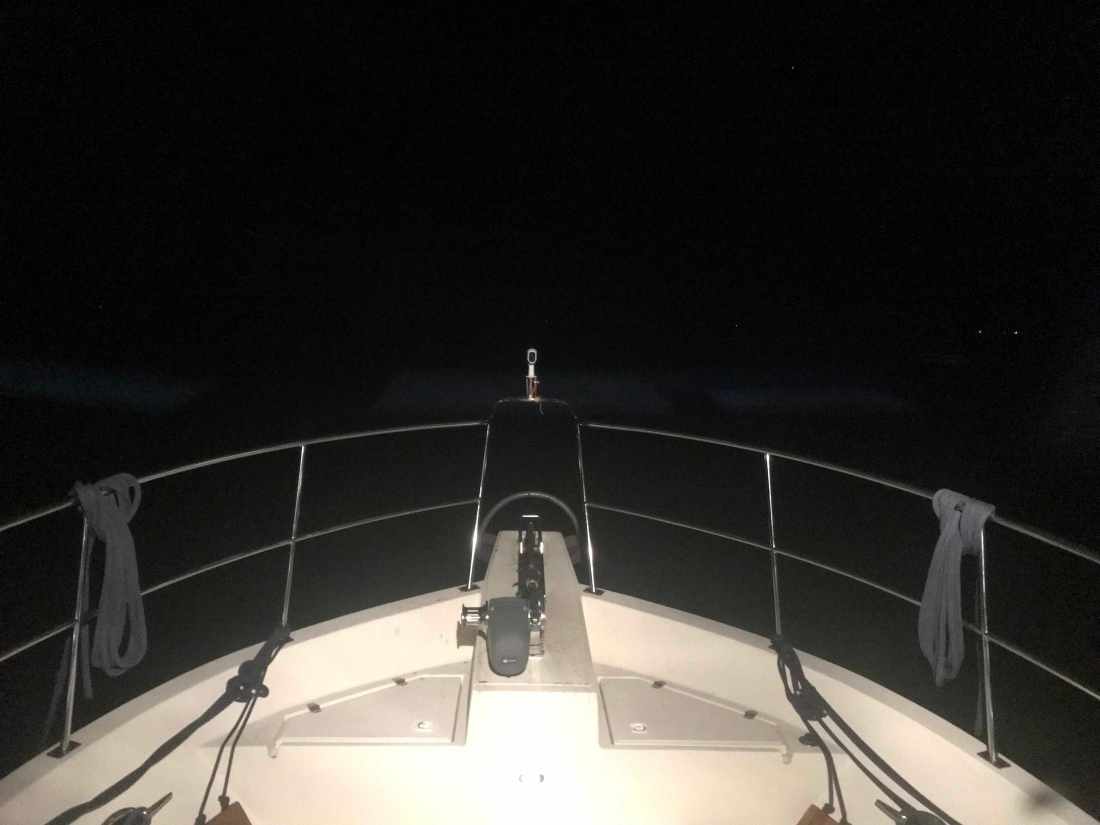
I decide to spend some time on the bow and video as I go

20NM East of Charleston, SC

The sun has begun to set. 

Sunset on the Atlantic

I settle in for the long night. When I go offshore as opposed to running in the ICW or “The Ditch” as it is called, there isn’t much to do. I plan my route and set my course and speed. The autopilot is engaged so no need to hold the helm. I do however need to maintain a constant watch for buoys or passing ships. My chosen route is a rhumb line between Winyah Bay Inlet and St. Augustine Inlet. Rhumb lines are courses navigators use to make it easy on themselves. A rhumb line only requires the captain to steer a constant magnetic bearing. I can hear the geometry nerds shouting… “The shortest route on the surface of a sphere is actually the arc of a great circle!”. On mercator projection charts a rhumb line is a straight line. My rhumb line route takes me about 45NM offshore. 
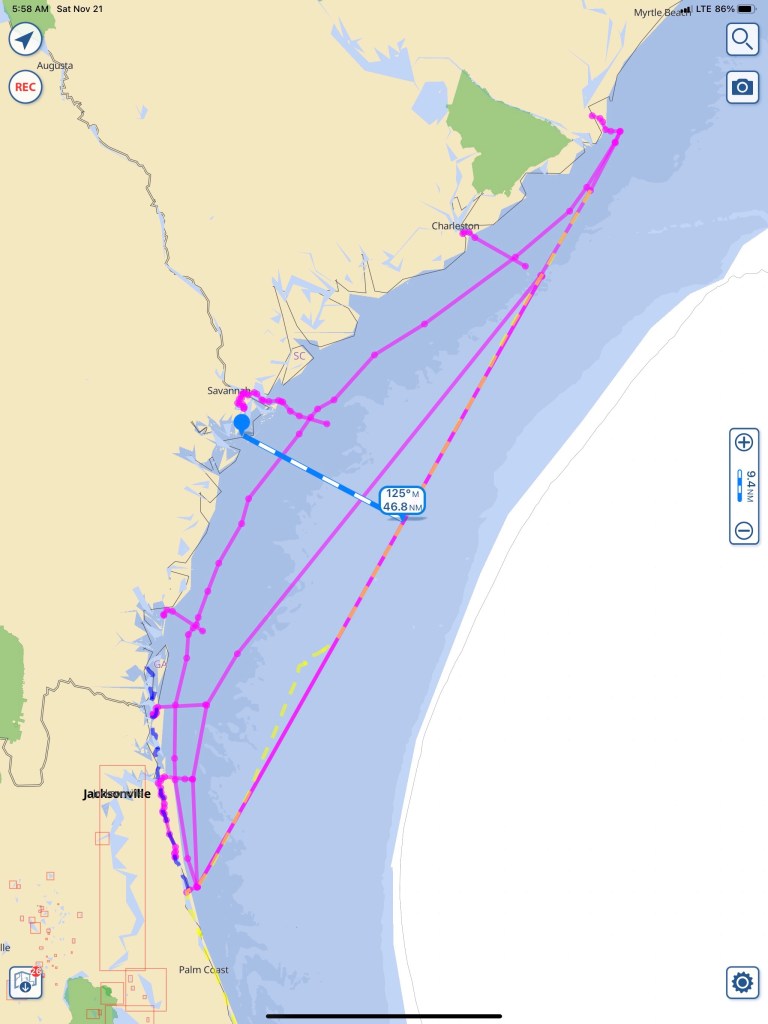
Shoreline Route is the closest, St. Mary’s Inlet route middle and St. Augustine Route is the furthest offshore. Bailout routes in the inlets have been platted as well

Explained another way… If you stare at the picture of “globe Earth” below, keep this in mind. The longitudinal lines come together at the North Pole. If you are sailing either of the two routes drawn below, your compass needle’s would align to the longitude lines. The “rhumb line” route you steer a constant heading according to the compass while the shorter “great circle” route has you starting out at one compass heading and constantly steering more east as you go from left to right.

I don’t anticipate seeing many ships or buoys this far out. My watch duties are reduced to:

  • Scanning the horizon
  • Checking radar
  • Checking my boats position to my route every three minutes or so. 
Note: you can see I zoomed way in and make small adjustments to the autopilot to stay close to my route line.

 With minimal watch required it’s time to watch movies while at the helm. I preload media onto my iPads so when a cell signal is nowhere to be found… I still have entertainment. 

Red Alert!

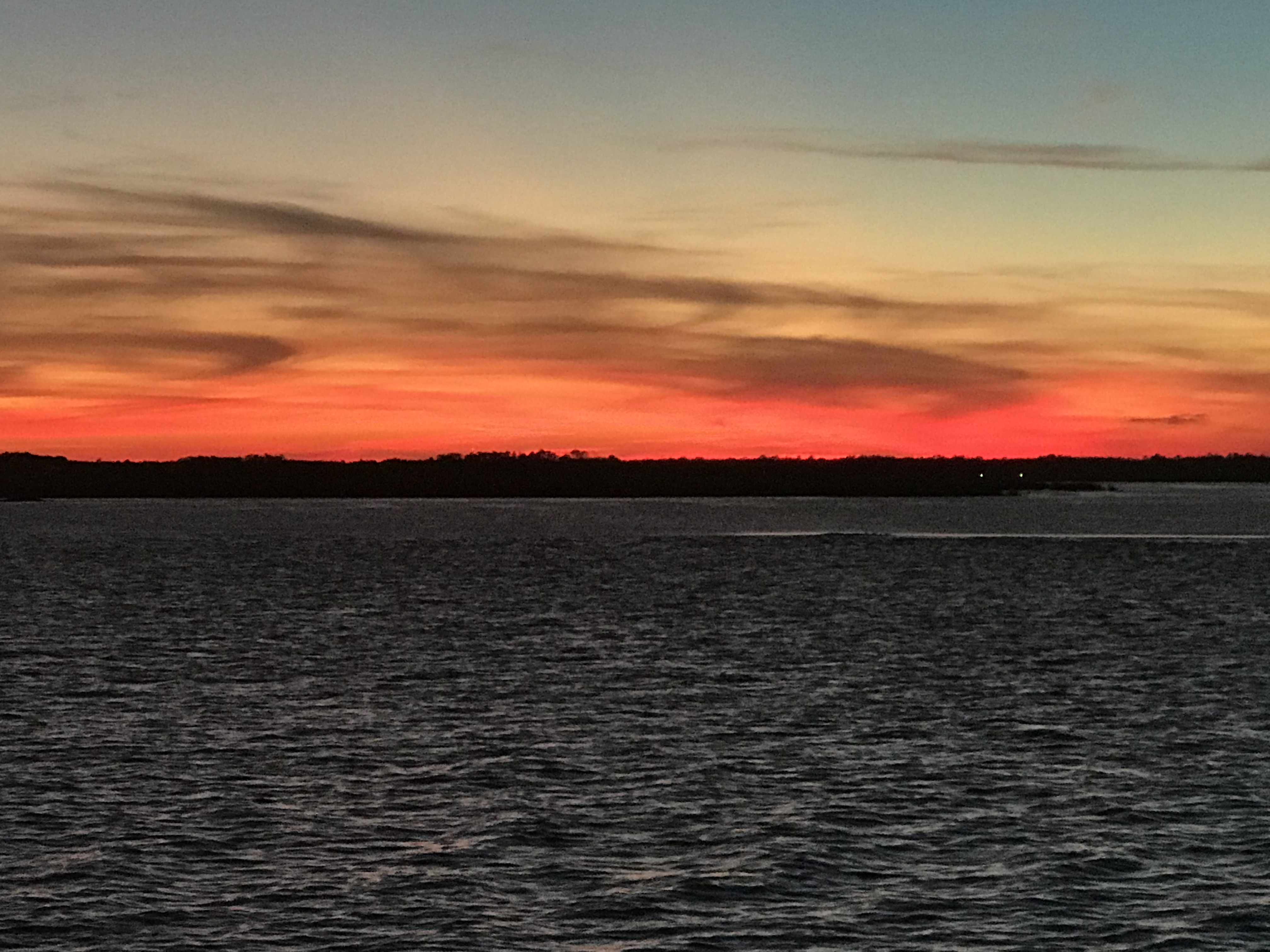
Tonight’s Sunset is a burning sky. 

As the sun sets… the burning sky gives way to a night sky. This is why we boat. This is an addicting drug.

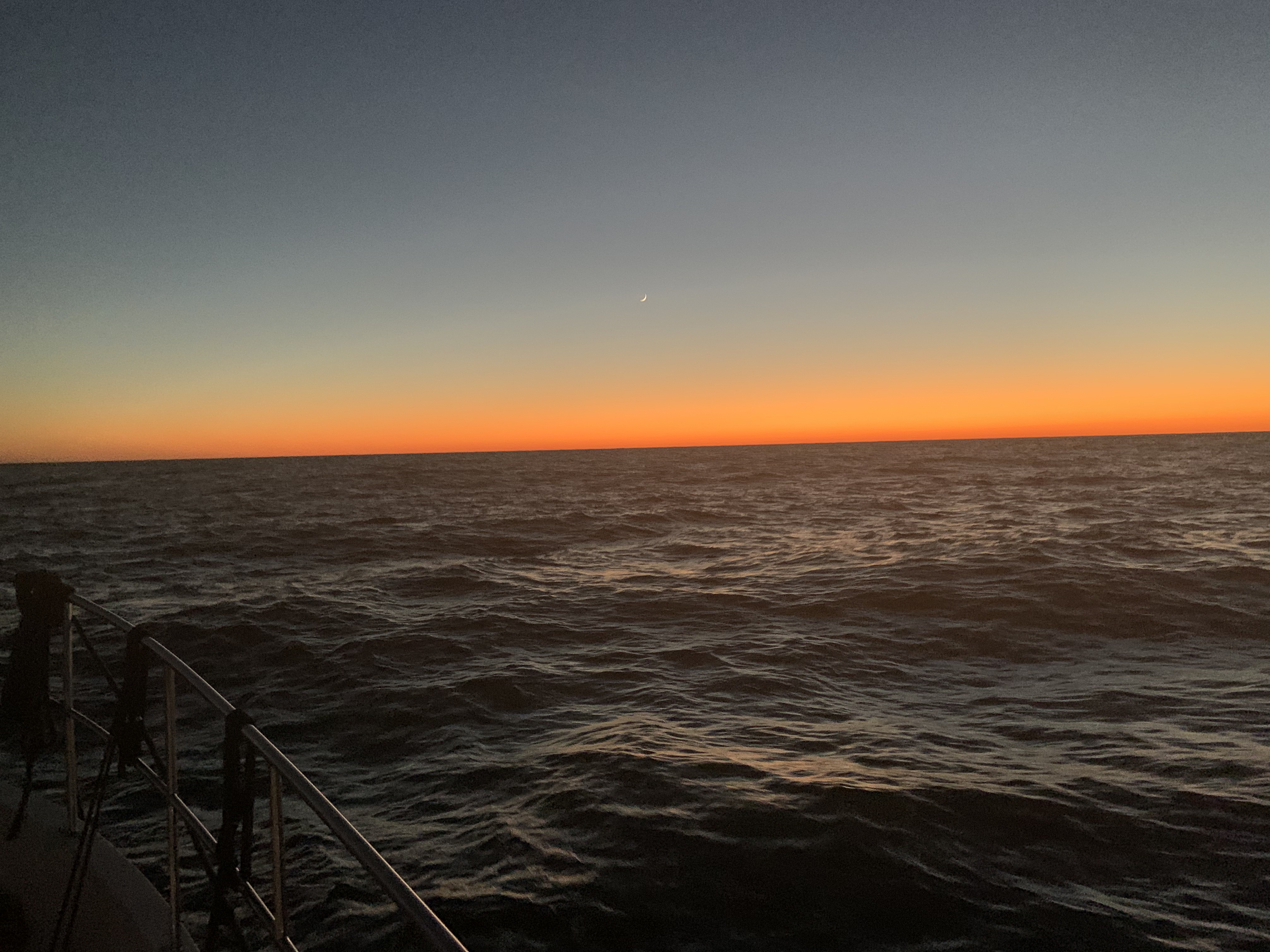
Crescent moon hangs over a horizon of fire

The sun slides beneath the waves. A waxing crescent, hangs above the flames of a burning horizon. I’m sure I’ve seen this surreal painting. An artist’s dream or mine? In a mere hour’s time, the moon follows her partner beneath that distant horizon. The boat surges forward with each wave, piercing the black velvet bedsheet stretched before her. The blackness offers up a gift. The stars are the only things left around. This far out to sea, the glow from land is all but snuffed out. The moment is now. I douse all the lights aboard and run to the bow. My bare feet upon the cold salty deck.  The diesel’s growl is but a whisper to the parting ocean that crashes to both sides of me. The deck pitches, yaws and rolls and I am forced to a seated position. Forward facing into a brisk invisible wind. I lay prone. Above me the stars fixed in their galactic positions sway to and fro. It’s an undeniable existential moment. Your presence in this universe comes rushing into your headspace. Why am I here? I am here! I am certain my presence is to be the mirror mother universe uses to gaze upon herself.

CaptMahty

At night when I’m underway laying on the bow my steaming light illuminates the American flags I fly on my VHF antennas. 

Steaming light on the American flags

Sometimes If I want to be seen, I  turn on my flybridge lights to better illuminate for passing ships. 
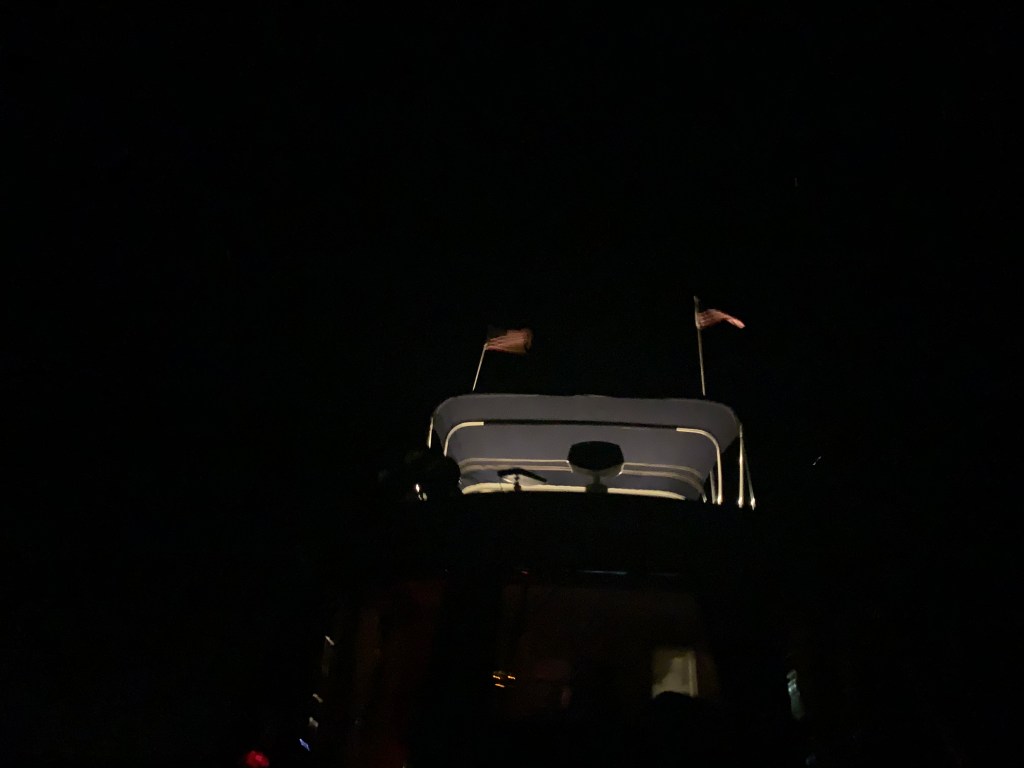
Flydeck lights on

As I look down at my iPhone’s moon app. I notice that as the boat is rocking the app developers have coded the moon app’s background to move with the iPhone’s accelerometer. The apps stars appear to sway like the ones above my head.

iPhone Accelerometer

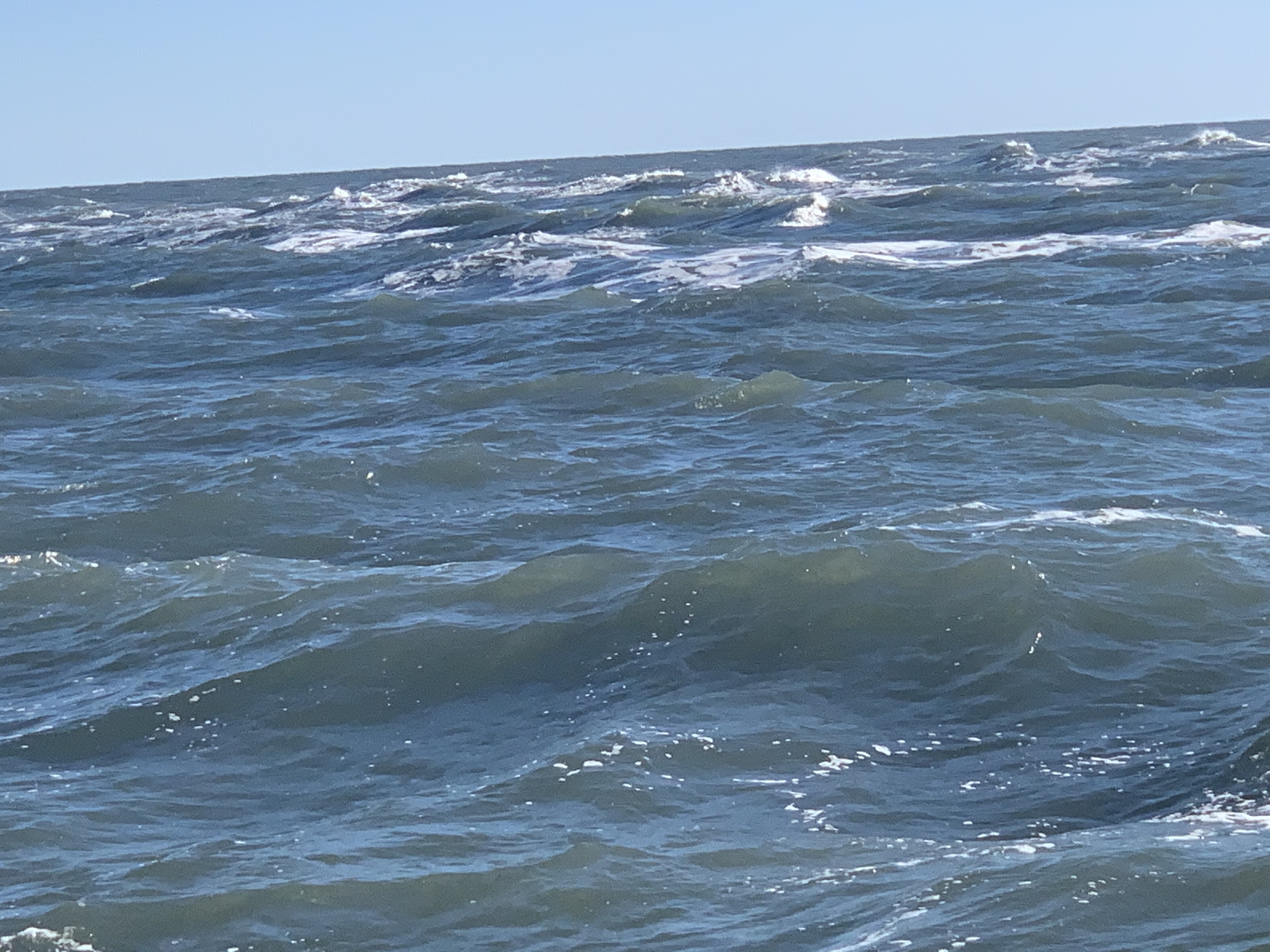
The night was long and dark. The 5’ following sea could occasionally be seen as its white froth breaks and roars past the front of the boat. I cannot keep pace with the following sea so each wave lifts the boat’s stern and eventually I slide down the face of the wave as it slips past me.

When Sunrise comes my weariness subsides and I feel a second-wind. 

I welcome the arrival of the sun

Friends are here.

They glide through the water with so little effort

Now 3PM, I’m making my way into St. Augustine Inlet. Hurricane Dorian wiped out all the inlet markers so there are no buoys found marking the channel. No worries though as with the incoming waves it’s not hard to spot where the shoals are. 

Shoals on the South side of the STA Inlet entrance

As I make my way in the inlet a beautiful Palm Beach motor yacht passes me.

STA Inlet Palm Beach yacht

Once inside the jetty walls I find a sailboat peacefully making way. 

Peaceful

I have been told that St. Augustine is a favorite by many a cruiser. Seems every time I arrive here I’m in a hurry to be someplace else. This time is no different. As I pass St. Augustine’s City Marina I view this beautiful yacht resting against the outer dock. 
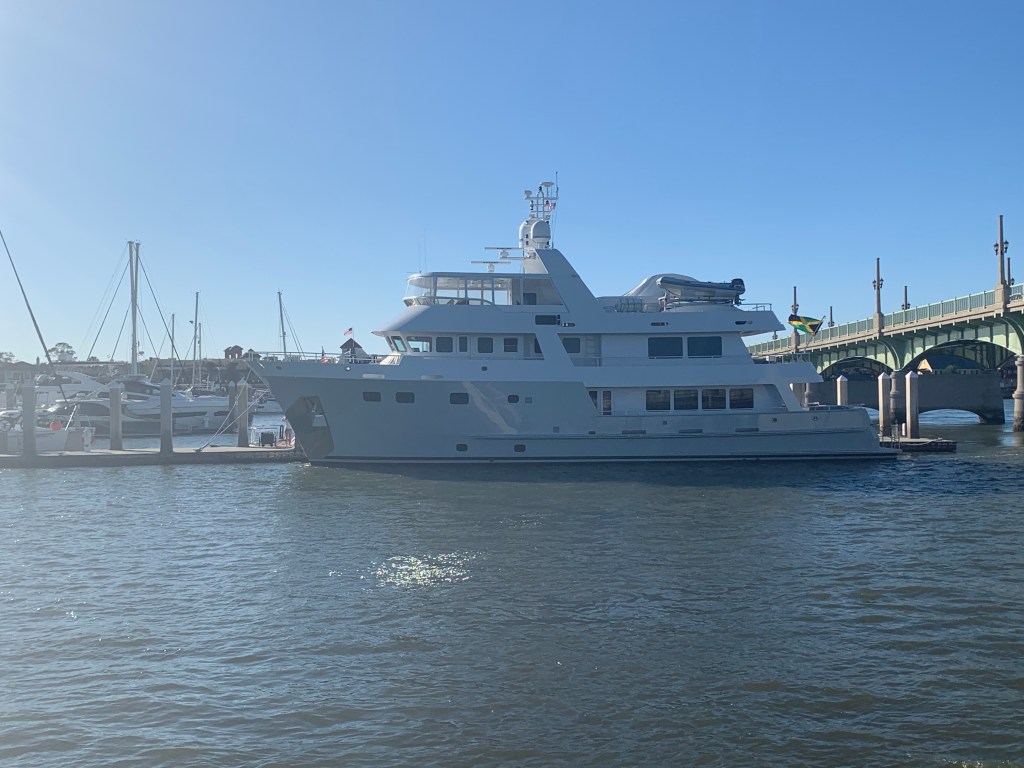
I wonder what the make of this beautiful yacht is?

The Sun is getting low as I make my way south of St. Augustine, FL. 
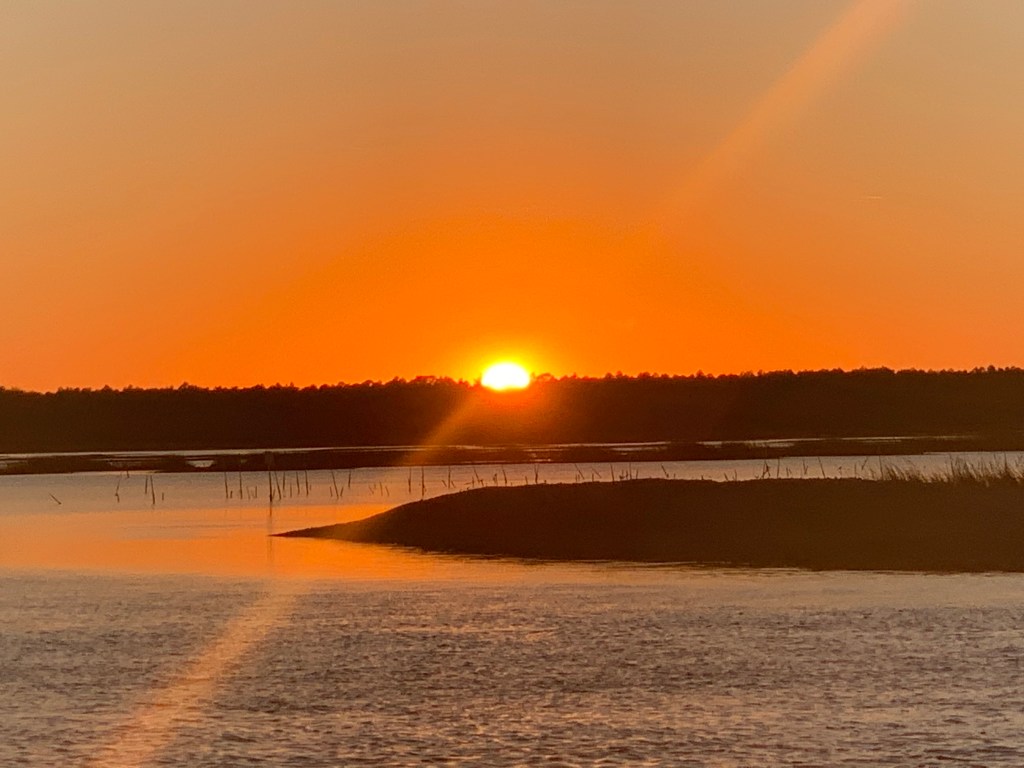
Sun is setting.. better find a place to anchor

My anchorage for the night is Matanzas as it puts me close to where I want to be around noon tomorrow. 
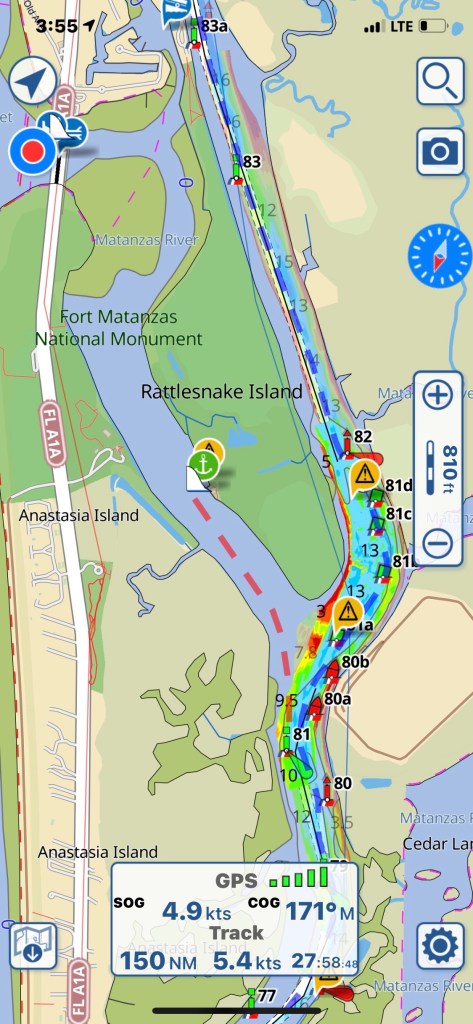
Anchorage off Rattlesnake Island

Now with the anchor down I can finally relax and close my eyes. 

I can finally stop driving the boat and close my eyes

Today’s W04L013 route looked like this. 

W04L013 route

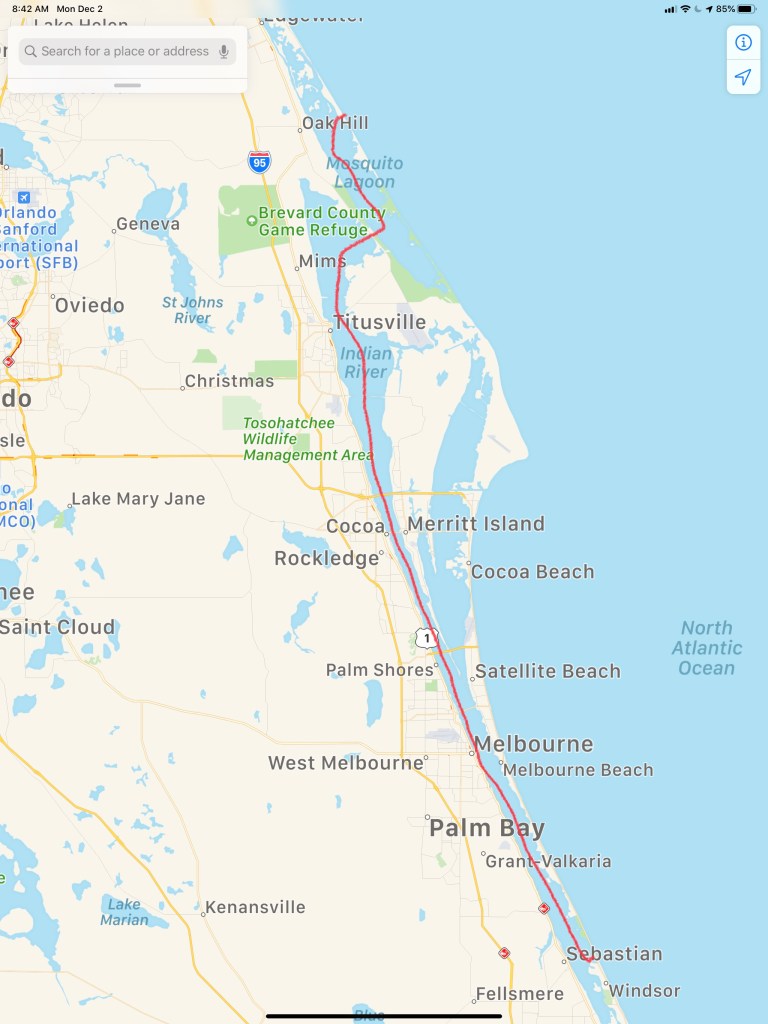
South to Sebastian

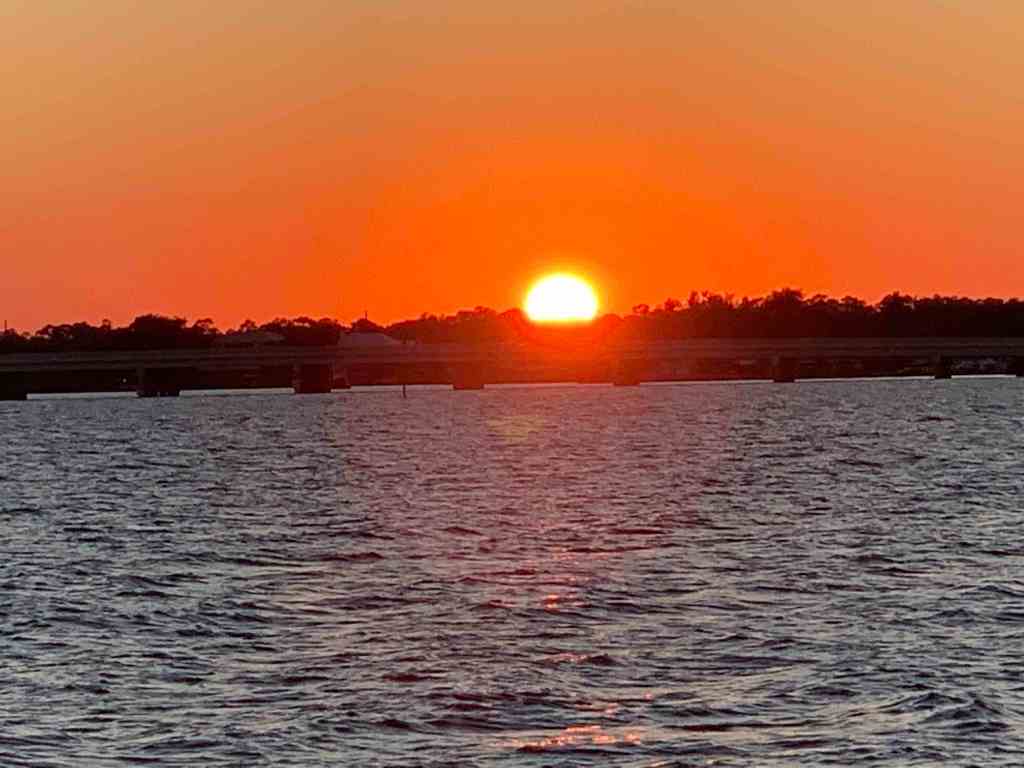
When the sun arose the next morning it treated us to an orange sunrise over Mosquito Lagoon.

“Because the sun is low on the horizon, sunlight passes through more air at sunset and sunrise than during the day, when the sun is higher in the sky. More atmosphere means more molecules to scatter the violet and blue light away from your eyes. … This is why sunsets are often yellow, orange, and red.”

Going under the Cocoa bridge – Look up & around and you’ll find workers trying to get right with the world again.

…”The Cocoa Bridge gives male inmates an opportunity to get their lives back on track. The foundation of the program is the Therapeutic Community Concepts, which are essential to maintaining a drug-free lifestyle in social contexts. With clinical supervision, this peer-led, peer-driven environment encourages the men to become active participants in their recovery.”

Bridges of America, Inc.
Cocoa Bridge

…”The NASA RR bridge is normally left in the open position, except in the case of approaching rail traffic (infrequent). This bridge is the main thoroughfare for shuttling heavy equipment and supplies to and from the JFK Space Center. Spent solid rocket boosters, rocket frames and other various material for the space program are normally shipped on rail and pass over this bridge.”

ActiveCaptain.com

This boat has a super bright light bar atop of it’s hardtop. Heck it was not even that dark out and that light bar was blinding when they were coming straight at us for a moment. I like the idea of having more lights on MV Simple Life. There are some nights when traveling in the pitch black that it would be a big help. I tend to only put my searchlight on for brief moments to not affect my night vision. Maybe I’ll install something smaller under the bow pulpit for lighting the crab/lobster pots at night without destroying my night vision?

Light Bar

I just love sunsets & stars every night on the boat. Too bad I can’t photograph or video the latter.

Our day’s journey took us from Mosquito Lagoon to Sebastion, FL.

Sebastian has a great live music scene. With visiting bands like, Mumford and Son’s and Joe Bonamassa. If we were not trying to get somewhere near an airport, we’d definitely have gone ashore for some live music.

Instead, we spent the night on anchor just inside of Sebastian inlet near coconut point.

Sebastian Inlet & State Park

…”Sebastian Inlet is 36.5 miles southward of Cape Canaveral Light. In May 1983, there was a reported controlling depth of 5 feet. It is further reported that the velocity of the tidal currents reaches 10 knots, and turbulence exists between the bridge and the end of the jetties. Anchoring east of the bridge is extremely hazardous, particularly by the stern. Except during flat calms, breaking and confused seas exist off the mouth of the inlet and inside the inlet as far as the bridge. Conditions worsen with increasing seas or winds and on an ebb tide. Small boats departing the inlet on a flood or slack tide can find it impossible to return on an ebb tide.”

By the morning, we had spun around with the Sebastian Inlet’s incoming and outgoing tide

Sapelo Island to Cumberland Island

Orange in the AM

Sunrises in the low lands of Georgia are amazing.

Sunrise over Sapelo Island, GA

Get Up You Lazy Captain!

If you read the last post, I wrote about how 50 NM / day can be done but you have to get an early start. Well, I didn’t.

9:20AM Weighing of the Anchor

Tortoise and the Hare

Right of the bat I had a much faster boat pass me by. I’m sure he gets his 50NM in before noon.

Raised Salon Cruiser

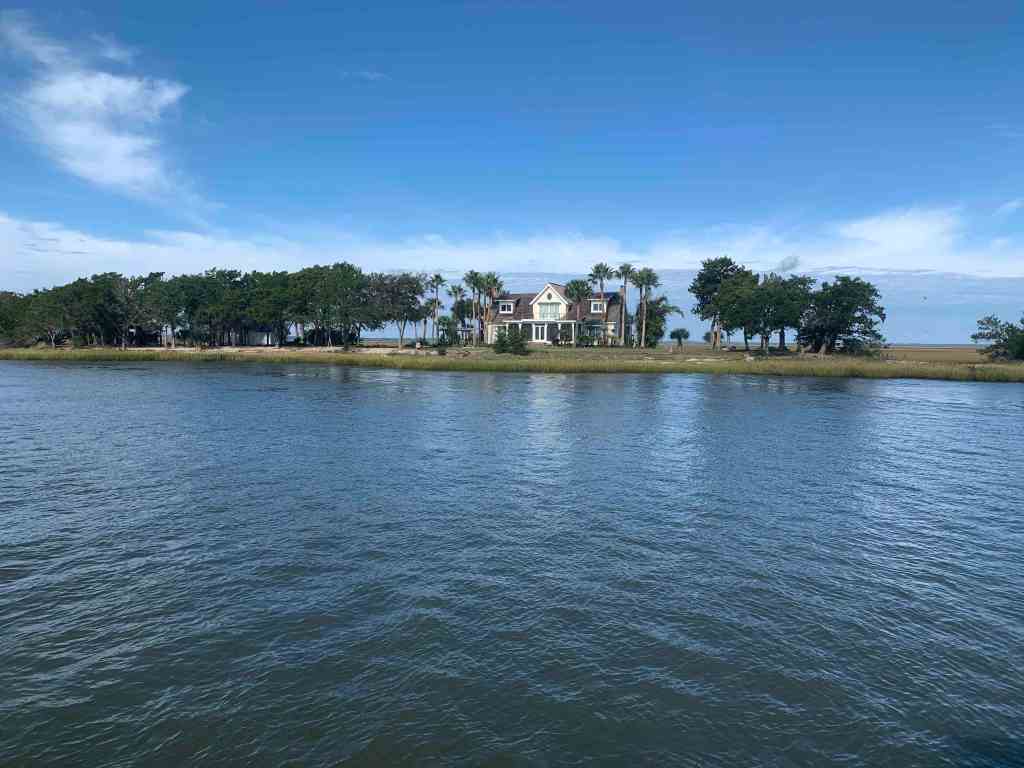
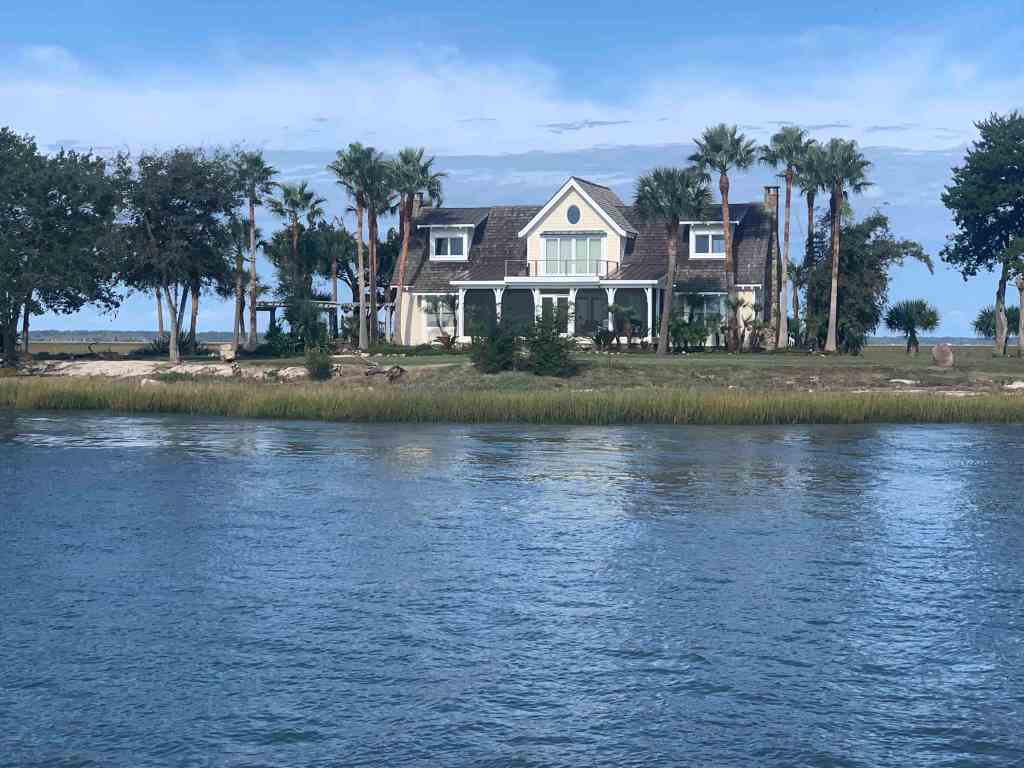
Anyone Home?

I found this home on a small island interesting as I passed.

ATONs

ATONs (Aids TO Navigation) or buoys if you will, are important things to pay attention to on the ICW.

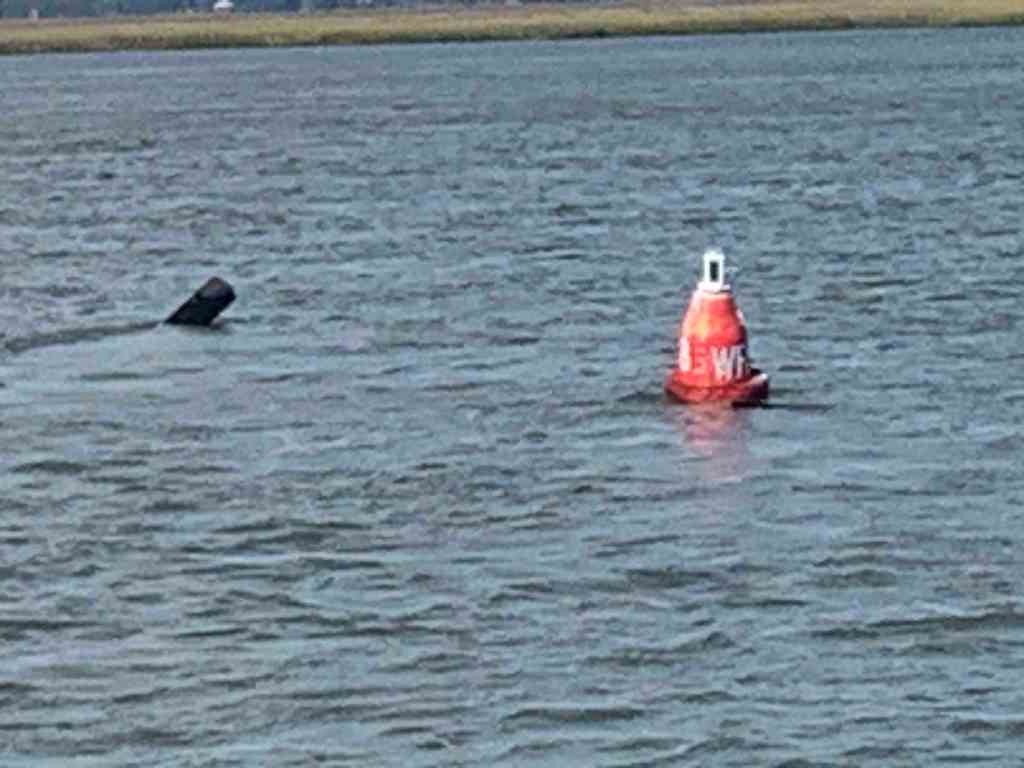
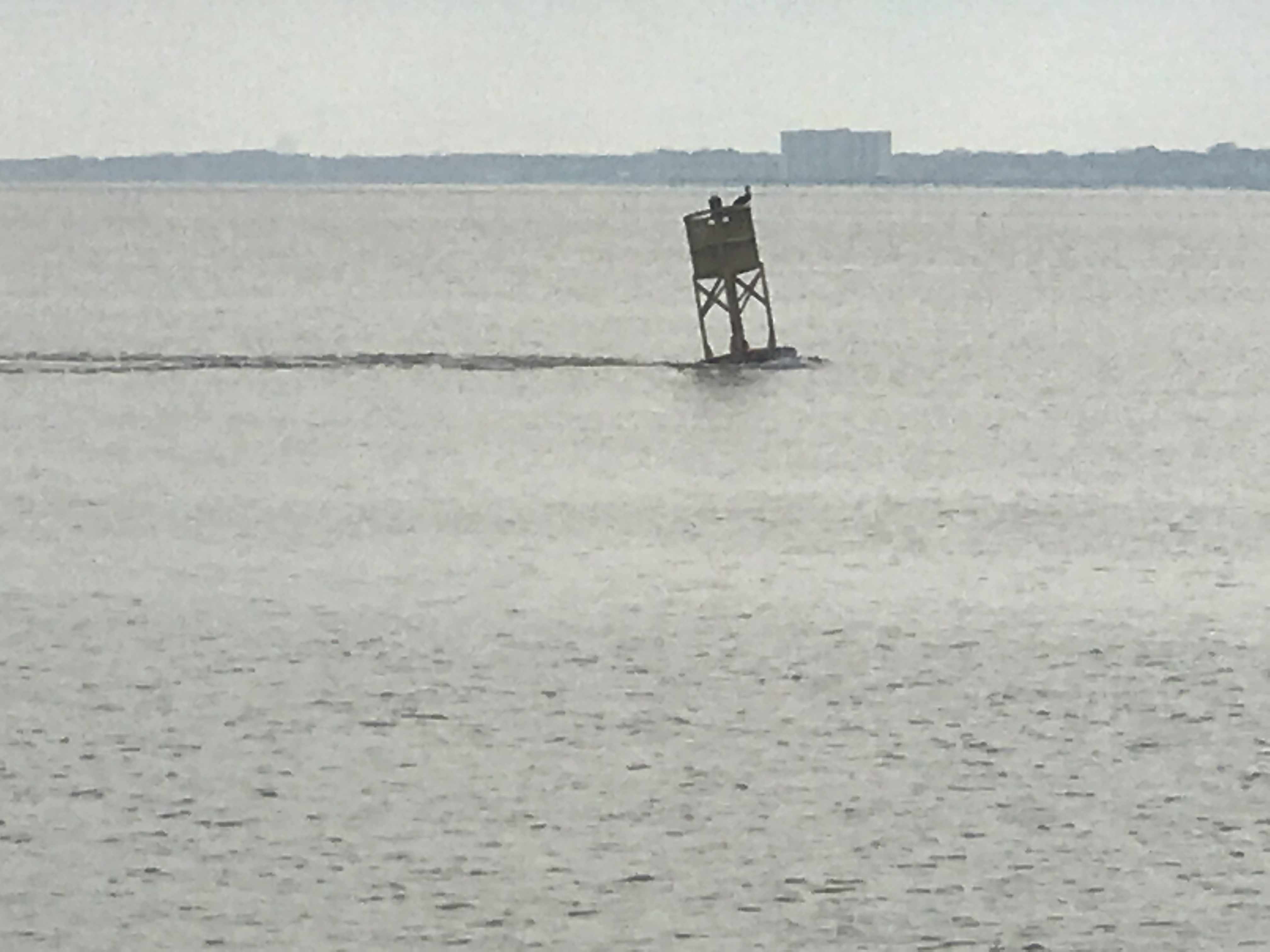
deadhead sticking up behind a buoy.

World is Ablaze

As I was approaching Brunswick, GA it looked like the world was burning.

No idea what was burning but there was a lot of smoke

Traffic

I hailed this tug & barge on the VHF and let him know that I would push over to the edge of the channel as soon as I rounded a narrow bend in the river.

The Unexpected

Next came something I did not expect. When I first saw it I had no idea what it was. I spy’d it with my binoculars but I still could not identify it.

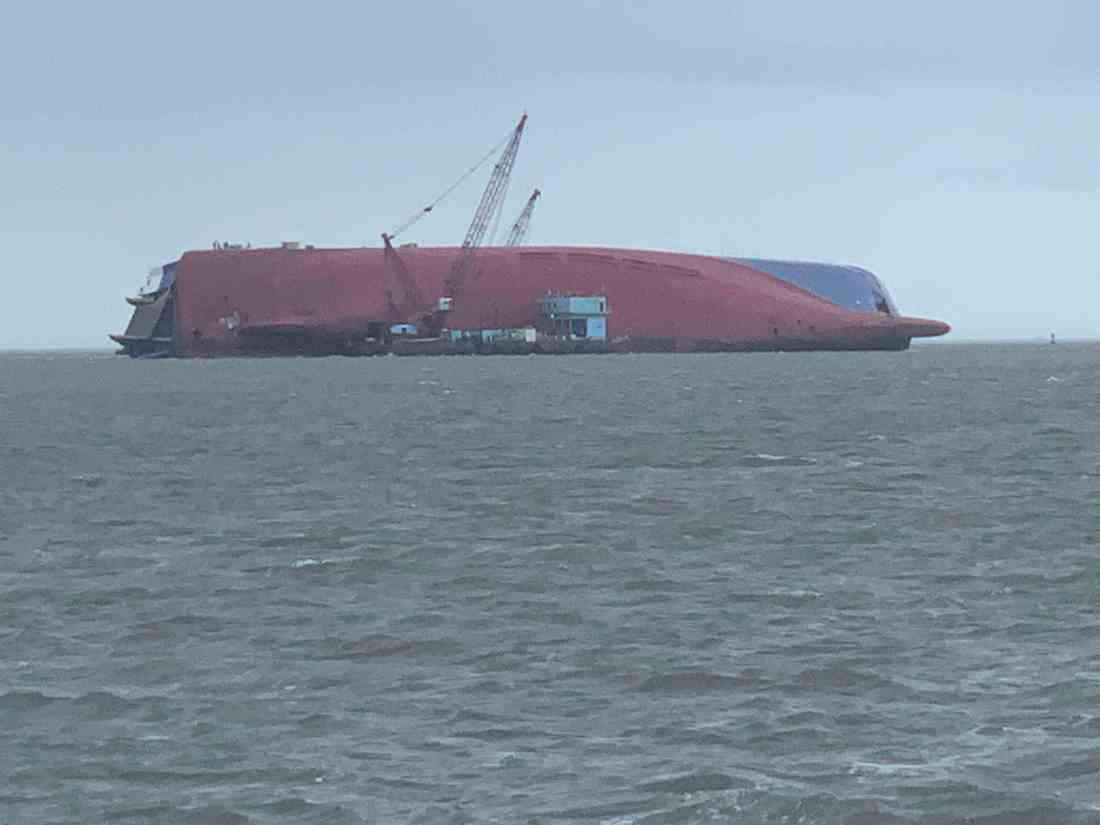
What is that?

Turns out this is the underside of the 656 foot long Korean RoRo cargo ship called “Golden Ray” that capsized in Cumberland Sound on September 8th, 2019. While 4 of the 24 crew members were missing 3 were later rescued and even the 4th was pulled out alive. They were trapped with a fire that was roasting them alive while they were stuffing their pockets with ice to stay cool.

Slow as She Shallows

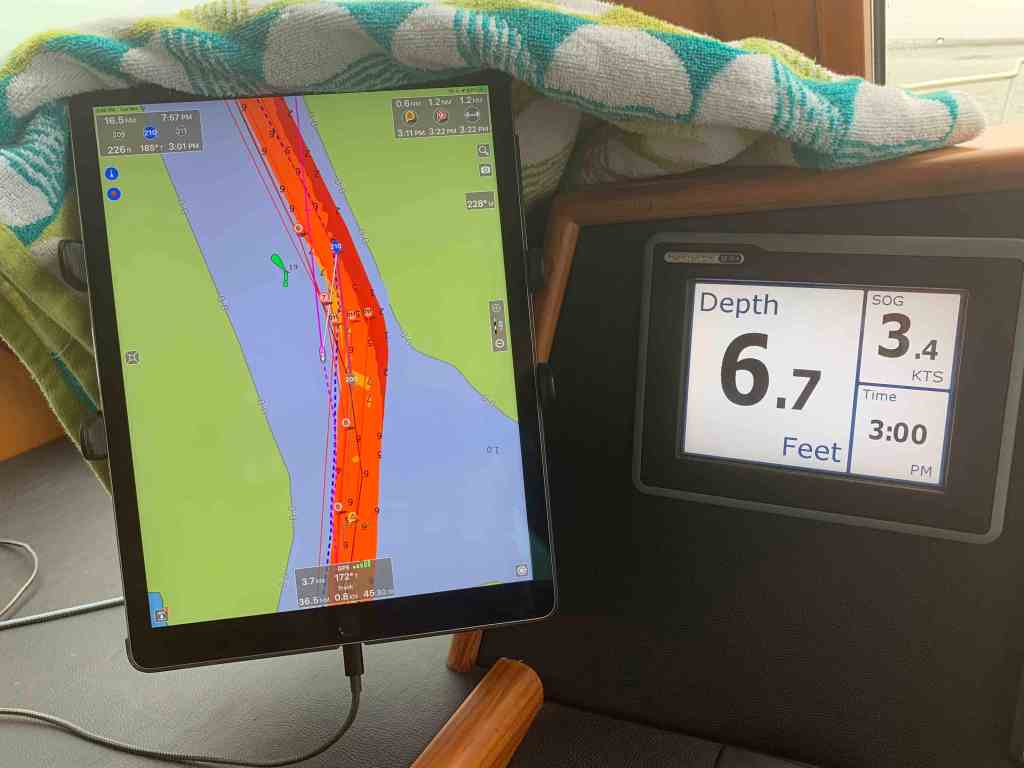
I was making my way down Jekyll Creek just off Jekyll Island. I found shallows.

Note the slow speed for shallow water

Foreboding

As I glanced up at the sky I could see that it was getting lower and darker.

A darkened sky ahead

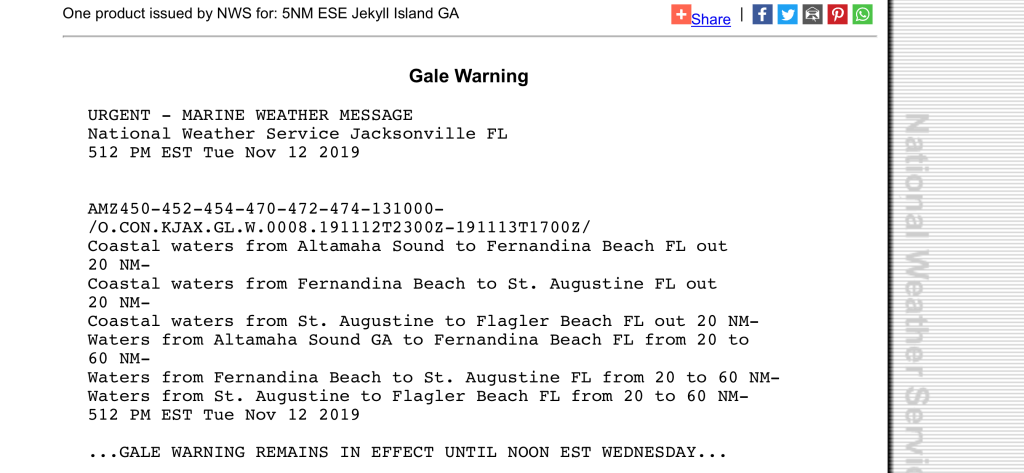
Time to stop being a lazy captain and check the weather.

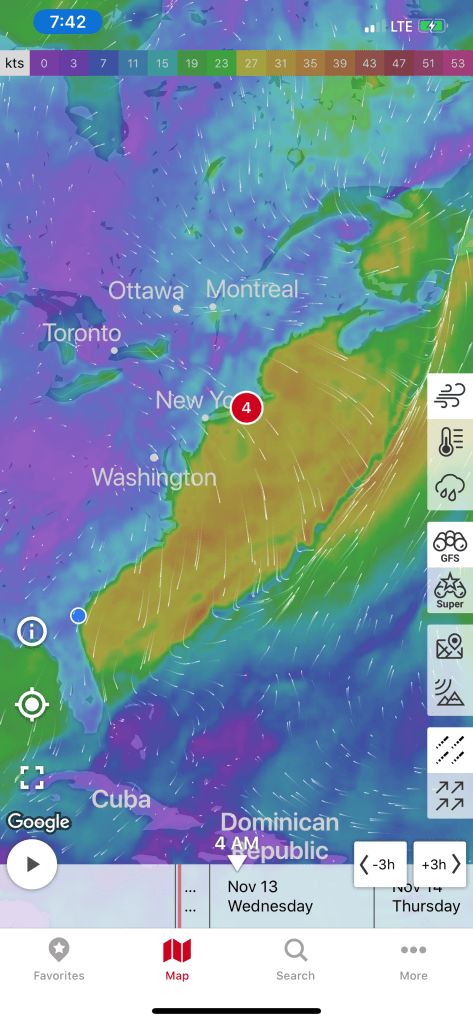
Gale Warning starting at … Well NOW
Offshore Weather Front

You Ain’t Be Around if You Ain’t Been Aground

I was happy that my anchorage was quickly approaching. However, before I could get to my chosen anchor location I came around a turn in the bend to find this trawler aground.

Like I always say, “If you want to know where it’s shallow… it’s where the birds are standing”

Have You Been Paying Attention?

Have you have been paying attention? Did you read my last blog post about how I plan on making 50NM legs like this leg shown below?

W03L017 Crescent River Anch – Delaroche Creek Anch

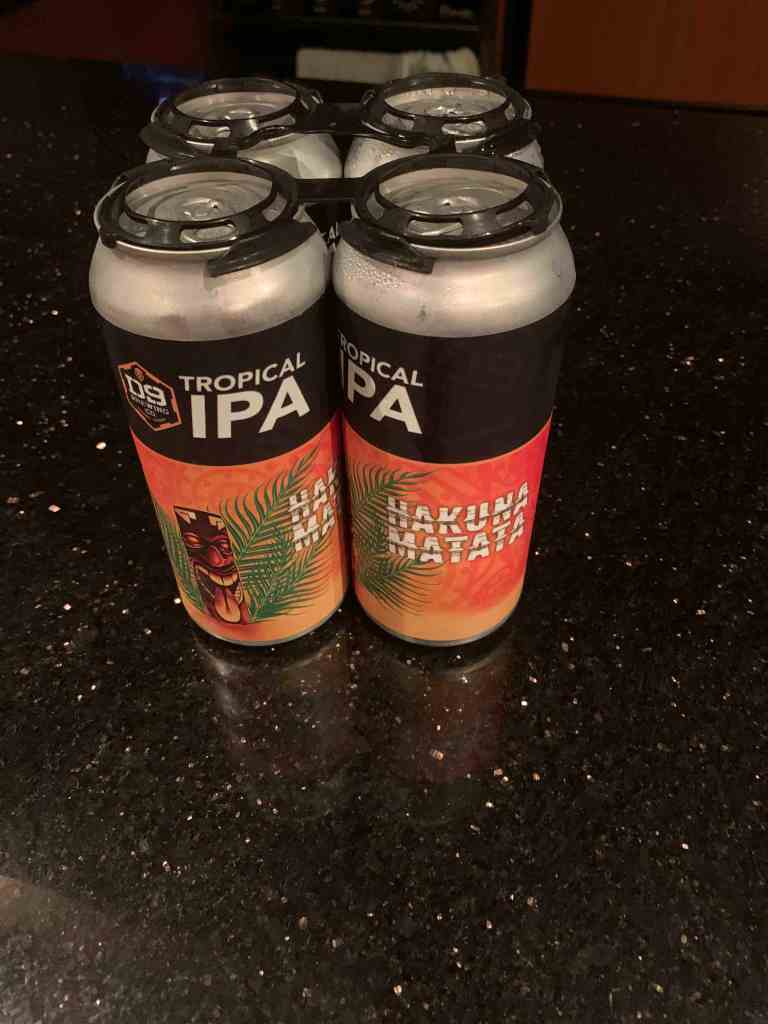
Well I got a late start, I ran into shallow water, Gale Warnings, slowed for all kinds of things like trawlers aground. When did I get to my anchorage? In the dark with gale warnings. OK, It may have been gale warnings out on the ocean but only strong gusty winds where I was anchoring. That said, I’m in the Georgia low lands. Nothing sticks up high enough to buffer the winds. I did not snap a pic while anchored because it was just black out. Anchoring did not go smoothly. I had a strong wind perpendicular to a strong current and I was challenged to find a spot that did not have the wind swinging Simple Life onto the creek bank. It’s going to be a long night on anchor. Now where did I put those IPAs?

D9 Brewing Company Hakuna Matata Tropical IPA

Fernandina Beach Florida

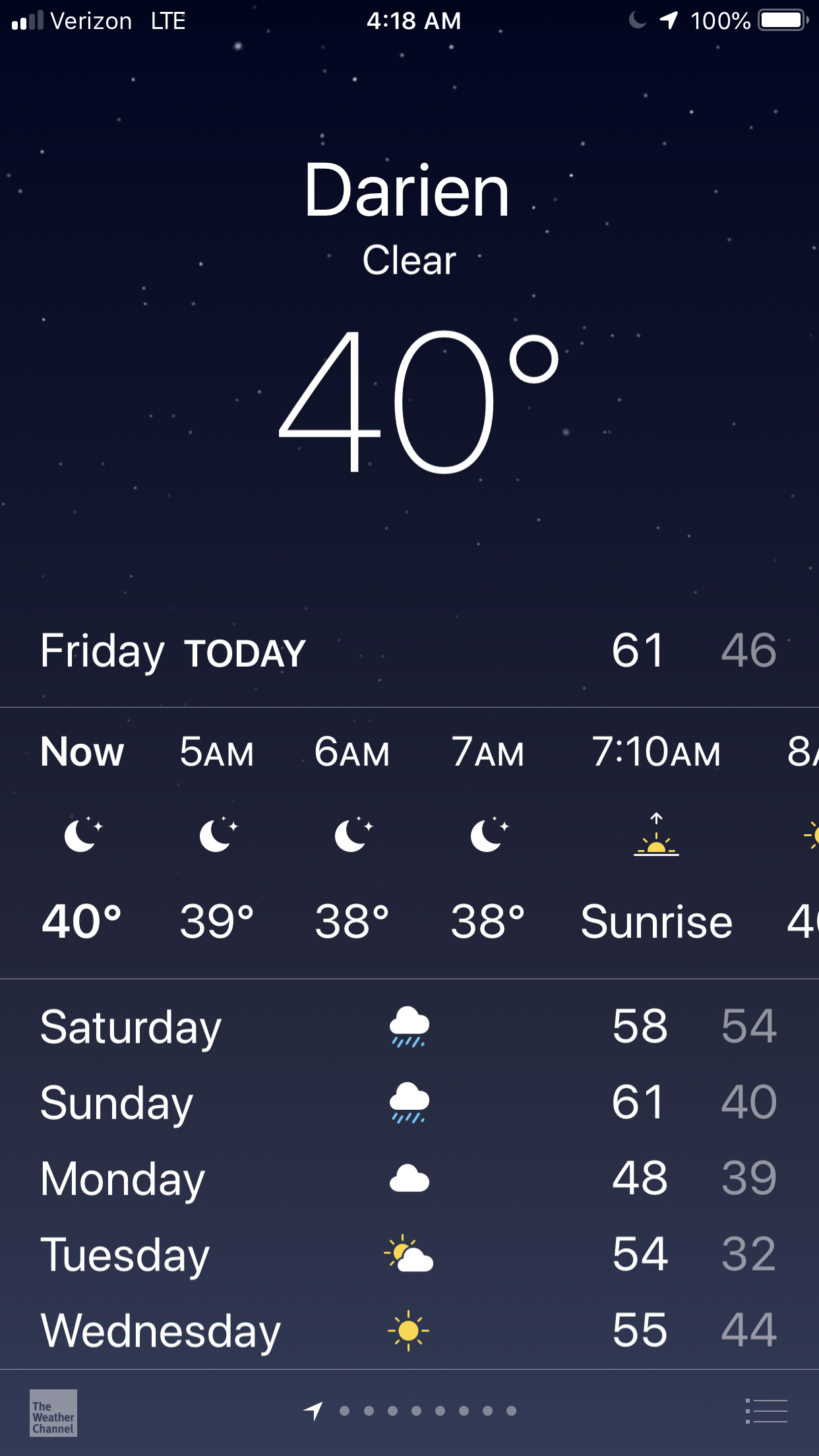
I awoke at 4AM before any of the crew. Neither Happy or Brody came out from under the covers to join me. We are in Georgia and it’s only 40 degrees when I awoke.

Heck, the temps were going to fall deeper before the 7:13AM sunrise.

Underway in the dark 6:14AM

By 6:30AM the sky was starting to lighten up on the ICW.

Looking East where the sun will rise

I decided to walk out on the bow while underway and snap a picture and a quick video before sunrise.

Not quite Sunrise

Once the sun rose you could see it burning the face of the daymarks as we passed. 

It’s high tide and the rivers are swollen around here. Daymark almost underwater. 

When you are at the helm for hours the internet is your entertainment. I was watching Mike-the-Drunken-Donkey from Mike’s Weather Page broadcasting FB Live video stream. I tuned in as Mike taught about weather and what to expect from the winter storm making its way across the US. 

Thankfully, MV Simple Life will be in Florida by the end of the day

We were amazed at how flat calm the ICW was as we pushed along at 7 knots. 

At the helm I’m wearing my work pajamas because it’s still a bit chilly even with the diesel heat on. Happy just figured out that there is HEAT coming out of that little black round duct below the AC panel door. She parked herself right under my feet to steal all the heat.

Heat Hog

We were making incredible time as we approached Cumberland Island in Georgia.

SOG (Speed Over Ground) = 10.4 knots

10.4 knots because we were enjoying a strong current on our stern. 

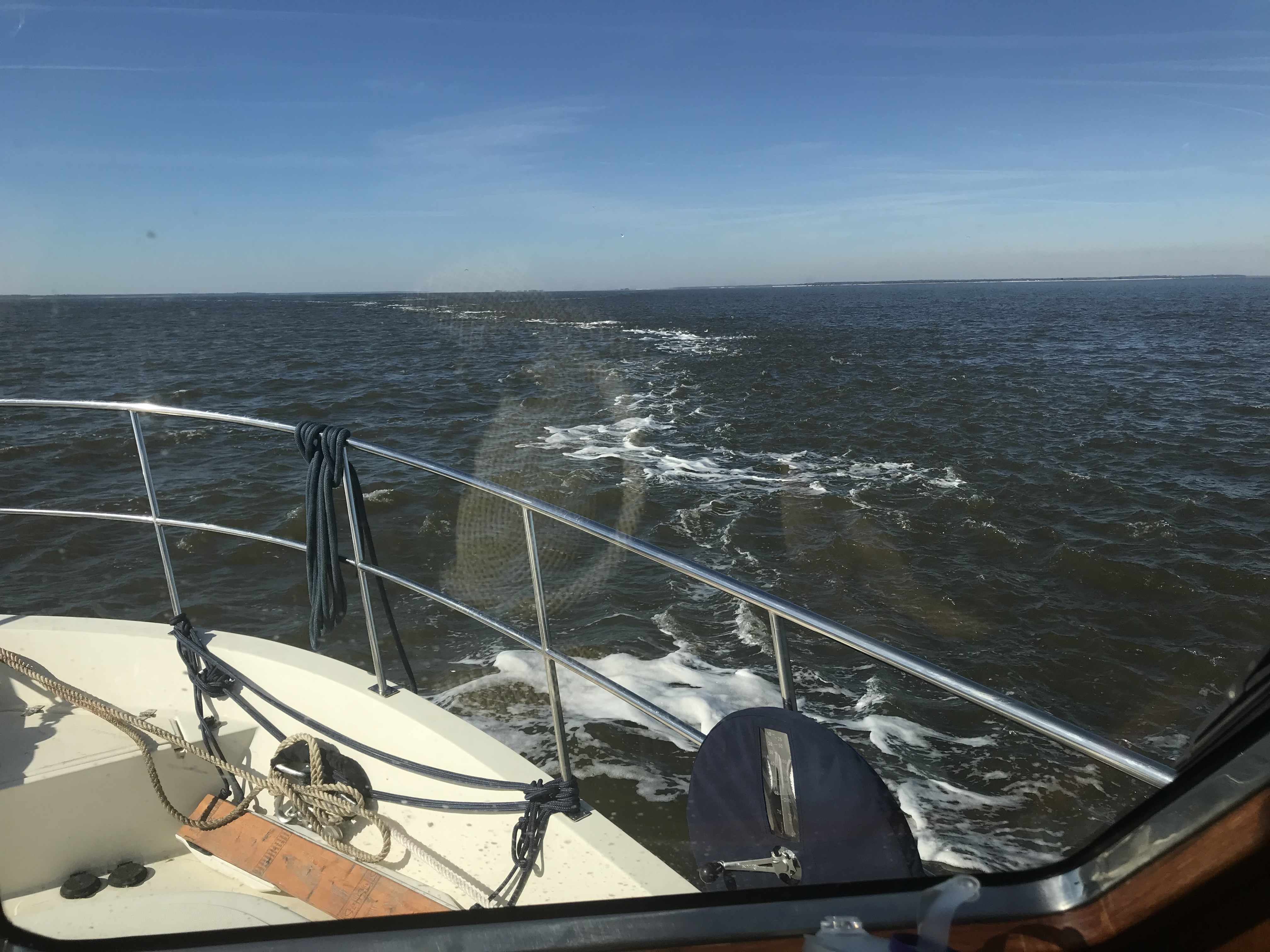
Then as we looked out, we could see a current line on the surface of the water. 

Opposing currents meeting causing white chop

We feared as soon as we crossed this line that our 10.4 knot speed would begin to erode. We could never have guessed just how much.

Strong Current on the nose. 10.4 => 3.9 knots

Knowing we would face this current from our trip around Cumberland Island we attempted to ride close to shore looking for an eddy current (reverse direction). But alas it was no use. We had a long slow ride around the island. 

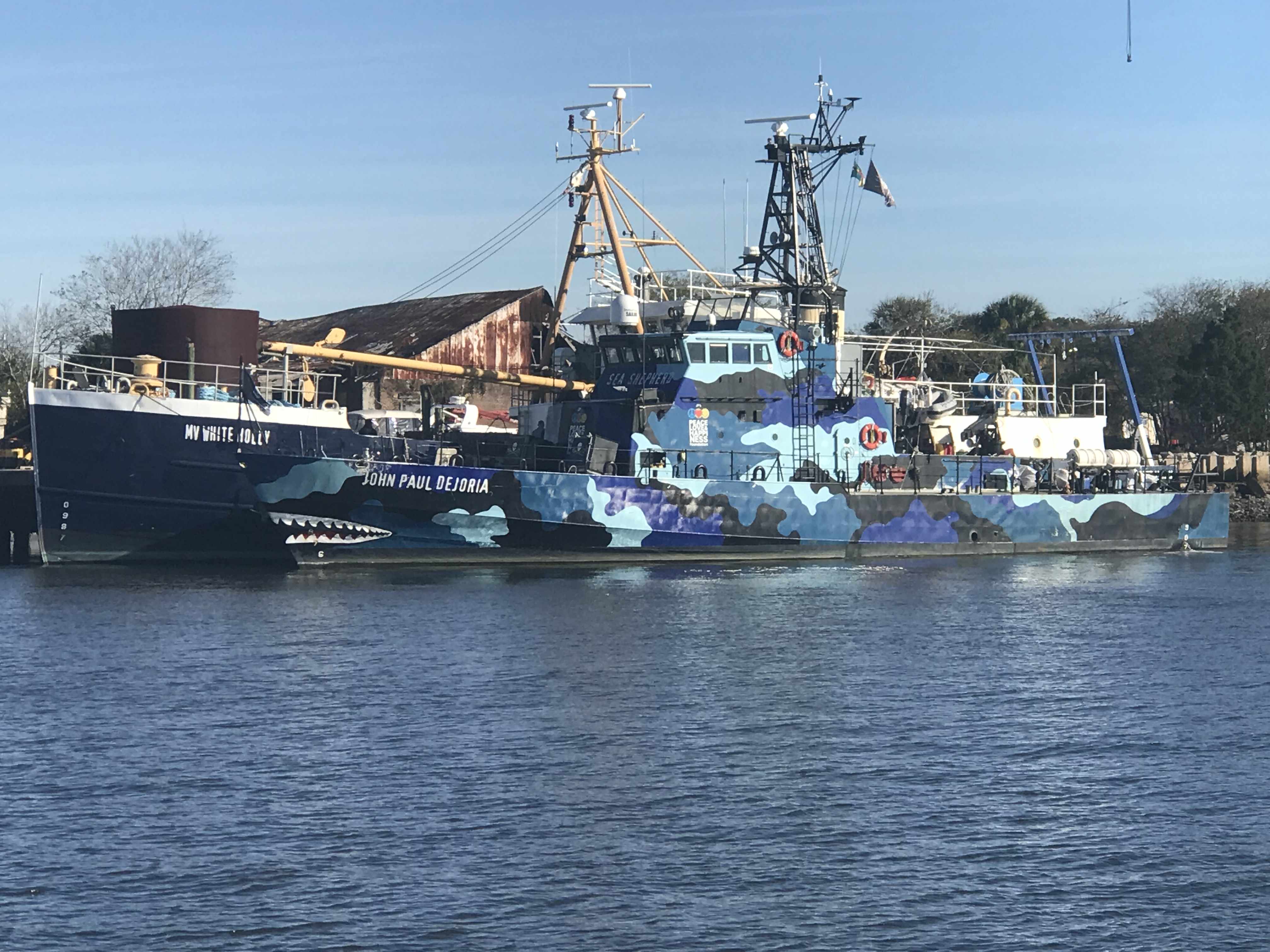
Then it happened. We crossed over the state line into Florida’s Amelia Island A.K.A. Fernandina Beach. As we passed we saw a ship that looked like a member of the Sea Shepherd fleet. We snapped a photo on the way by and low & behold, it was a Sea Shepherd ship. 

Sea Shepherd’s – MV John Paul Dejoria

Kelly & I have always been fans of ocean conservation and the crew of Sea Shepherd work hard to keep our oceans and their inhabitants safe. 

We are currently anchored in the Amelia River just over the GA-FL state line. 

Sun is setting in the Amelia River as I finish this post

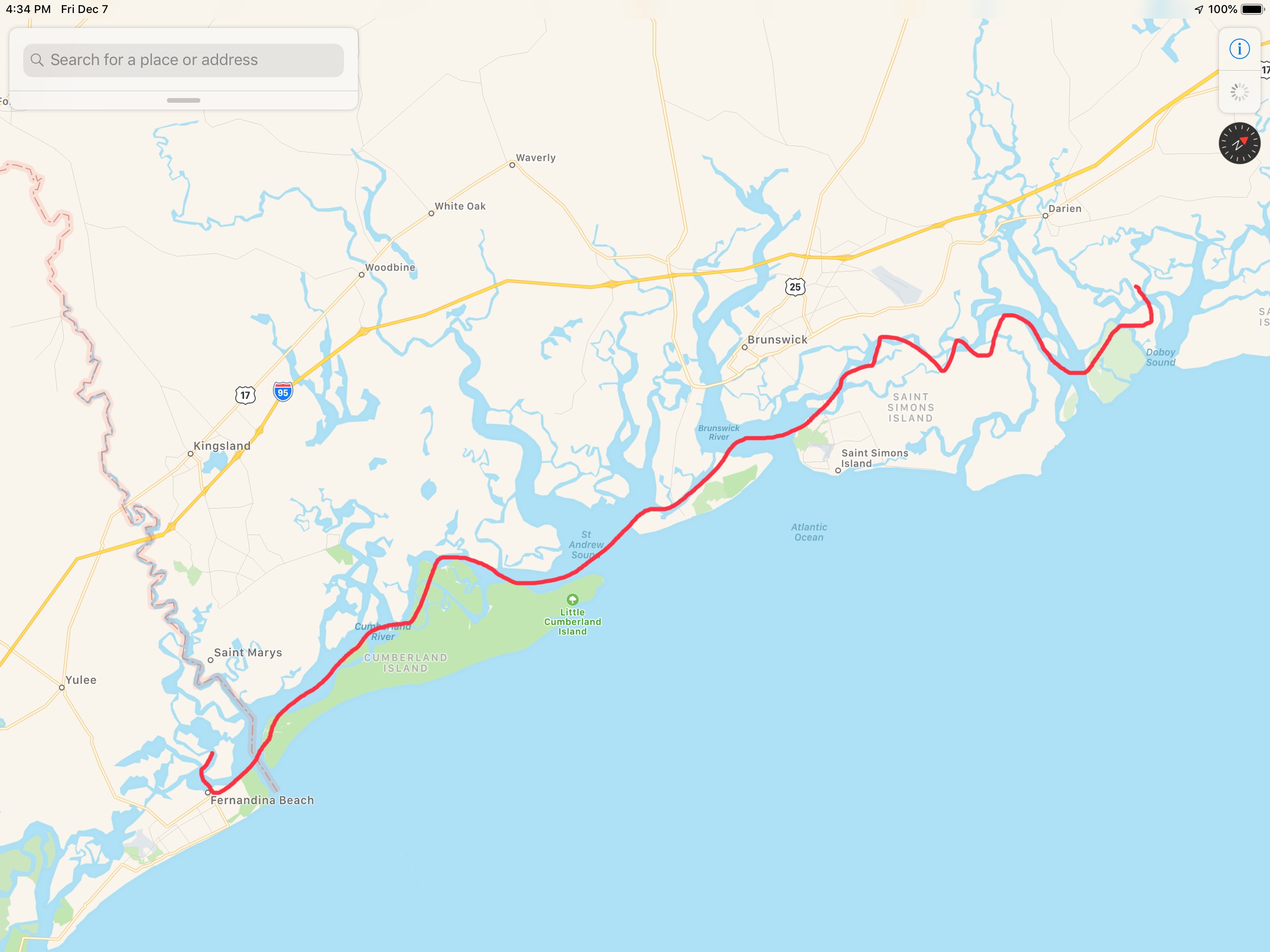
Today’s leg looked something like this finger drawn route. 

W02L021 – Darien, GA to Fernandina Beach, FL

Slipping into Venus

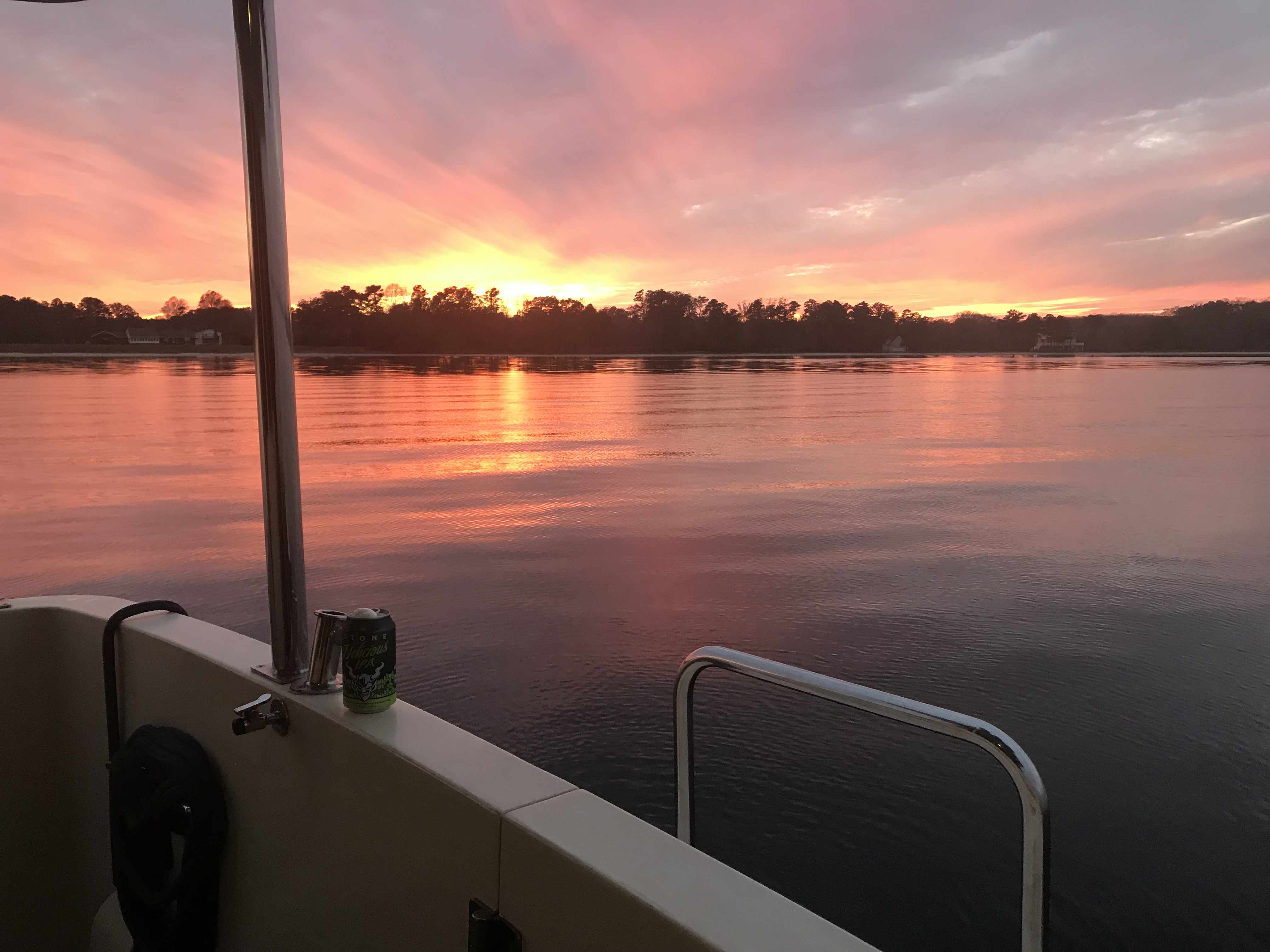
The sunset before we went to bed was beautiful in Godfrey Bay

Sunrise in Godfrey Bay, VA

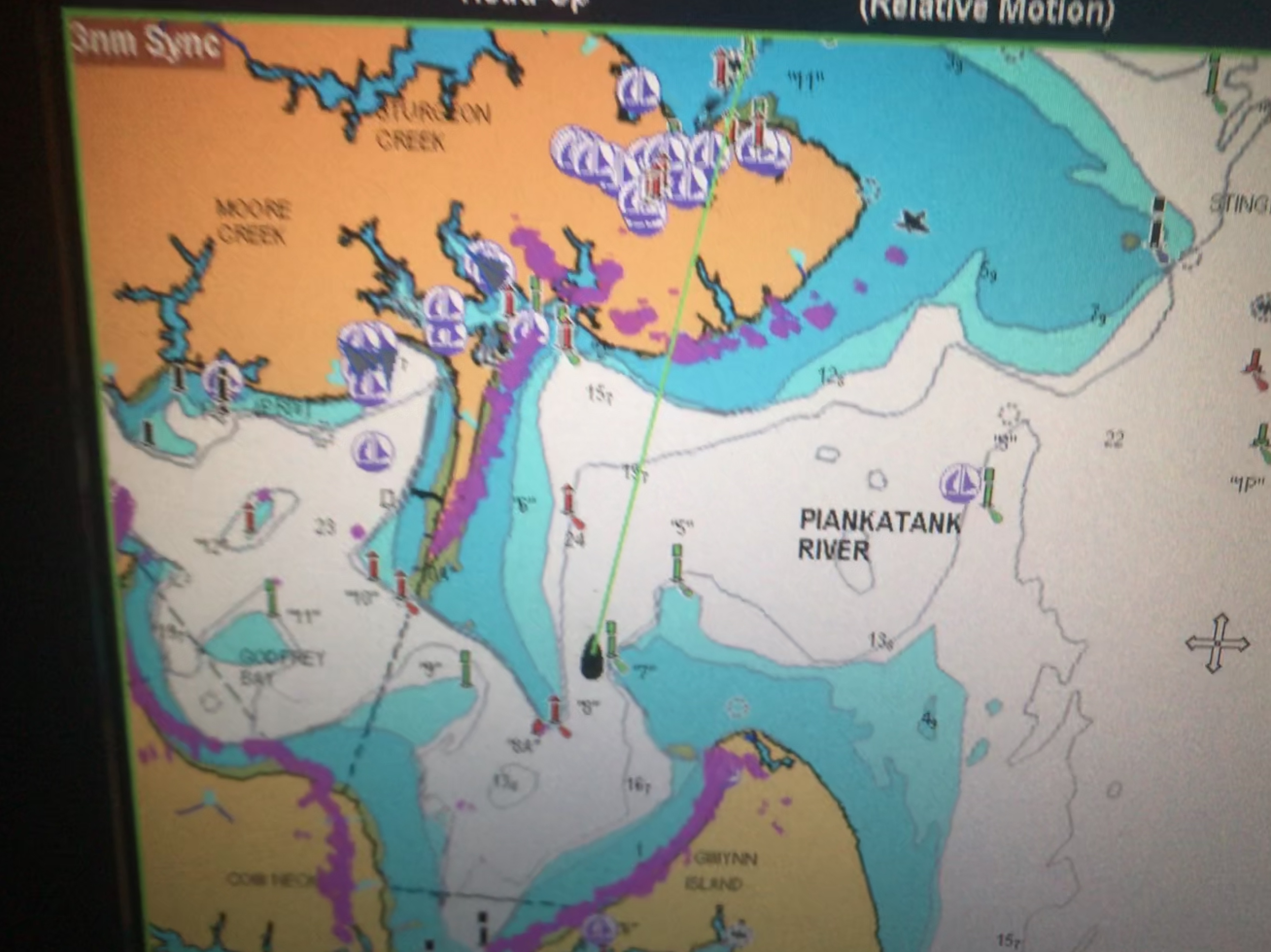
We had woken up at 4AM and decided to get underway. It was pitch black but I wanted to arrive at Top Rack Marina before they closed without having to burn more than 2.5 gals/hour.  So as we twisted and turned our way out of the Piankatank River we had to rely on the lighted buoys and cans. Recall that buoys or “nuns” are red, even numbered and have pointy “nun hat” tops, cans are green cylinders with odd numbers and flat tops. 

MV Simple Life in the center passed Red lighted beacon #8 and approaching Green lighted beacon #7
Directly above the red beacon light you can see Venus. I think the halo effect making it look even bigger in the photo

As we headed East the planet Venus was brilliantly lit up and acting as a perfect aiming target to stay on course. We were slipping our way past shoals and straight into Venus.

At times I would run with the searchlight lit to attempt to view and steer around crab pots and unlit fish weirs. This is the hazard of running at night that you can wrap a crab pot line around your propeller or become ensnared in a fish weir. 

I have a project to install LED lights under the bow to light crab pots without reflecting off the foredeck

Two hours passed and first light was upon us. Sunrise was a coming…

Danger Area… If you go to lower zoom levels to see what chart note is attached to the Danger Area you only get an annoying note that says to read NOAA’s US Coast Pilot Vol #3. That’s not very helpful as I used to keep all the Coast Pilot books printed and stored aboard but I found that I was using the online versions linked above.

Danger Area, Why? Have to look in the US Coast Pilot Vol #2

Coast Pilot is a FREE, online pdf, navigation book published by NOAA.

It’s a lot like the Maptech Embassy or Waterway Guide books that I used when I first started boating. 

The trip down to the mouth of the Chesapeake Bay was easy smooth going.

However, as we approached the inlet to Norfolk, VA the current was quickly ebbing.

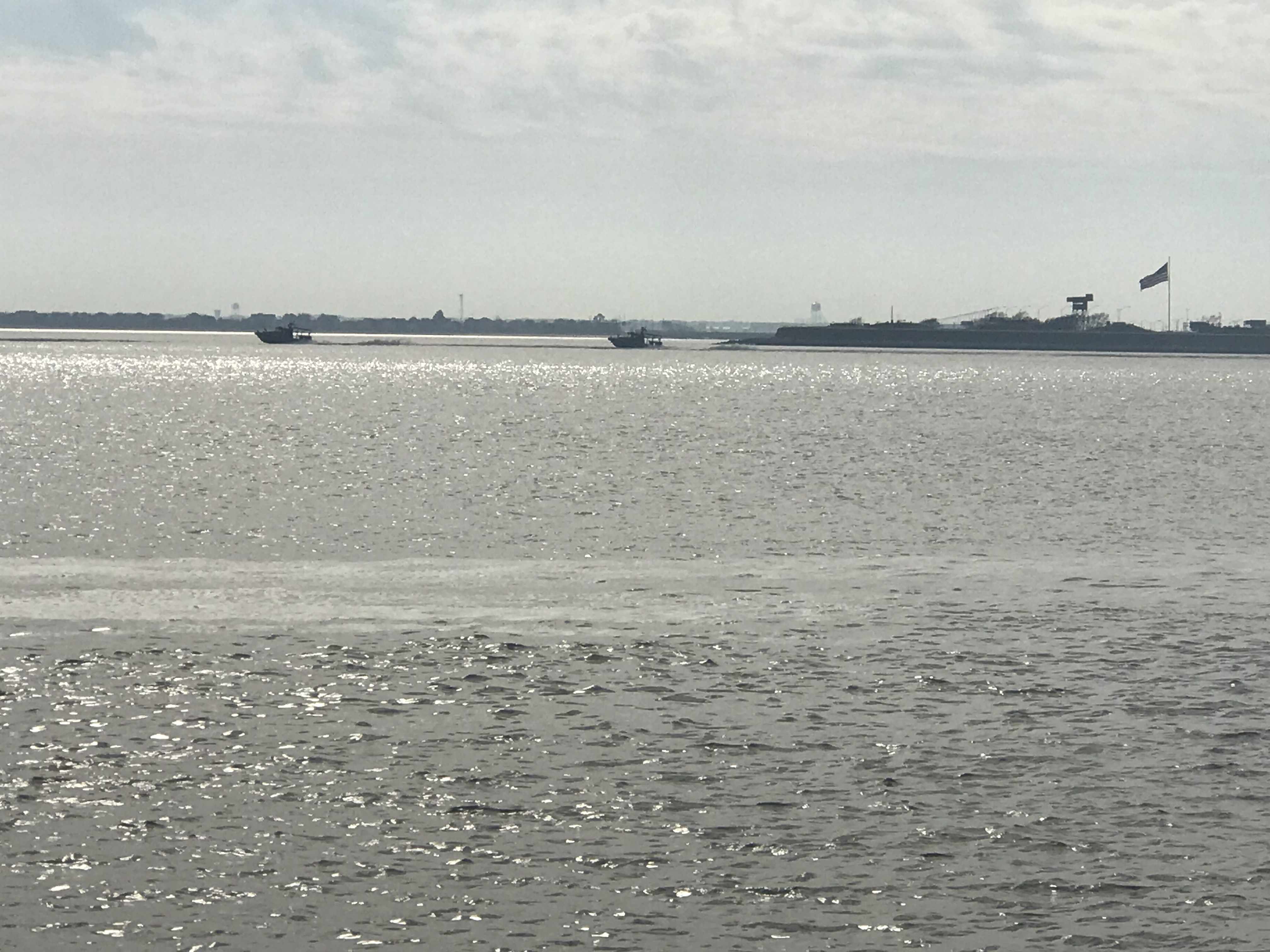
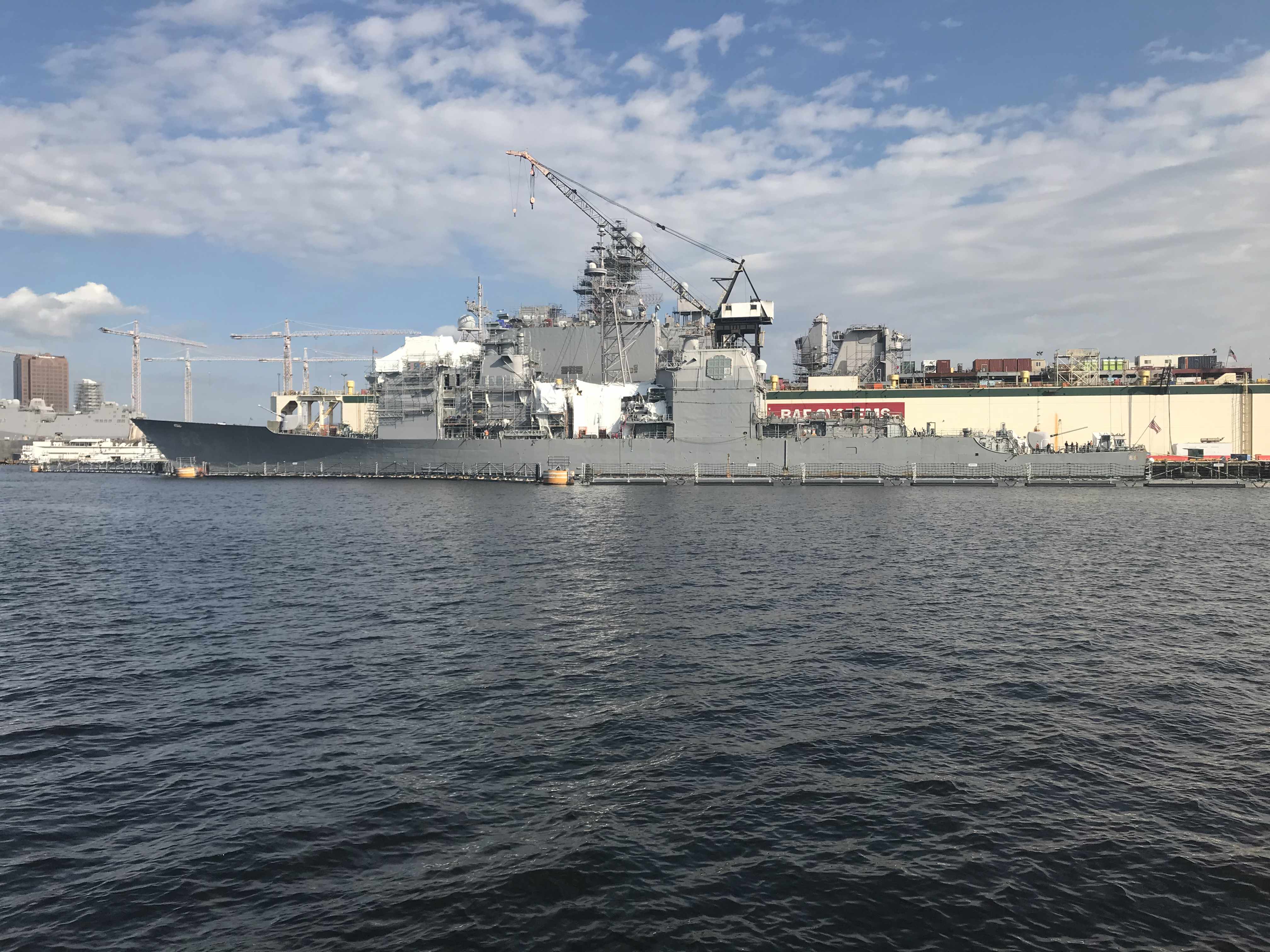
Soon we were surrounded by military gun boats and helicopters buzzing overhead. On the VHF you can hear Virginia Pilots calling ships preparing to enter the harbor. They are landing on a cargo ship via helicopter for inspection of the vessel. All hatches must be open except the one the helicopter is landing on. Specific instructions were given not to have crew approach the helicopter on landing. 

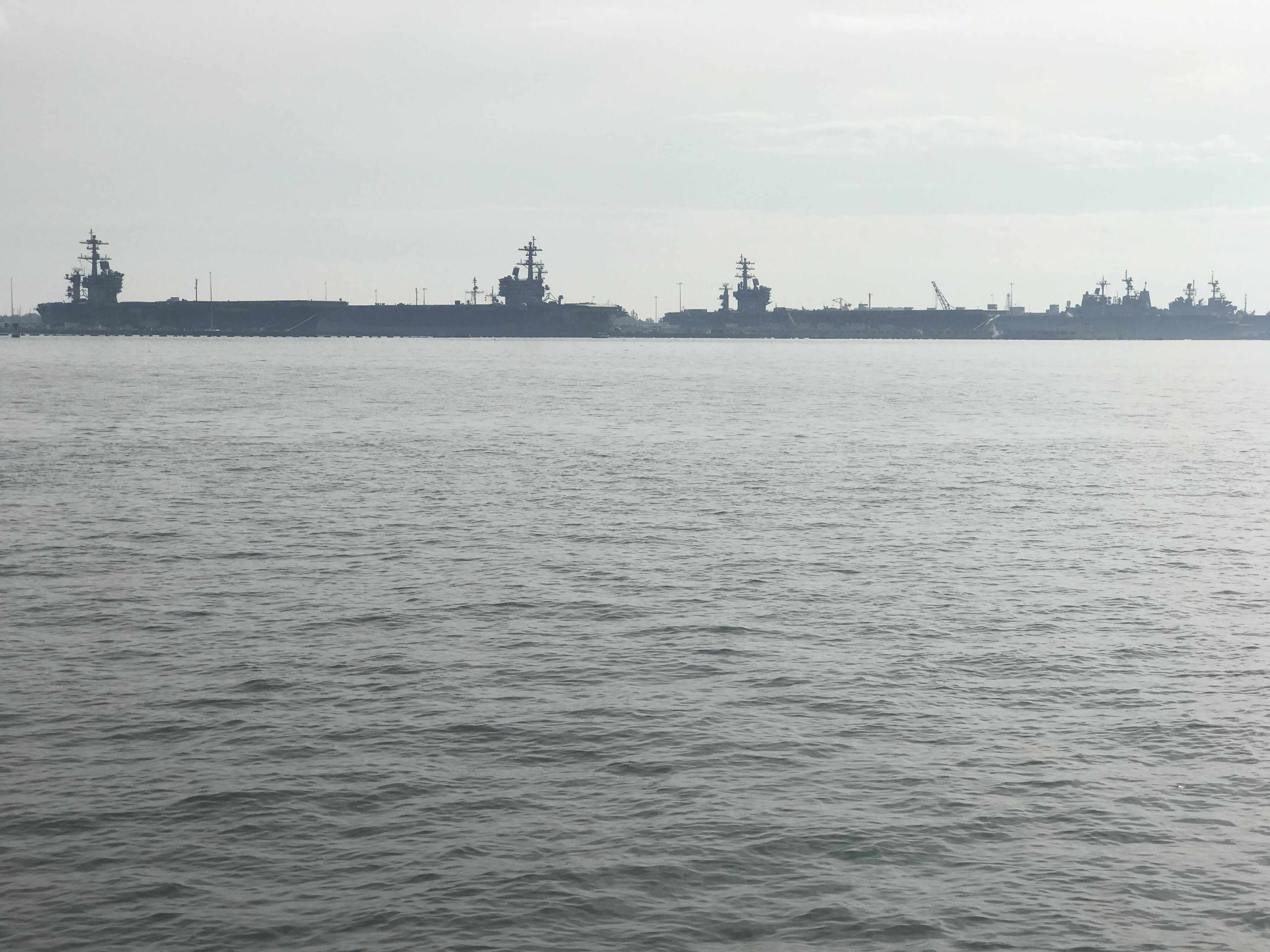
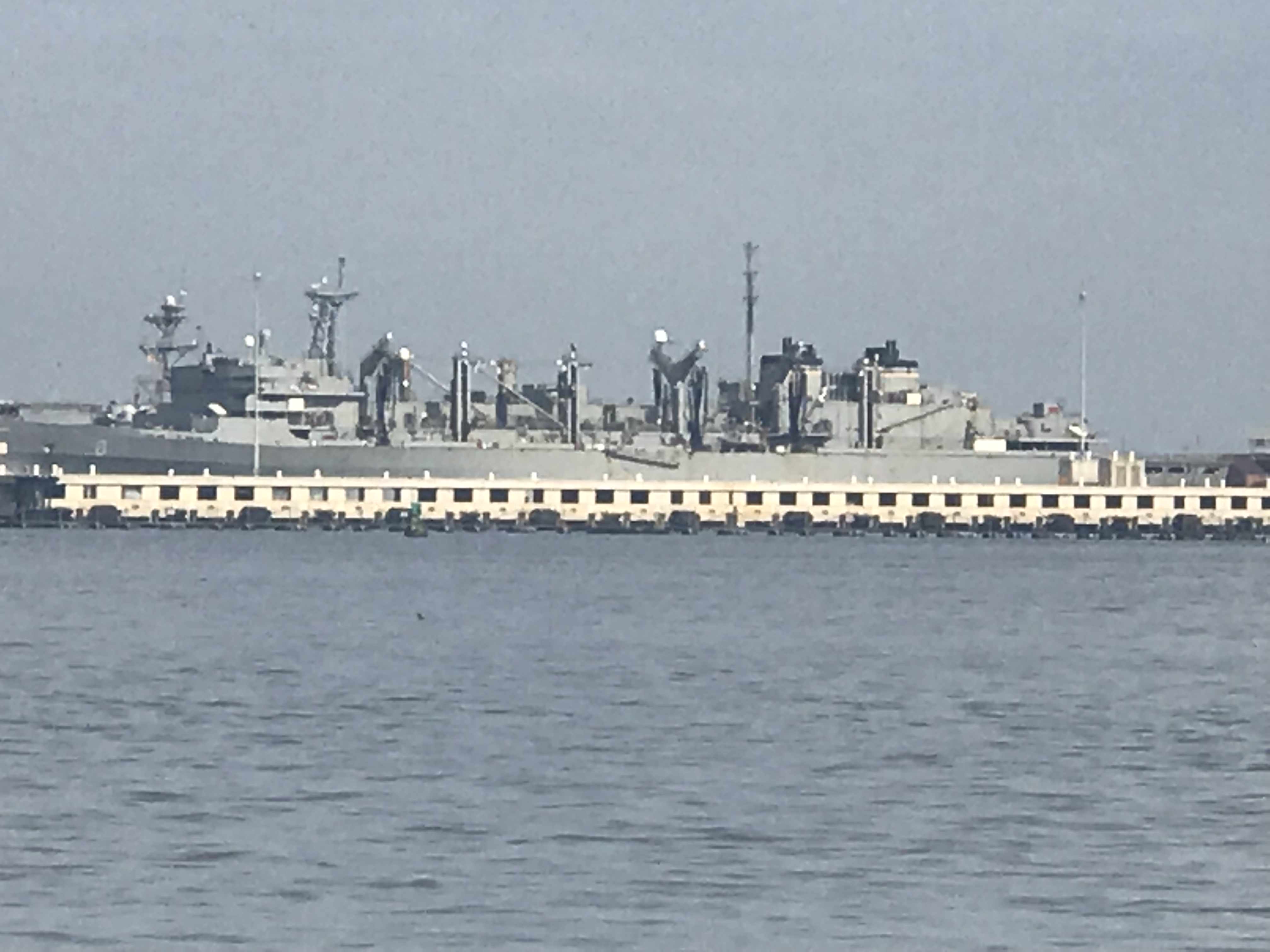
Warships were everywhere to see in port but we let those boys do their work and stay clear of them. 

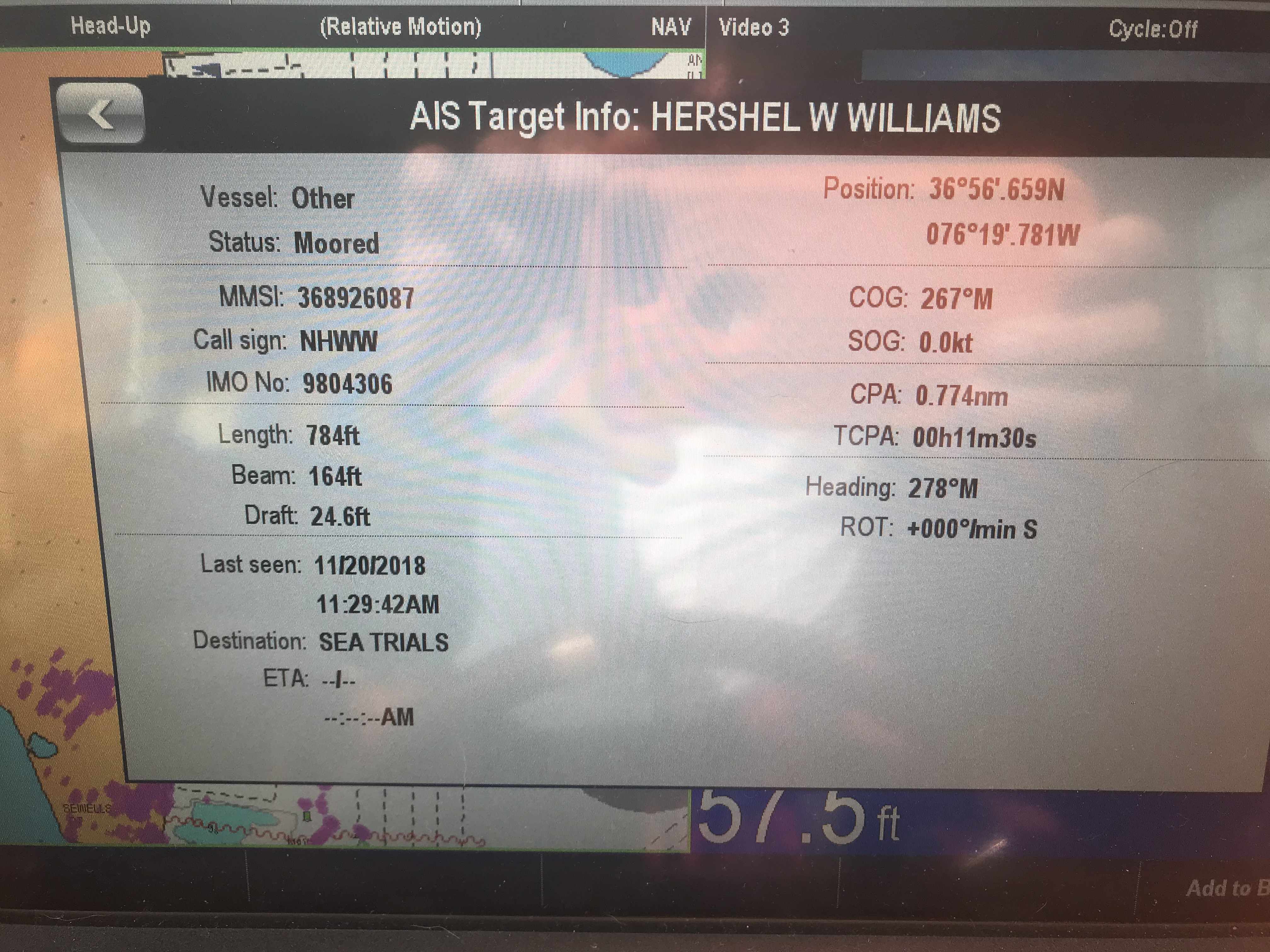
If you click on any of the AIS targets they come up as “military” or “US Govt”

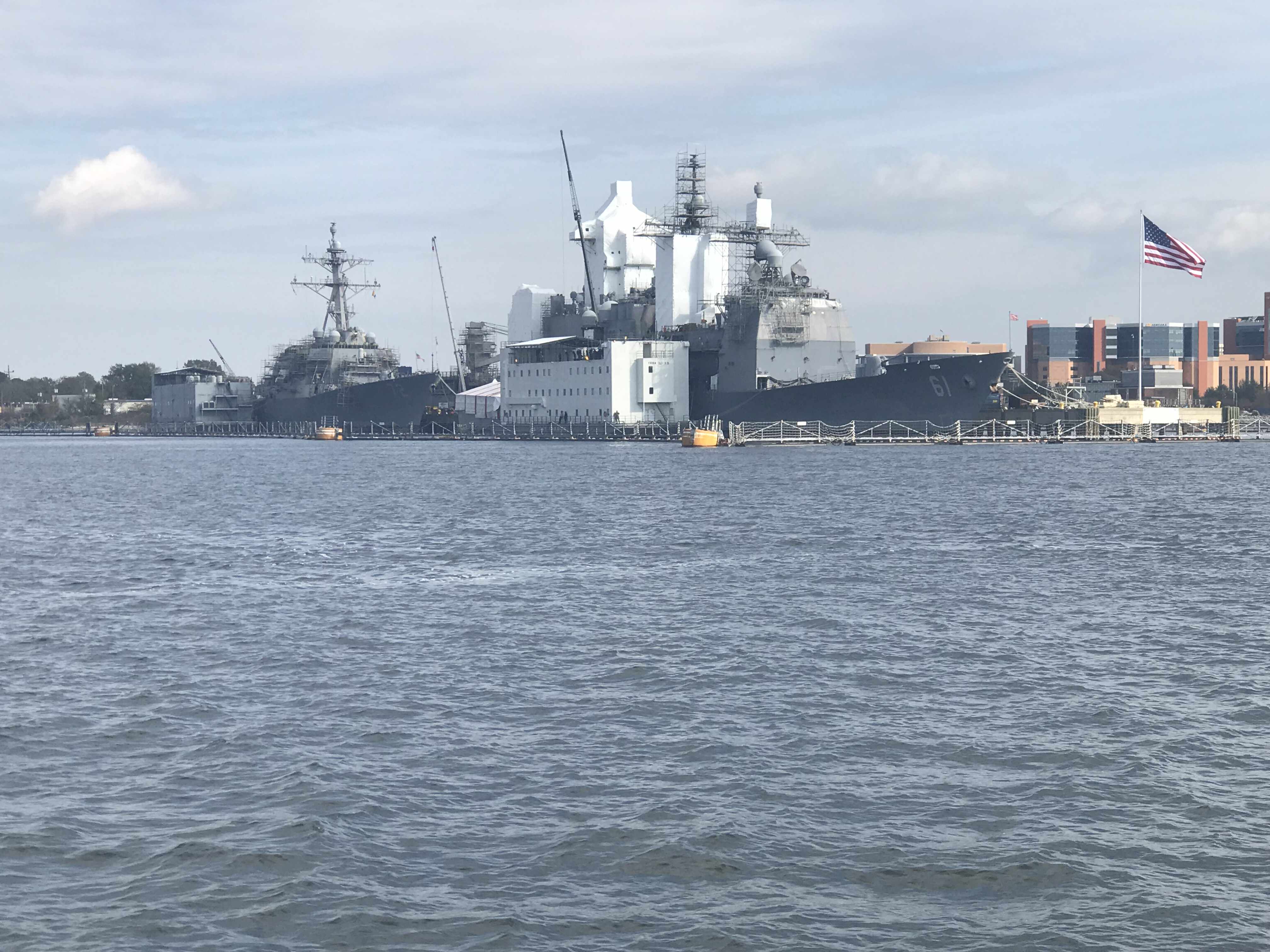
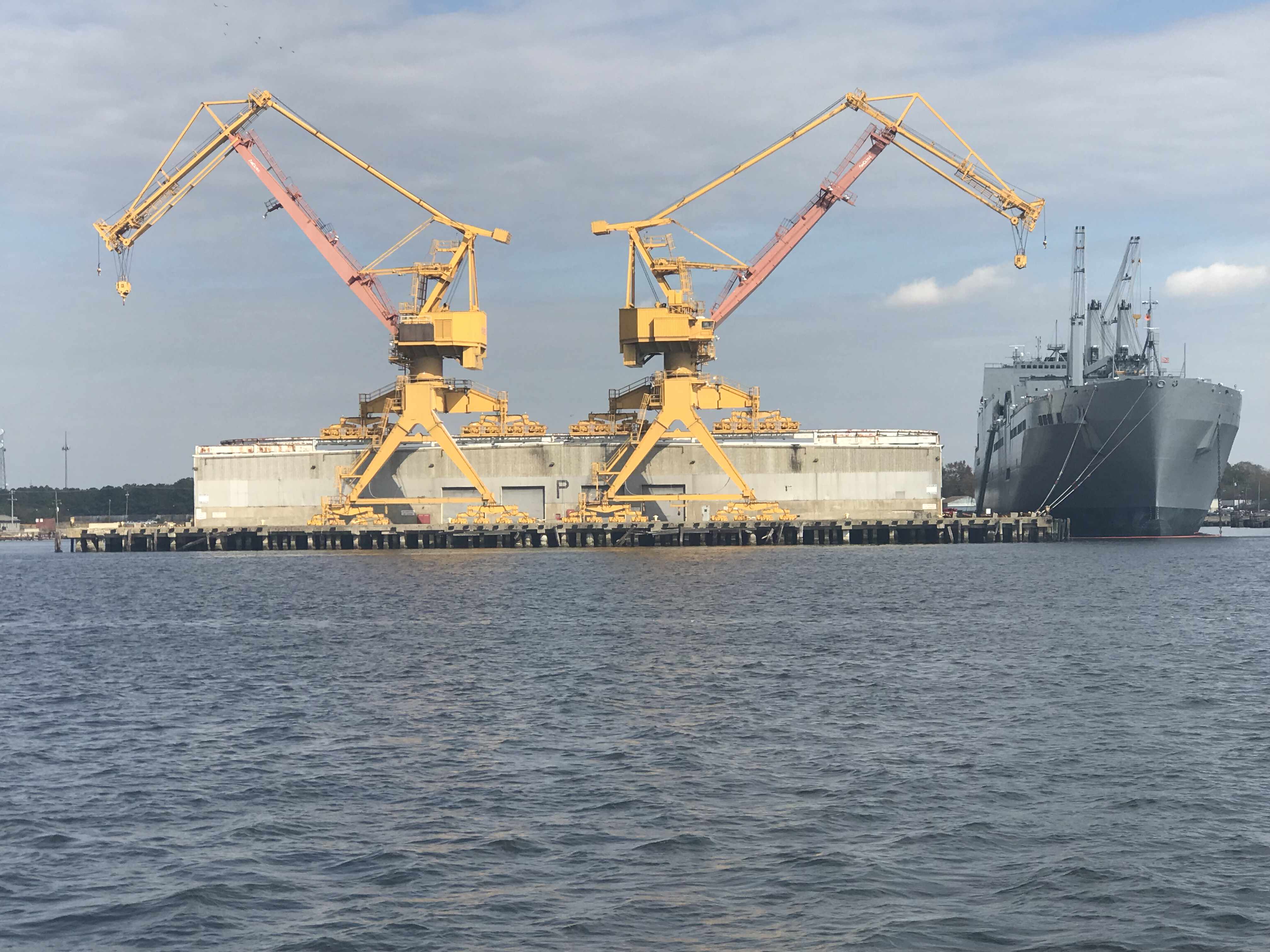
The shipyard has some amazing mega-sized structures.

it’s looks like it climbed onto the building

As you proceed further down the Elizabeth River you are reminded that much of what’s on the shore is off-limits to anyone other than the US Government and military. 

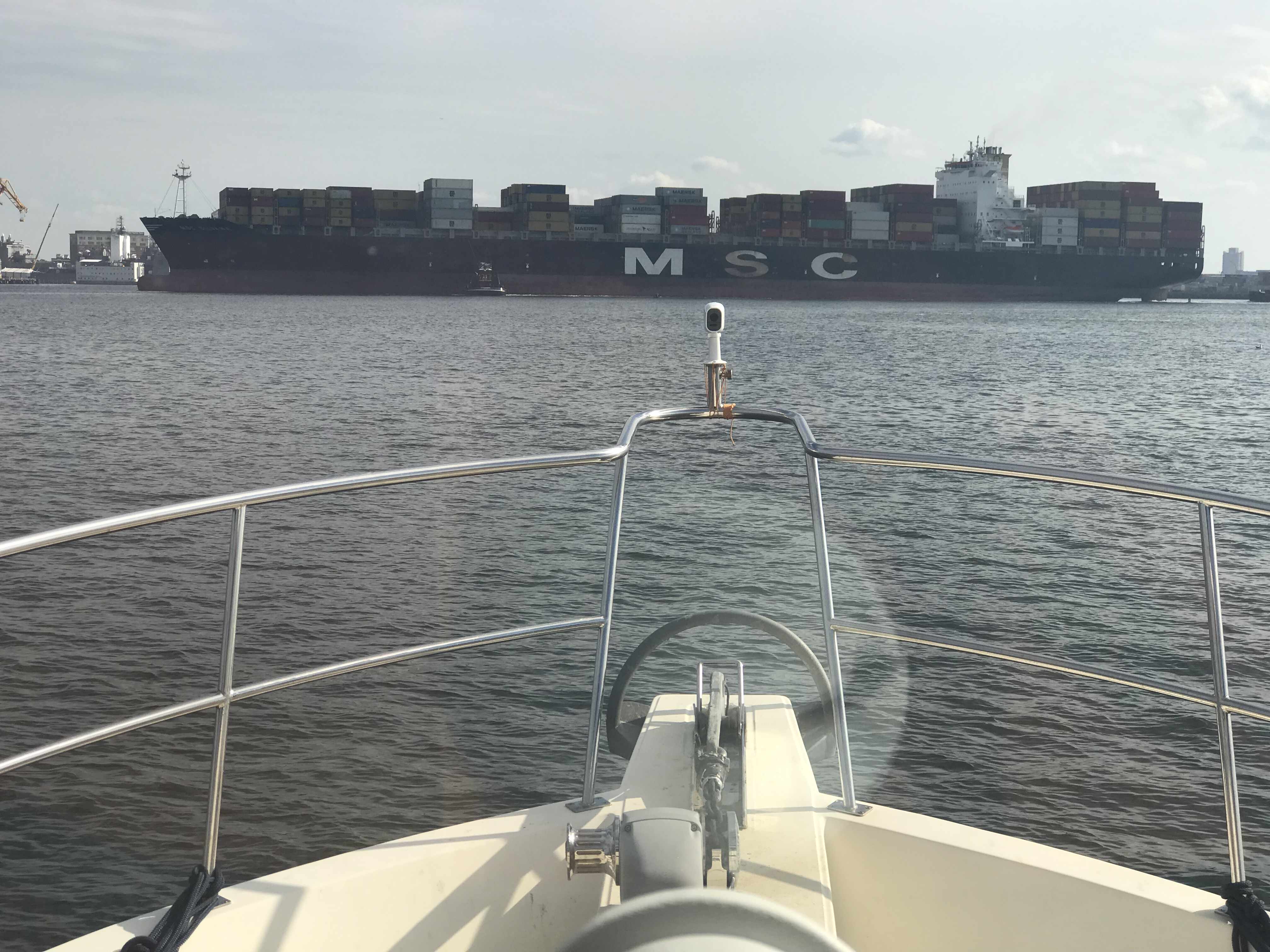
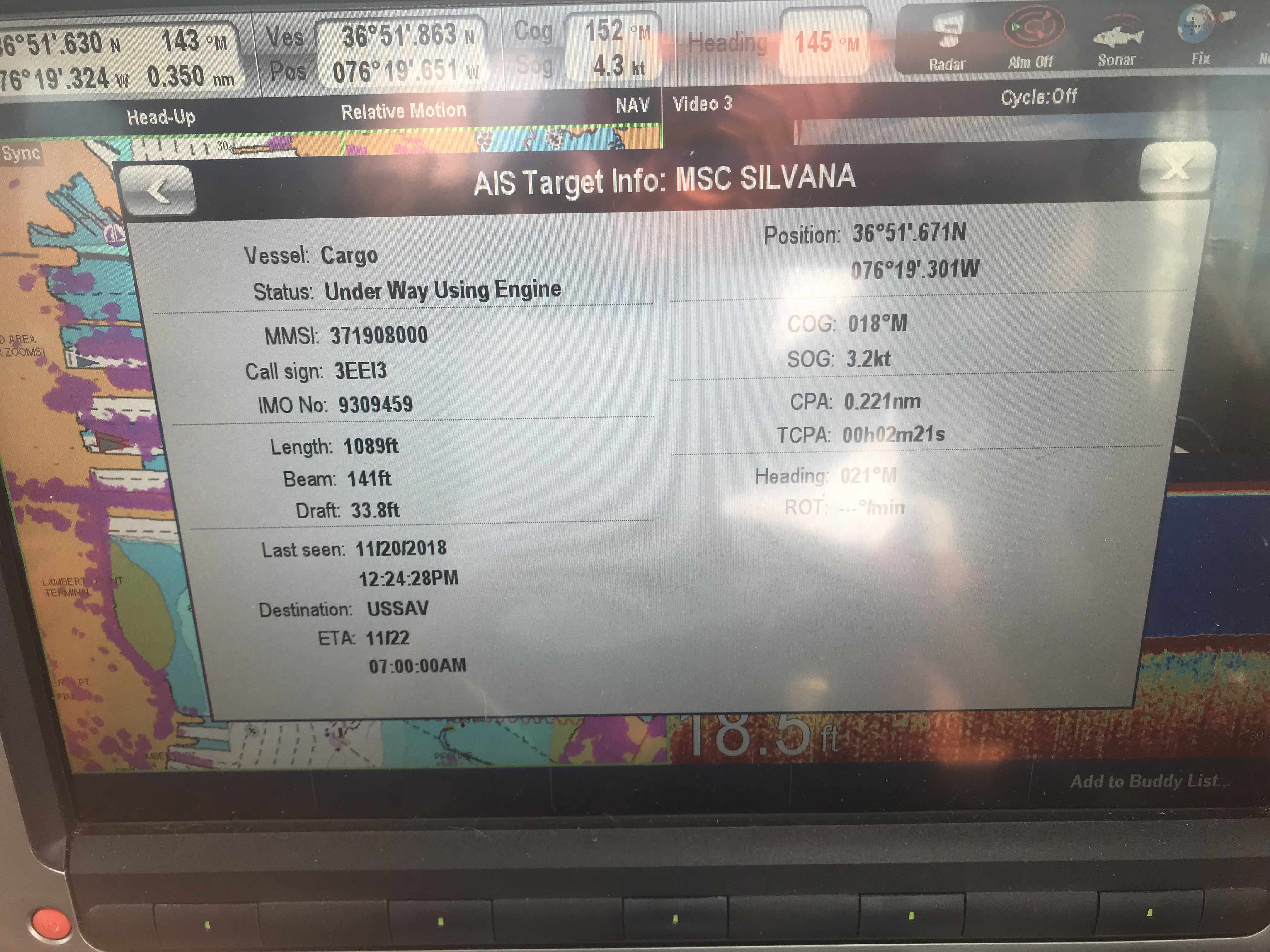
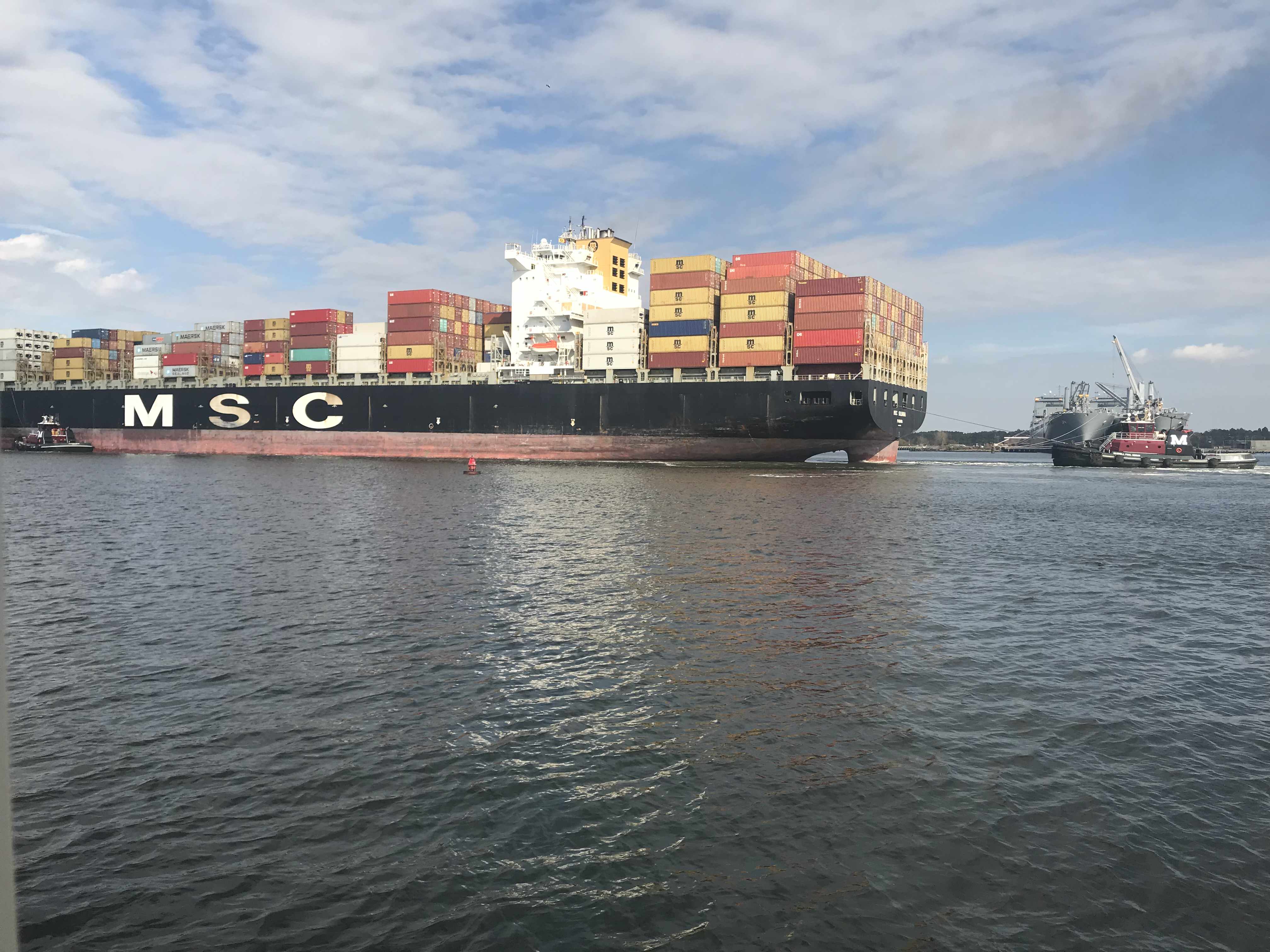
At one point in our journey down the channel I noticed that the gigantic MSC Silvana container ship had black diesel smoke coming out of it’s stack. OMG. it’s underway and blocking the entire channel!

We had to get out of the channel to get past her

Soon we were passing this lifeboat that looked like it had lost it’s ship. These fellows were just riding around in the life boat. Maybe they are on shore leave and wanted find a restaurant 😉 


I Totally WANT one of these

I just think these are the coolest. I’m jealous of this woman getting to launch one of these free-fall lifeboats. 

How cool is she?

Soon we made our way to Top Rack Marina.

We love this stop for several reasons. 

  1. Amber Lantern Restaurant
  2. Great fuel prices
    1. $2.74/gal Diesel – we took on 306 gallons.
  3. Great slip prices
    1. $35/night any length boat (includes power)

People often ask us how cheap can you live aboard? It’s a great question and the answer is “it depends”. It depends on the life-style you want to live. Sometimes we hit marinas and restaurants every day and money seems to disappear. However, other times we spend cruising on anchor every night and spend nothing but diesel. We left Warwick, RI on Sunday, Nov 11th at around 3PM. It’s now 10 days later, Nov 21st we are at Top Rack Marina in Chesapeake, VA. Being a fan of science I believe people would rather see a data-driven answer where they can draw their own conclusion. If we “Do the Math”.

  1. We have completed 9 legs of our journey over 10 days.
  2. We put 89 Hours on the diesel
  3. 86 hours / 8 legs = 10.75 hours a leg. (skipping the first short 3 hour day)
  4. 10 hours on the genset (4 because I forgot to shut it off while underway)
  5. $242 on 2 nights dinner & drinks (I don’t recall getting back to the boat on 1 of them)
  6. 306 Gallons of diesel (main engine, genset & forced-hot-air diesel heat)
  7. $838 on diesel
  8. $150 for 3 nights at marinas

I hope that sheds some light on budget.

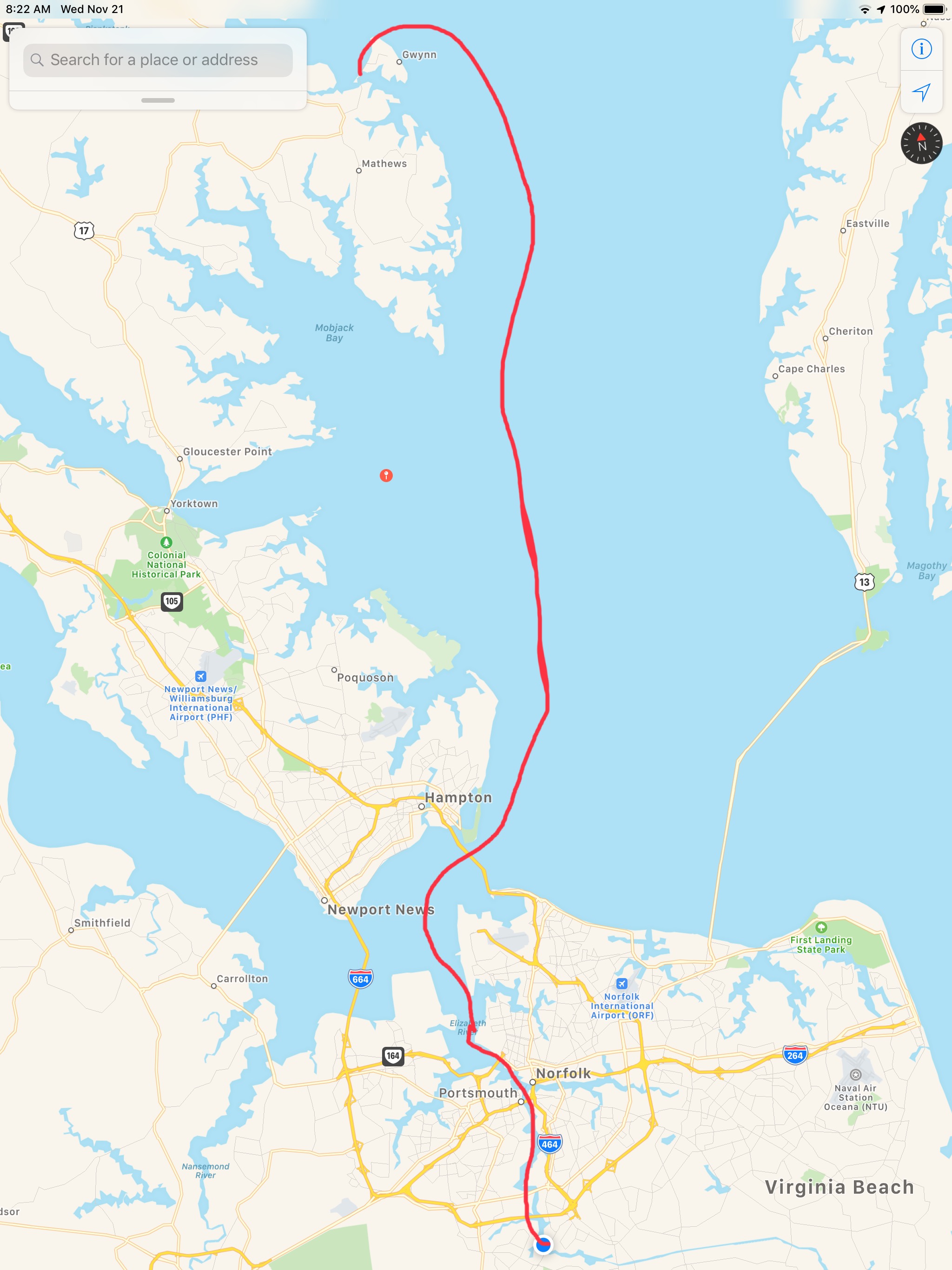
Our 9th leg looked something like this…

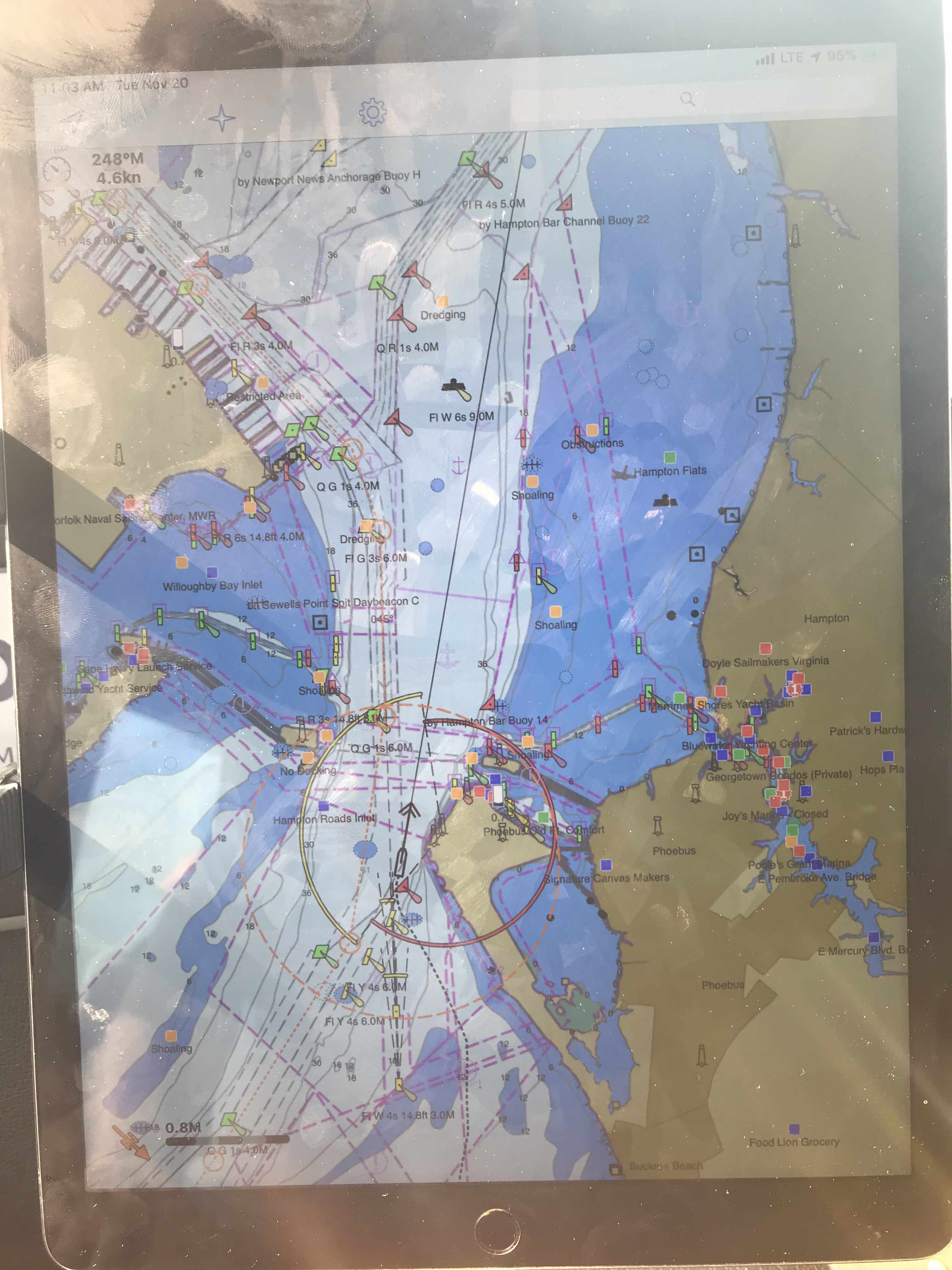
Apple Maps screen capture with hand-drawn finger route

Coinjock Marina Going North

We had a quiet night on anchor in the Alligator River. Our anchor spot was just off the ICW and was an “easy in” and “easy out” in the morning. Note: some anchoring spots can have shallow or tricky entrances.

The sunrise was amazing.


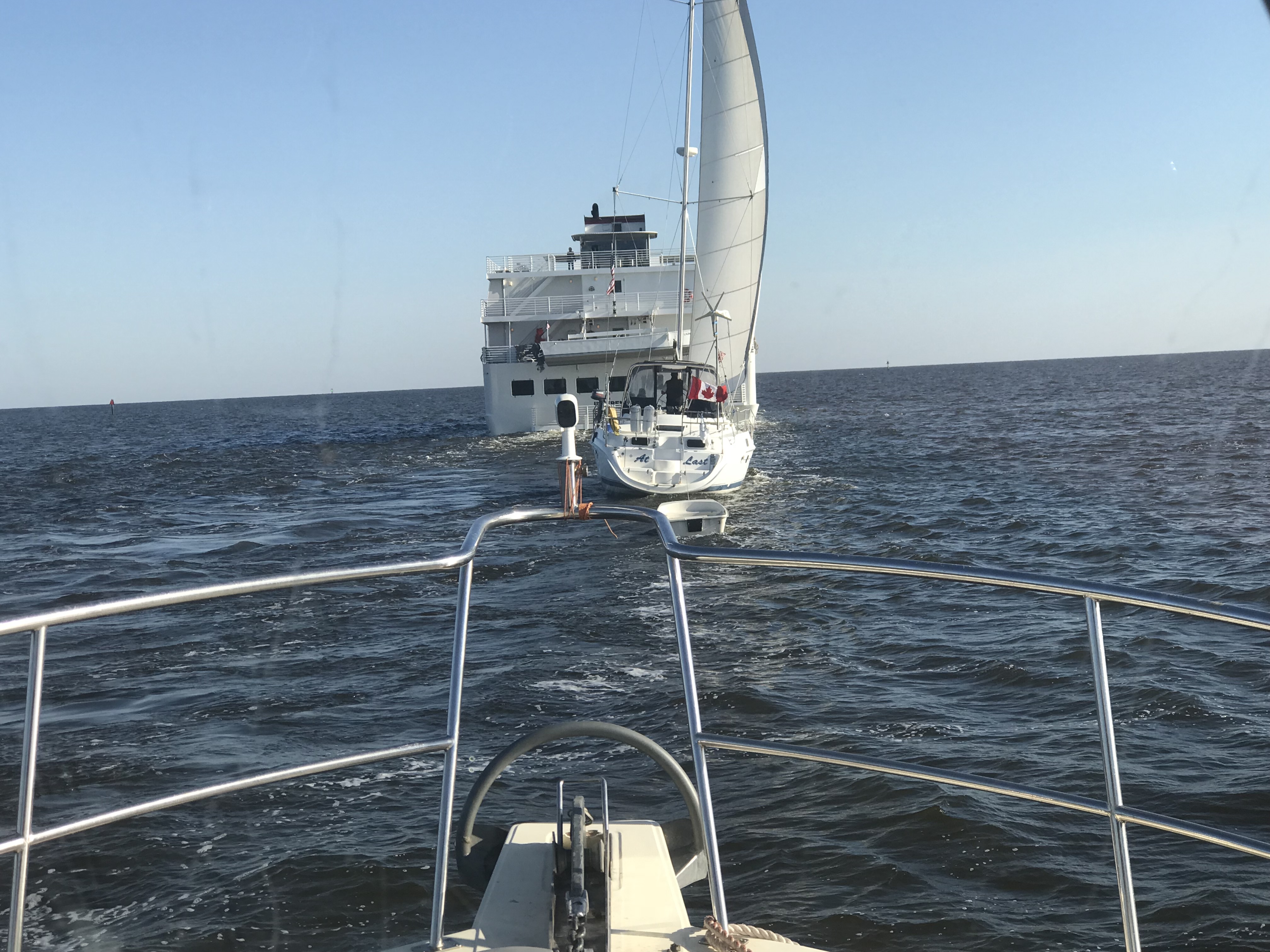
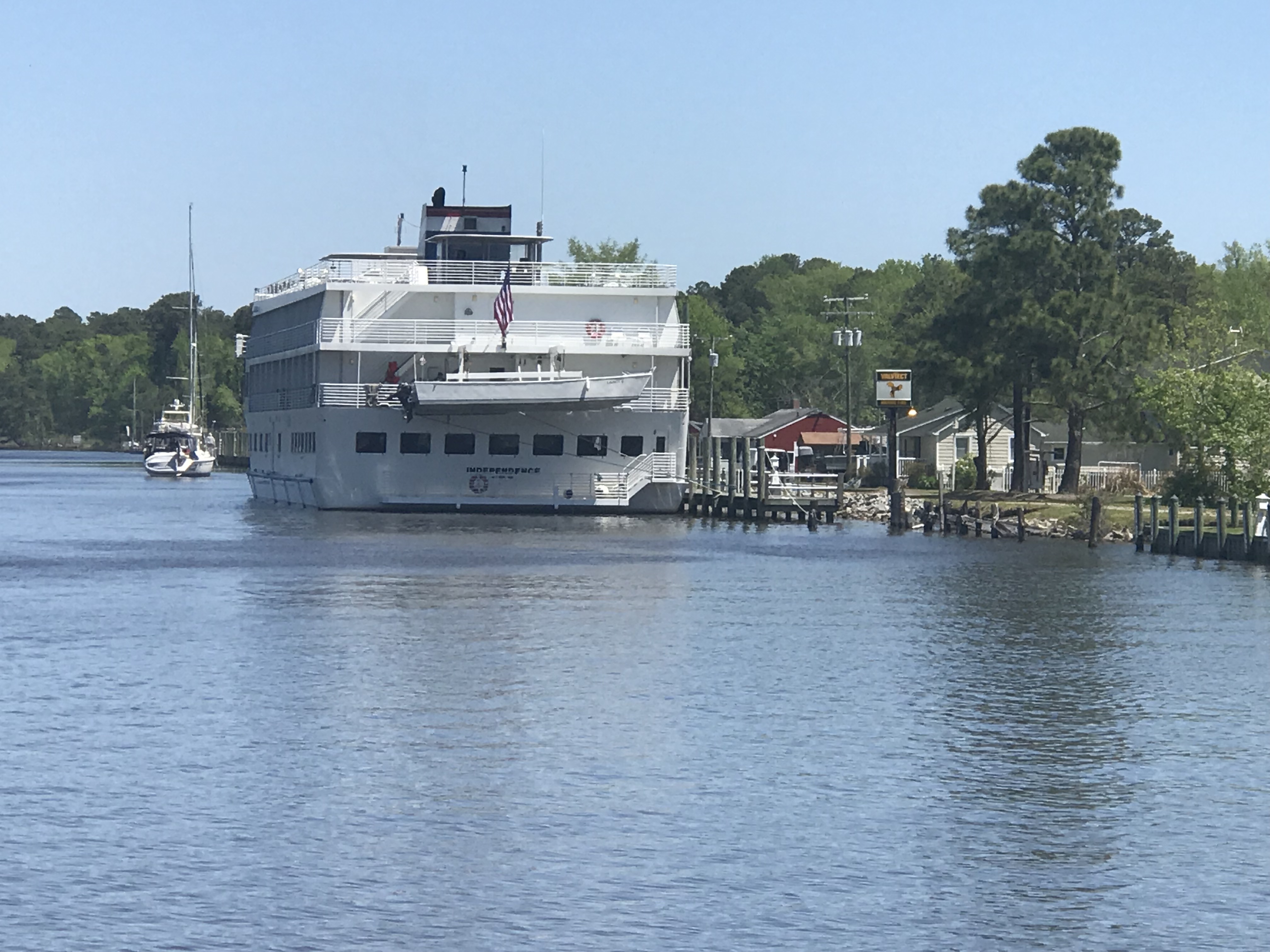
We had no sooner got through the Alligator River Swing Bridge and we hailed the large cruise ship, Independence, coming up on our stern. The captain was very friendly and thanked us for giving him exclusive use of the narrow channel.

MV Independence uses AIS just like us so it was easy to acertain their ship’s name and hail them directly. I simply let the captain know that I saw they were going to overtake us and stated we would manuver to starboard and allow them exclusive use of the entire channel for a “2 whistle pass”.

Cruise Ship 1
American Cruise Lines, MV Independence

As the channel got narrow we had to get in line behind this sailboat who did not seem to have their VHF radio on. (repeated hails from us and the Alligator River Swing Bridge with no response). On the ICW you must monitor channel #16 (the international hailing channel).

Traffic 1
Canadian Flagged SV

Note: the ITU (International Telecommunications Union) designates 3 channels internationally as “Safety Channels”.

Channel 16 (156.800 MHz) – Distress, safety and calling

Channel 13 (156.650 MHz) – Intership navigation (bridge-to-bridge)

Channel 70 (156.525 MHz) – Digital Selective Calling

DSC Discussion (skip this technical section if you like)

CH 70 or DSC or Digital Selective Calling is a new technology that uses EM wave pulses on channel 70 to send digital (1s and 0s encoded in electromagnetic pulses over a radio wave transmitted on channel #70’s designated frequency)

This channel is not for human voice transmission but for ships continually broadcasting their current position and heading. The data is received by your VHF antenna and processed by your AIS transceiver before finally being plotting on your chartplotter. Instead of just a radar blip on my chartplotter, I see a triangular icon representing the ship and if I click on it I get all sorts of info like:

  • Ship Name: So I can hail them by name instead of “Motor vessel off my port bow”
  • Heading
  • Speed
  • Ship length
  • MMSI #
  • Sail or powerboat
  • CPA (Closest point of approach or how close will they come to our boat if nothing changes)
  • CTA (at what time will they be the closest to us).

DSC also has a well hidden secret function where you can use a ship’s MMSI # (like a personal phone number) to call them directly. By this I mean you don’t hail them by name (ie. “ship name, ship name, this is motor vessel Simple Life on channel 16”. Instead you type in their MMSI number and a channel that you want their VHF radio to automatically tune to. Hit the PTT (Push To Talk) button and a loud tone plays over their VHF radio and their radio automatically jumps to the channel you wanted to communicate with them on. It’s a great feature but I must say I have not used it, nor have many other boaters. Maybe it will just take some time till the early adopters start teaching other boaters how to use it?

As we approached Coinjock, NC, there were large plumes of smoke coming from shore. I saw that the smoke which had started as grey/black was now white indicating that it was burning itself out (Where are my firefighter friends here, keep me honest).  Maybe it was a controlled burn of the low lands?


As we were pulling into Coinjock Marina, named for the NC town of the same name,  we were aware that our port fuel tank was running on fumes. NOTE: we had some reserve fuel in the starboard diesel tank.

Diesel
I think I need to start wiping my leather helm down with lint-free cloths 😉

We had made two long runs up the coast and at almost 9 kts and burned lots of fuel. Coinjock about 20 cents more per gallon of diesel than the marina we were heading to next. While not the cheapest place to take on over 300 gallons of diesel it was convenient. I mentioned to the dockhand that the next marina North was 20 cents cheaper a gallon and he responded, “Oh, our costs are higher because we sell more fuel than them”. I just smiled and thought, I’m pretty sure this friendly dockhand skipped school that day in business class 😉

When choosing a location for diesel be sure to chose a location that sells a lot of diesel. Common wisdom says: the more they sell, the less time the deisel sits in storage tanks acculmulating condensation water or other contaminations. If you have ever had your engine die offshore due to bad fuel you’ll agree that it’s better to spend a bit more for the likelihood of clean fuel.

The cruise ship which had passed us on the ICW was now docked in Coinjock to take on 5000 gallons of diesel.

Cruise Ship Coinjock
MV Independence Docked in Coinjock NC

I believe in large ship terminology, the captain and crew talk about the amount of diesel they have in terms of weight rather than gallons. Diesel is about 7 lbs / gallon while gasoline is about 6 lbs / gallon. When you take on 5000 gallons of diesel you need to be thinking about how much that excess fuel weighs and what it does to your ship’s draft. Draft = how deep your boat sinks into the water. Air draft = how tall is your boat is above the water for fitting under low bridges.

MV Simple Life took on about 311 gallons or 2,177 lbs of diesel while we were there. We also filled our water tanks (8.3 lbs / gallon) so that adds another 3,700 lbs to our boat. If you ever read the specs for a boat it will list it’s dry weight as well as it’s water draft. Always remember that when you load your boat up with your possessions, passengers, dogs, food, fuel, water, etc that it will sink your draft a few more inches into the water. When a boat is designed they guesstimate the weight & displacement of the boat from summing up the weight of every item in the CAD drawing. This we know thanks to the ancient Greek scholar Archimedes and his “Eureka” moment when he figured out that a body (boat) displaces it’s exact weight in water.

An engineer friend of mine who also loves physics, Andy,  once asked me this fun question about a man in a canoe in a pool who drops a stone into the water and asks how high will the water rise?

Boats with sharp narrow hulls must sink lower in the water to float while boxy square hulls like that of a barge need only sink a small amount to displace their weight in water. The boxy square shape to the cruise ship allowed it to have ashallower draft than MV Simple life. So don’t follow the cruise ship up the ICW thinking… ”if there is enough water in the channel for them, we can easily follow them”.

Adam’s Creek Anchorage NC

Because it was a 98.8% full moon, we pulled up the anchor and got underway before the sun had even risen.

Wrightsville Beach
Wrightsville Beach Anchor Location

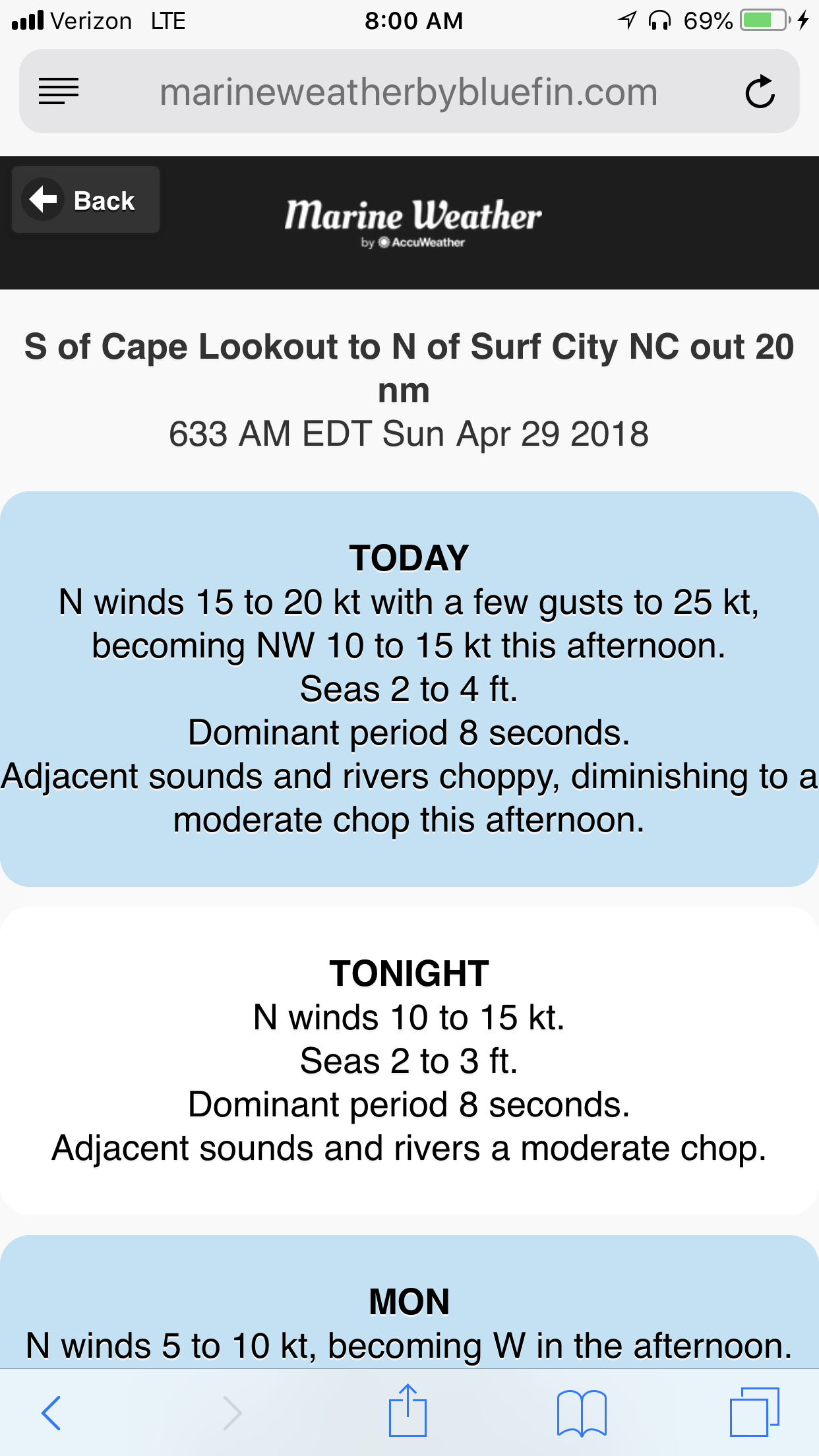
As we skirted our way up the coast, we tried to minimize the length of fetch as the winds were blowing 20 kts from the NW (with gusts to 25 kts). Recall: a fetch is a distance of water that the wind has been given to blow over the top of. Wave heights build wave heights with distance.

Sunday Forecast
25kt Gusts

Along the way we saw beach homes like these near Surf City

We saw a giant ocean-side pier near Top Sail Beach.

Top Sail Beach Pier
Top Sail Beach Pier

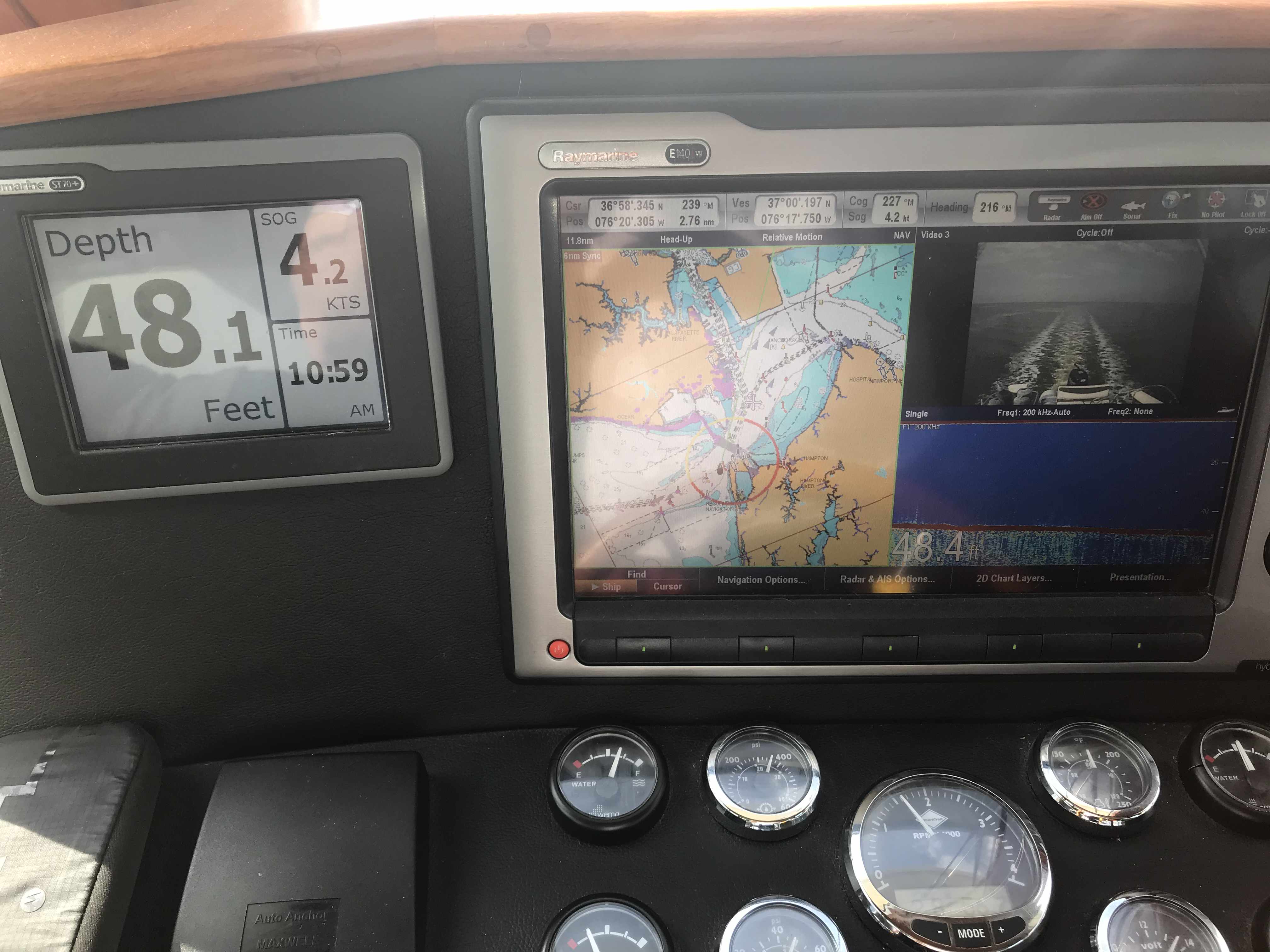
As we go, I’m always watching the depth sounder, ie sonar. It pings high frequency sound (like a dolphin) off the sea floor and displays the depth as a graphical chart over the last 60 seconds. It is very important to understand not just the instantaneous depth but also how the depths are trending over time. You need this info to ascertain quickly if you are running off a downhill slope or running aground. The steeper the incline, the faster in time the sea floor is rising up to meet you, metaphorically speaking. While watching the sonar,  I repeatedly saw objects between the boat and ocean floor. I believe these depictions to be “bait balls” or schools of bait fish in a tight spherical grouping. Sometimes they are formed into these ball formations by preditors such as dolphins.

I’m no expert at reading the fish finder / depth sounder’s visually displayed ping returns, however, I also saw this fishing boat hauling a net.

Bait Net
Small Trawler Netting Bait Fish

The trawler’s size makes me think that they are hauling a small net sized for bait fish.

A moment later, we were passed by this Italian designed Azimut luxury motor yacht. She clearly has some horsepower in her diesels since… as big as she was, she was just skimming over Mother Ocean.

azimut
Azimut on plane

As we approached Beaufort, NC, we passed Brown’s Inlet. The ActiveCaptain description for this inlet simply says: “Browns Inlet is unmarked and used by local boats only;  not recommended to strangers.”

Soon we were off Fort Macon State Park Beach which is just before Beaufort inlet, NC.

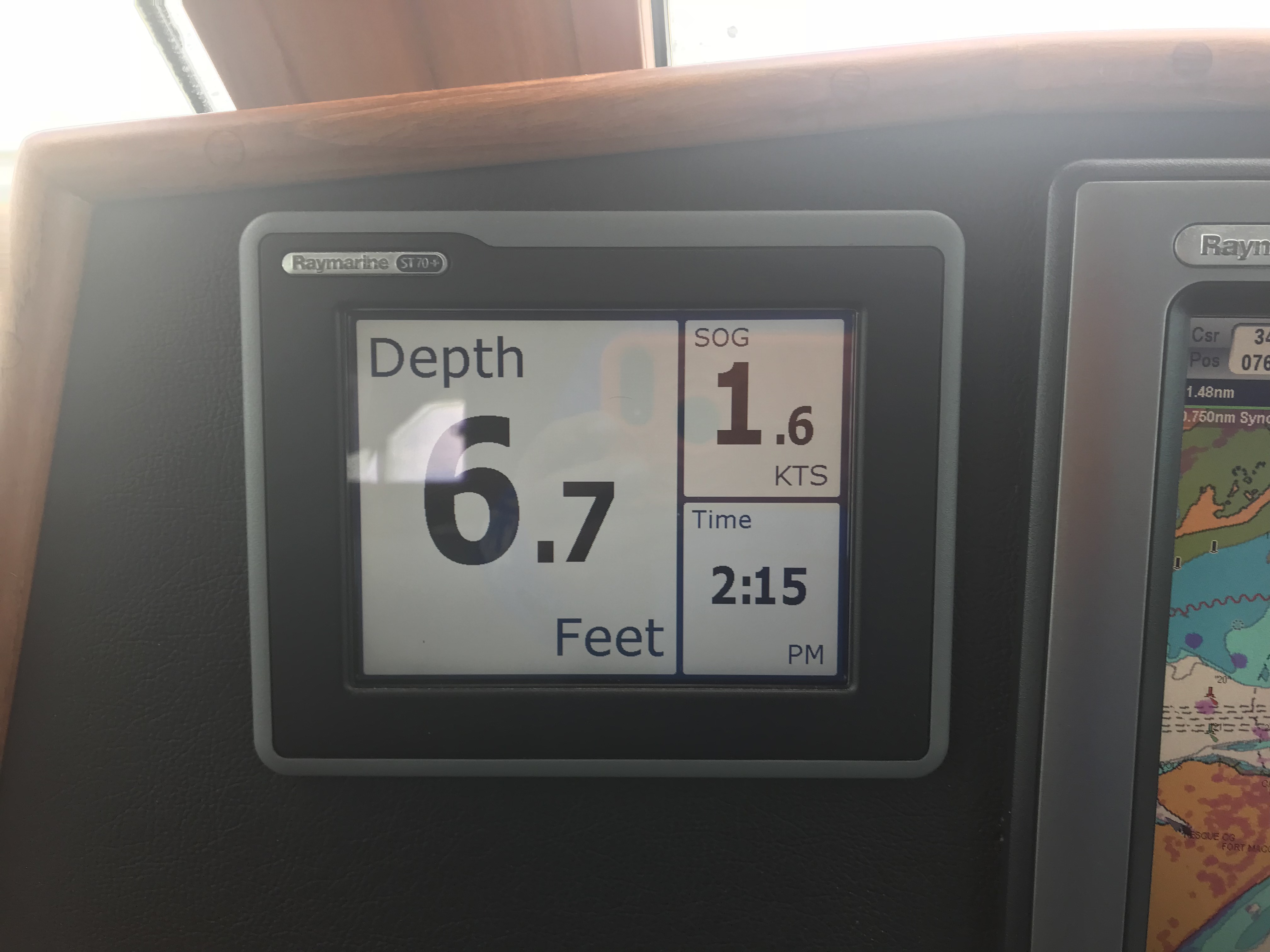
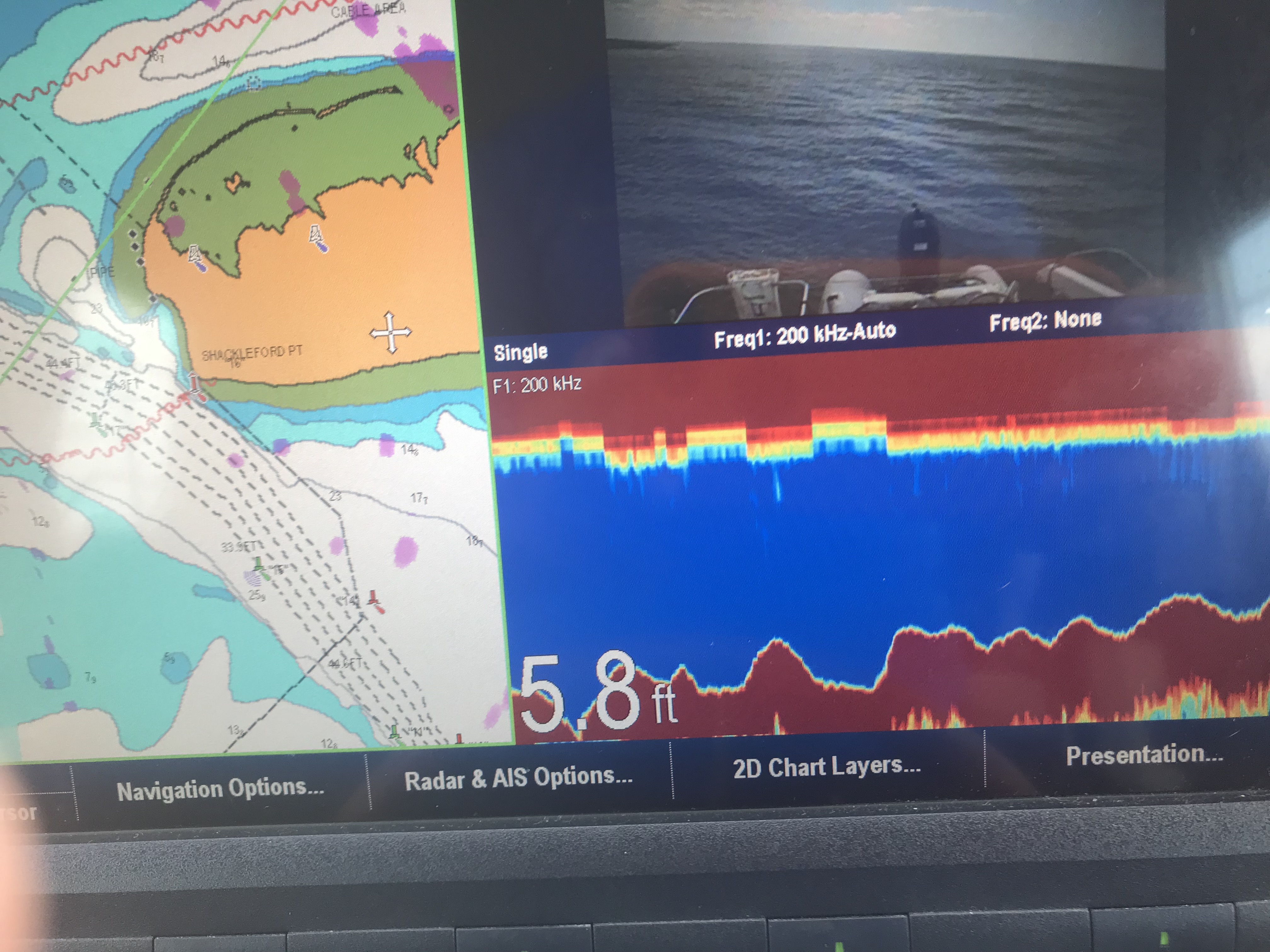
Running a dynamic inlet whose shoals change with each storm is not advisable as even the latest published charts with depth soundings will likely be incorrect. That said, we attempted to use the latest NOAA charts to sneak into Beaufort Inlet via a narrow channel close to shore. It was low tide so you don’t get any added water depth over the low water spot soudings. We entered the narrow natural channel displayed on our chartplotter.  I checked the accuracy of the spot soundings (depth numbers) and the actual depths (reported by the sonar) were 3’ shallower than what my recently updated chart displayed. That was not comforting, but I still proceeded slowly at only 1.7 kts.

Beaufort Inlet 6.7
1.6 kts is slow forward

We will run aground at about 5’ and I was already in only 6.7’. To make matters worse, there was an ocean swell that was lifting and dropping the boat above and below the static ocean surface. I was confident that however “skinny”, “thin” or simply “shallow” the depths got that we would make it. After all my charts showed a low of about 10’ and we only needed 5’.

Well, we made it about 10’ from crossing into the deep channel when we bumped the bottom. You have to tell yourself: “resist the temptation to simply push the throttle forward and plow the next 10’ to the deep channel”. You just can’t know how shallow those next 10’ are. You could be pushing your boat up onto a shoal so shallow that the diesel engine / propeller combo won’t have the bite on the water needed to either push or pull you off the shoal. I opted to put her in reverse and spin her back the other way. We knew if we didn’t hit on the way in, we would not hit leaving.

Beaufort Inlet 5.8'
5.8 is Shallow

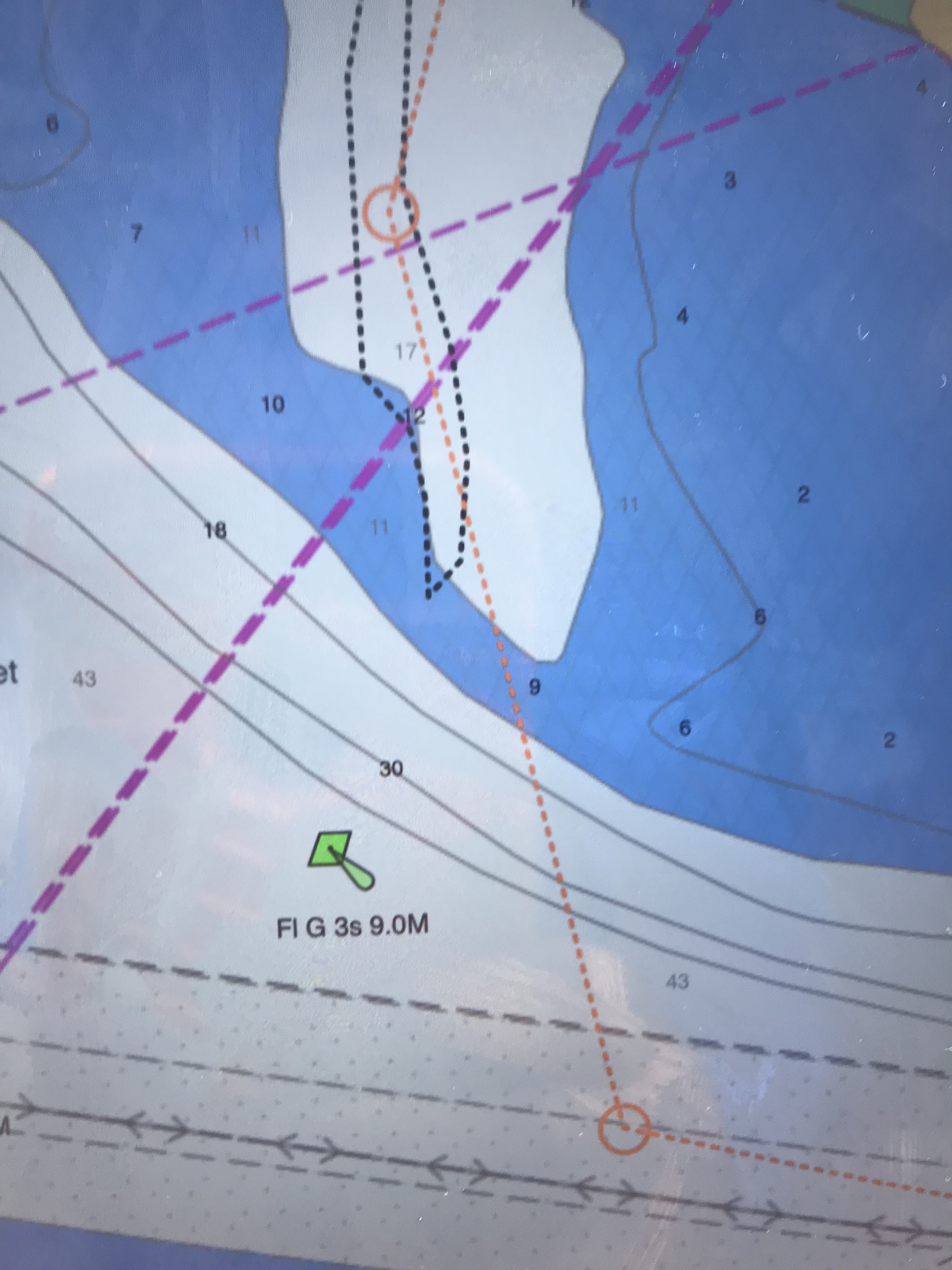
Beaufort Inlet 10 feet.JPG
10′ more and we could have made it into the deep channel

Note: The top picture showing the chart with 5.8’ depths displayed is not as recent as the chart depicted in the picture below it. We were literally 1/4 of a boat length from making it into the deep channel. You can see our track as we backed out. FYI: track = a black, dotted line or bread crumb path of where your boat has been. The dashed orange line with circular junction points is our plotted course. We backed out and came in the inlet via the mid-channel / safe water buoy. This buoy marks the center of the entrance channel.  Line up with this vertical red-white striped buoy and you are heading directly in the inlet.

Confidence is a good thing as a captain but … so is restraint 😉

I was emailing with a fellow boater who was getting ready to come North from Vero Beach. They have owned their blue water trawler and traveled up and down the coast. However, I still added the below statements to my reply. I did so because, I myself, am often curious where other sailors draw the line at the decision to “go offshore or not”?

Marty Reply: I wish you fair winds and seas however, checking your weather forecast on my favorite web app: http://www.marineweatherbybluefin.com/united-states/app

The NWS weather zone just above Vero Beach shows 3-5′ waves with a 6 second period and winds out of the East. I hear that and think…

1. If the winds were instead out of the West, you could run North tight to the coast.

2. I prefer 2-4′ seas because 3-5 is the average wave height not the significant wave height. 

On average, about 15% of waves will equal or exceed the significant wave height. The highest 10% of waves could be 25-30% higher than the significant wave height. And on occasion (about one per hour) one can expect to see a wave nearly twice the significant wave height.

3. Six seconds is a rather short period. I’m picturing steep waves. Your boat is stabilized,  ours is not. I would not want 6 second period,  5′ possibly 7’ waves on my beam.

On my laptop, I like to use the Windfinder web app

On my smartphone, I like to use the Windfinder Pro iOS app

WindFinder
WindFinder Pro iOS App

When you study the densely displayed data given by this app, you see that the waves during the daylight hours will be… at worst 4.5’, out of the NE with a 6 second period. The tide will go low about an hour before the sun sets (read that as… “about when you are entering the shoaling inlet from the sea”).

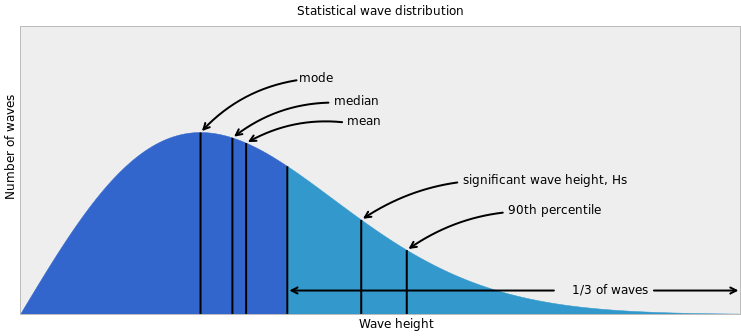
Then you say “4.5’ waves are not that bad”. However, that wave height forecast is based on a statistical wave distribution.

Statistical Wave Distribution

Make sure not to mix up “mean, median or average

The average of the biggest 1/3 of the waves you’ll see are much larger, possibly to the height of 6.5’. That is uncomfortable to most crew in an un-stabilized trawler. Note: Blue water, top-heavy, flybridge trawlers often use active fins beneath the waterline to oppose the roll of the vessel to port or starboard. This can dramatically improve the conditions underway in a sea. Naiad is one such company who manufactures marine stabilizers.

Naiad

Here is a dated but decent overview of marine stabilizers

After making our way in the inlet we passed ICW statute mile marker 200. Note: Mile 0 starts in Norfolk, VA and the ICW milage progress to statute mile 1243 in Key West.

ICW Mile 200.JPG
ICW Mile Marker 200

We made it into Adam’s Creek before having to anchor up for the night. Adam’s creek offered us the last anchoring spot before we enter Pamlico Sound and must travel the next 25 or so nautical miles to the Goose Creek anchorages.

Our current anchorage does not offer wind or wave protection but the holding is good. The NE winds are forecast to be light, at only 10kts.

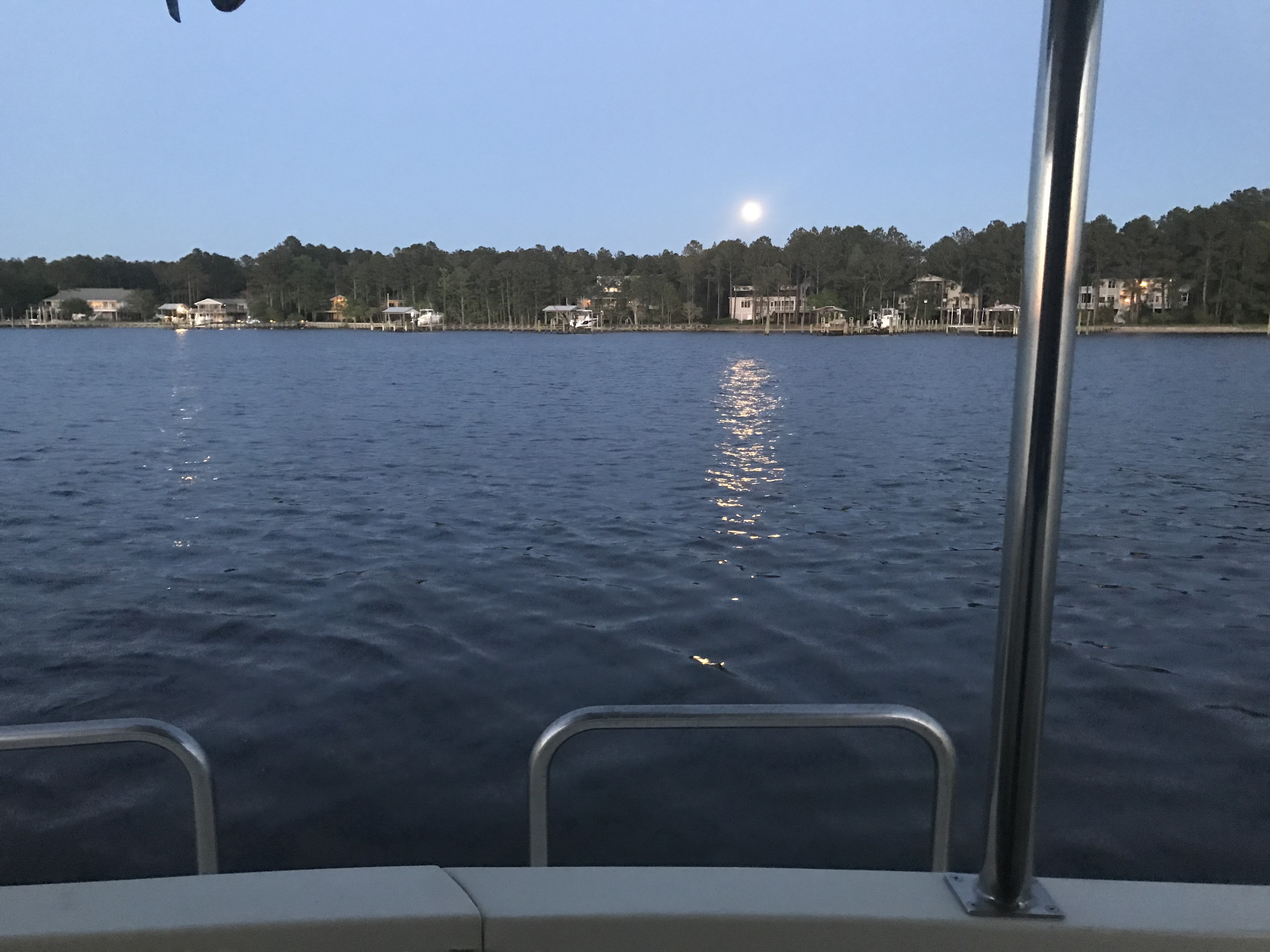
I found it interesting that we had a full moon rise off the stern and a simultaneous sunset off the bow.

Moon
Full Moon

Tonight Moon
Moonrise off the Stern

Tonight Sunset
Sunset off the Bow