NYC – Norfolk VA

We departed Port Washington and perfectly timed our arrival to the east end of the East River. We had a fair current giving us a strong push on our stern all the way through the East River and into NYC Harbor.

East River

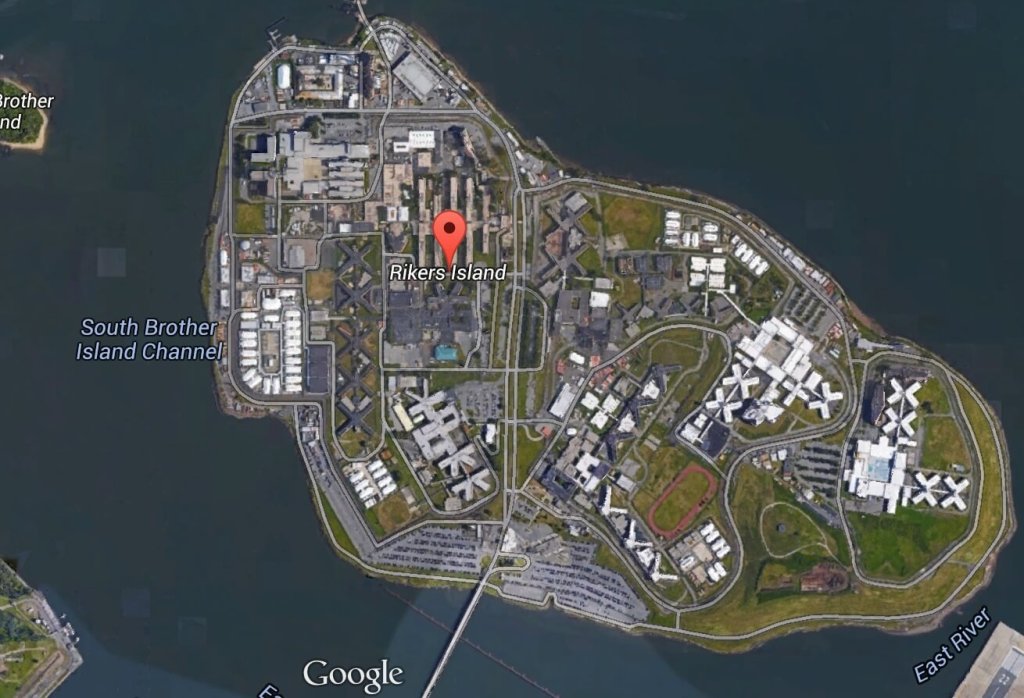
Once in the East River you come upon Laguardia airport and Rikers Island.

Just past Rikers Island you’ll find the “The Boat” or as it’s more formally known, the Vernon C. Bain Correctional Center.
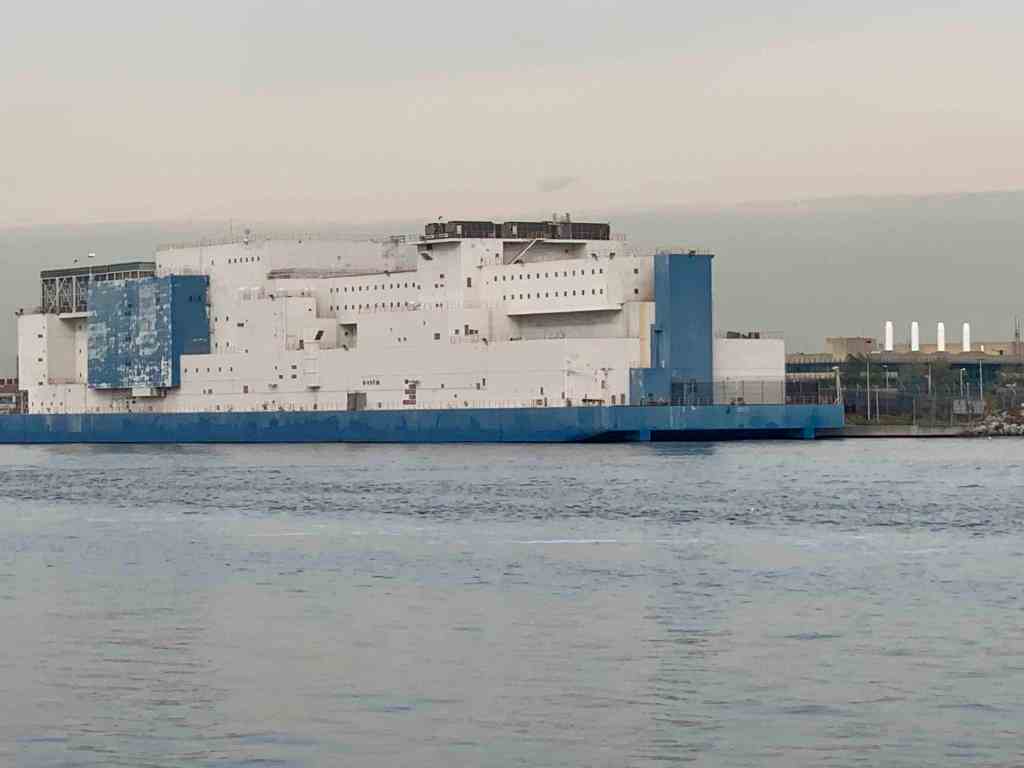
The Jail Boat

A wee bit further down the East River and you come to an infamous location known as Hell’s Gate. This is where the Harlem River dumps into the East River. Our planning placed us here at max ebb current because it’s a great feeling being pushed in such a strong current.

Buddy was at the helm calmly making helm corrections as quickly as possible to keep the pointy end of the boat pointing in the right direction.

Buddy Hell Gate

Roosevelt Island was off to port.

Past Roosevelt Island it can feel like a war zone as helicopters and water-taxis buzz all around you.

NYC Harbor

At this point you are nearing The Battery or the southern tip of Manhattan. The skyline looms above you.

Manhattan

Next up is Ellis and Liberty Island and that famous tall green lady of liberty.

Lady Liberty

The famous Staten Island Ferry wizzed past us.

Weather Changes Plans in NYC

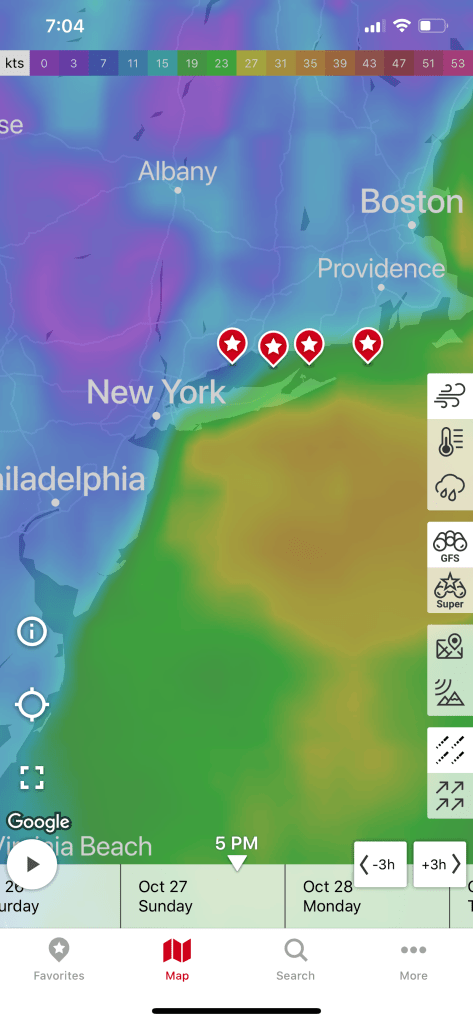
We had planned on spending a couple days in NYC harbor and visiting Manhattan but our weather heading down the NJ coast looked great for the next 38 hours. We had a quick discussion at the helm and decided that we would go offshore. Stopping in NYC would have meant being trapped for the foreseeable forecast.

Offshore Voyage to Norfolk, VA

Going offshore to Norfolk would require a helm watch schedule. We like to call it a port & starboard watch meaning that there would be two teams. Team 1 = Buddy & Renee. Team 2 = Marty. When you’re on “helm watch” the other team is relieved of any responsibilities other than to rest up for when your watch starts.

Night watches means keeping an eye out the pilothouse windows for any lights. The moons phase was only a sliver of a crescent and it did not rise till 4AM. We chose a route between 2-3 NM off the coast and that allowed us to see the twinkling lights of shore as we made way south.

For those uninitiated in night watches you will have to become comfortable with staring intently at your radar screen while you push into the blackness. Looking forward out the pilothouse windows all you see is black and the few instrument lights that reflect off the inside of the glass. You’ll need to determine if any of those red, green or white lights are coming from a boat or a buoy. If the light blinks, it’s a buoy. If it’s solid, it’s a boat.

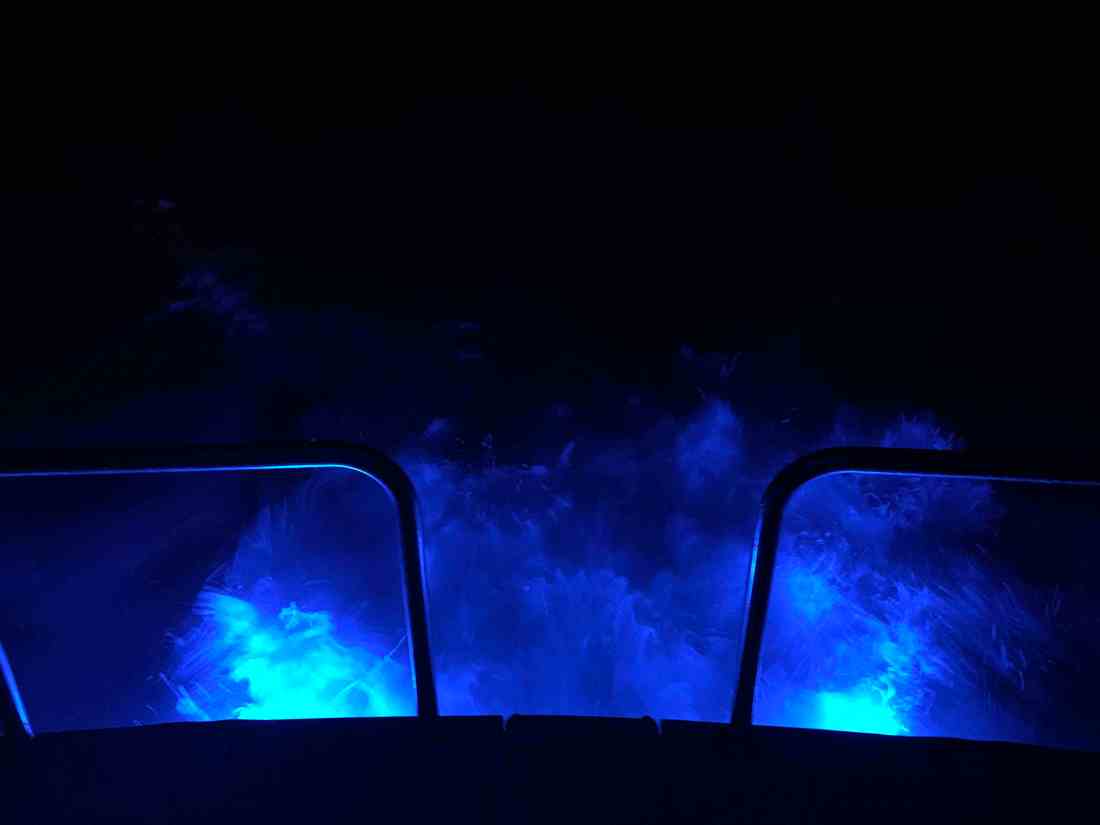
One night I come off watch and lit the underwater lights so I could stand on the stern as the propeller wash boils up from below as the lights of shore pass.

Here is a short video of a boat passing on our starboard side. You can clearly see the other vessel’s red-portside-light as well as it’s white-steaming light. When I zoom in the camera was able to pickup the white water wake in their stern light.

When I left my home port in Warwick, RI, a few fellow boaters, friends were also making the trip south for the winter. MV Ship Happens, a large sport-fishing boat, was heading south and we had been communicating thinking we’d cross paths eventually. I received a photo via text from Capt. Dan and to my surprise it was of MV Simple Life as they zoomed past us. Although MV Ship Happens left port days after us, she has a much faster cruise and eventually overtook us.

Capt. Dan snapped this pic of us on the way past us

During the day we were graced with the presence of whales. I captured a short video of a whale coming to the surface off our starboard side.

Whales off the Jersey Coast

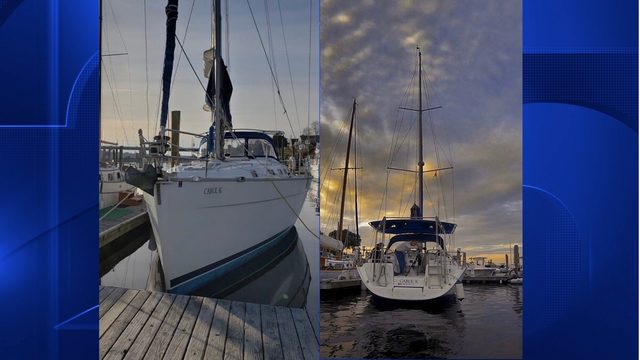
While we were off the coast, our VHF crackled to life with the USCG issuing a securite broadcast about an overdue 43′ Benneteau sailing vessel out of Jamestown, RI called the “Carol K”. They had left before us and were somewhere along the coast with us. We attempted to hail the Carol K but got no response. We hoped that they would be found safe and several days later they were found 100 miles of Cape Henry, VA.

As we approached Cape Charles in Virginia we thought it best to tuck under the Chesapeake Bay Bridge-Tunnel and find a quick place to anchor for the night.

The trip down the busy channel into Norfolk, VA is best done in the daylight. I could tell you a story about nearly getting run over by a warship a few years back but that story is best told over a few beers. 😉

We searched our Aqua Maps charting app for an Active Captain anchorage and found one called “Concrete Ships”. The wind was out of the east but the forecast predicted the wind would clock around to the south and strengthen. This particular anchorage offered the best lee from the wind within the distance we were willing to travel.

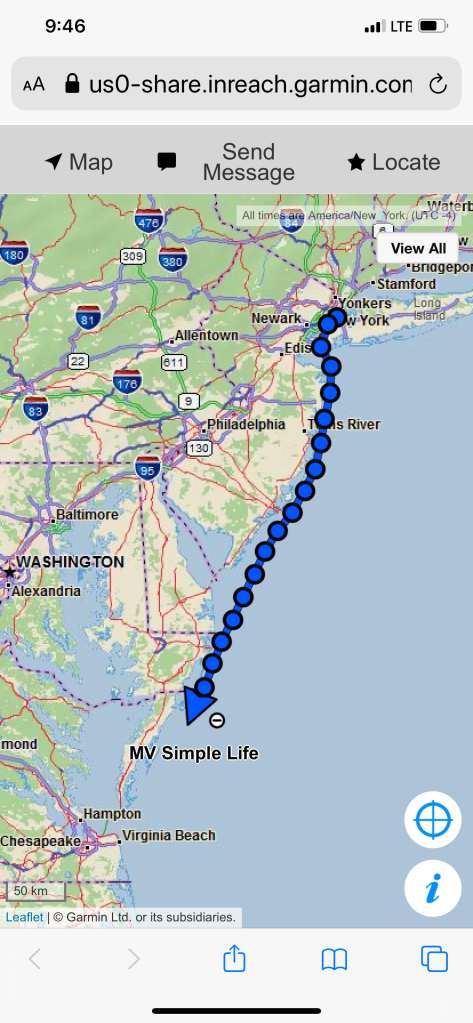
My website/blog has a button that you can click to see the real-time location of MV Simple Life. Here are some pics of that my Garmin InReach Satellite communications device makes available to you.
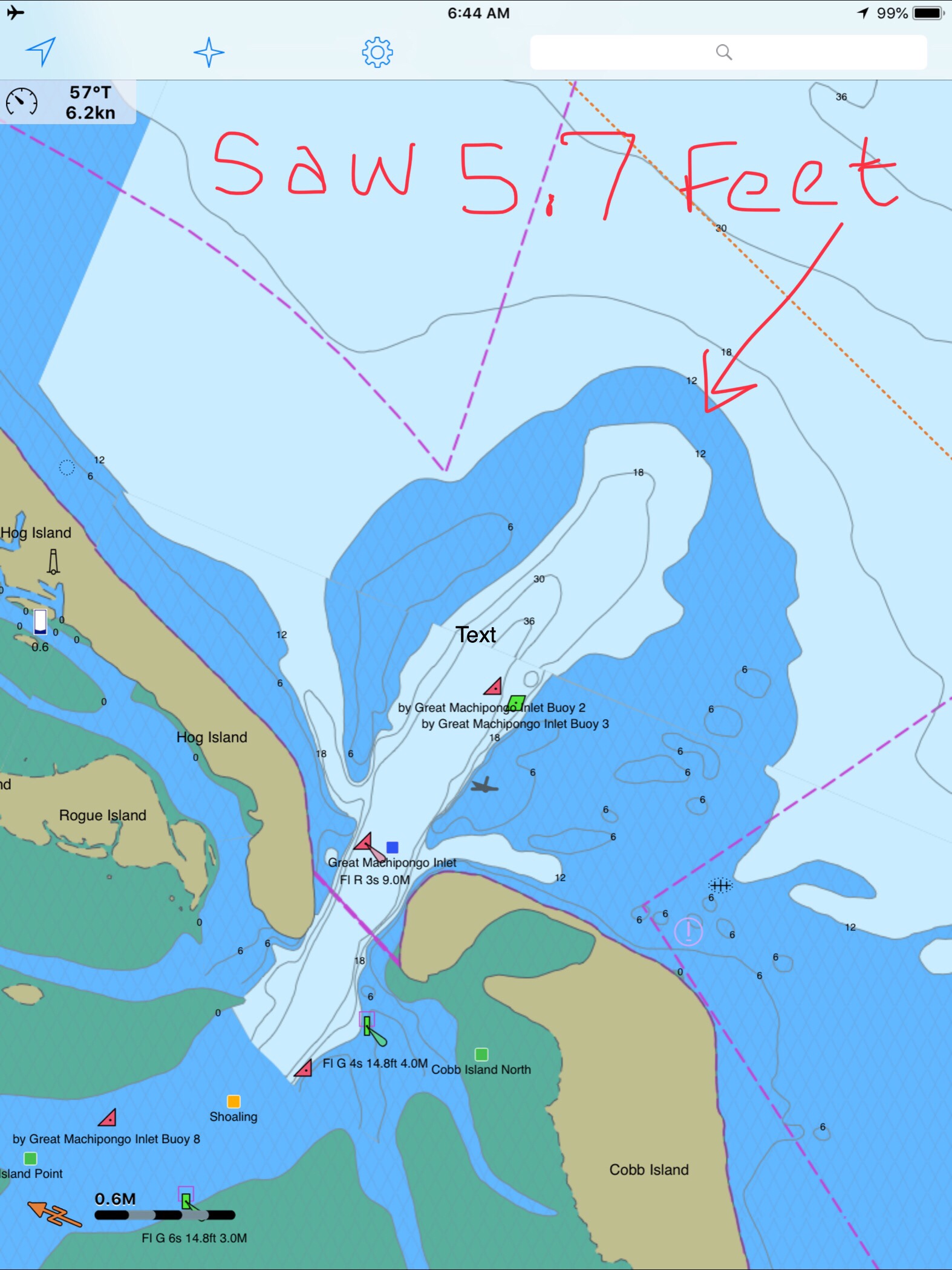
Days past, I have made the trip south from Cape May, NJ to Norfolk, VA by going outside along the coast before. Those times, I had chosen to anchor nightly along the coast. There are few decent anchorages along this stretch of coast. One anchorage I have used before was inside the Great Machipongo Inlet. I recall how tricky getting through the shifting shoals dotting the inlet was. As we passed, I could not help but notice that the latest update of the NOAA charts shows a similar sized vessel to MV Simple Life wrecked on those same shoals. (Me thinks…) I’m happy I bailed on my inlet entry that stormy night.

Ghost Ships

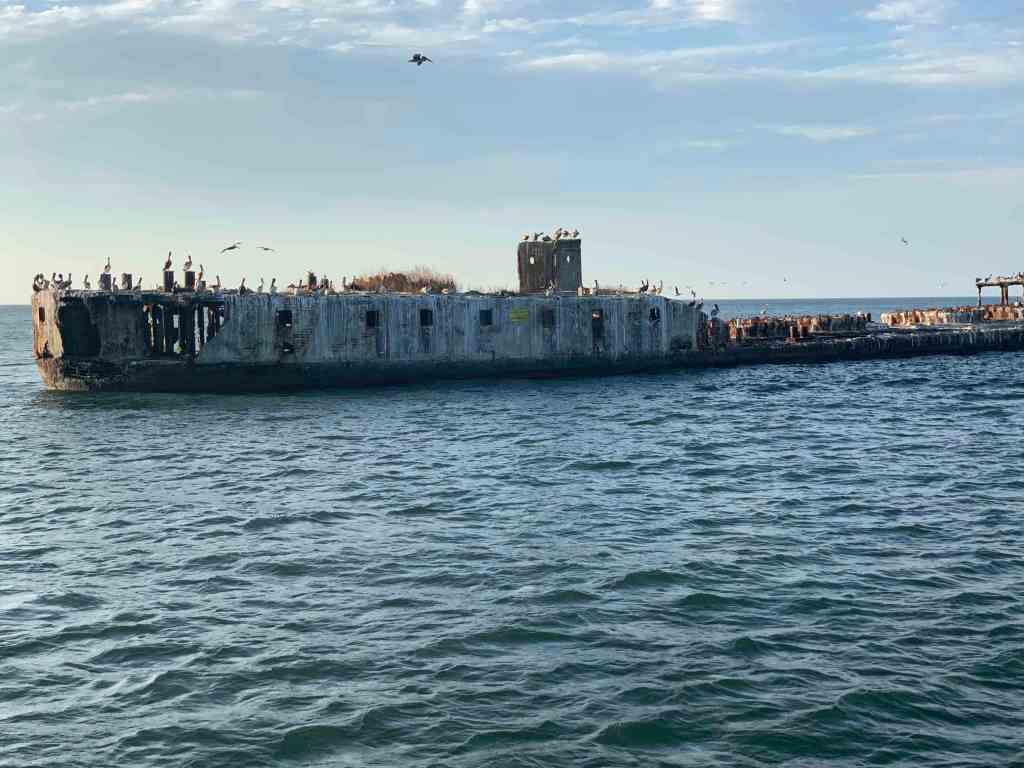
When it comes to ship building there are many hull materials to select from. One such material/method is ferrocement construction. It’s a cheap way to build a hull/boat but has fallen out of favor with the advent of materials such as FRP (Fiberglass Reinforced Plastic).

We had arrived at our anchorage with plenty daylight left. We shot some video and snapped a few pics of the ships as we arrived.

Standing on the bow at night in the breeze we were flanked by ghost ships with their ghostly pale white shapes faintly materializing though the inky black of night.

Next up Norfolk Navy Yard …
Retreat from the Waves

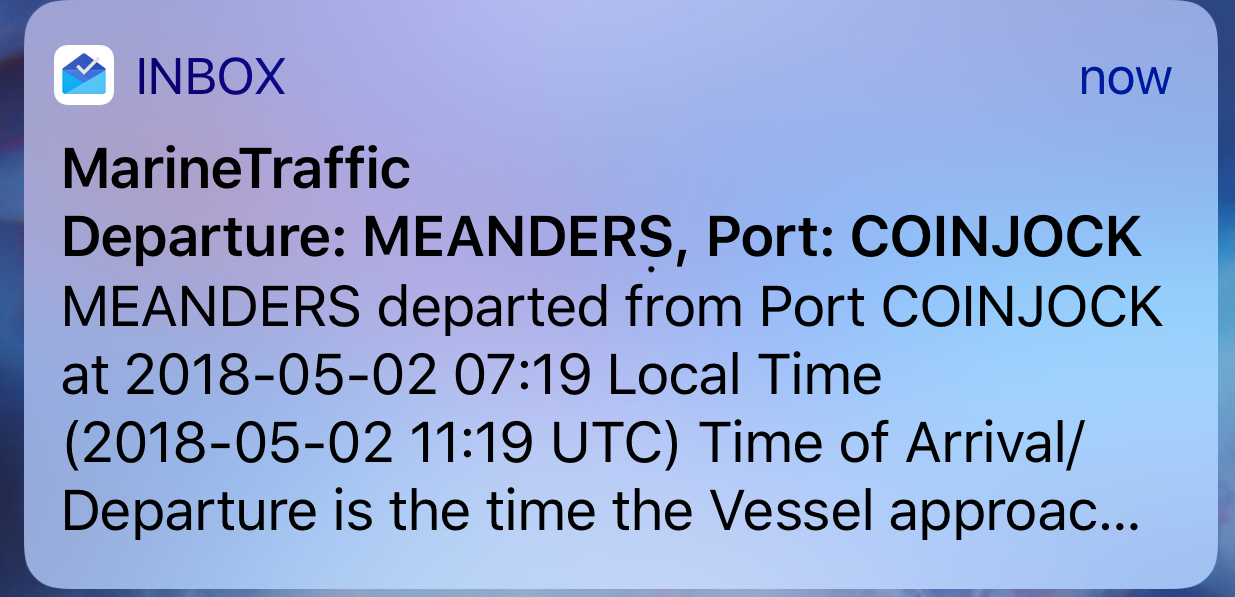
Before leaving Coinjock Marina, we received an email alert that MV Meanders had left Port: Coinjock. MV Meanders had been docked bow to bow with us. They had stealthily slipped away while we were making coffee.

Meanders Marine Traffic
Marinetraffic.com email alert for a boat as it leaves a port

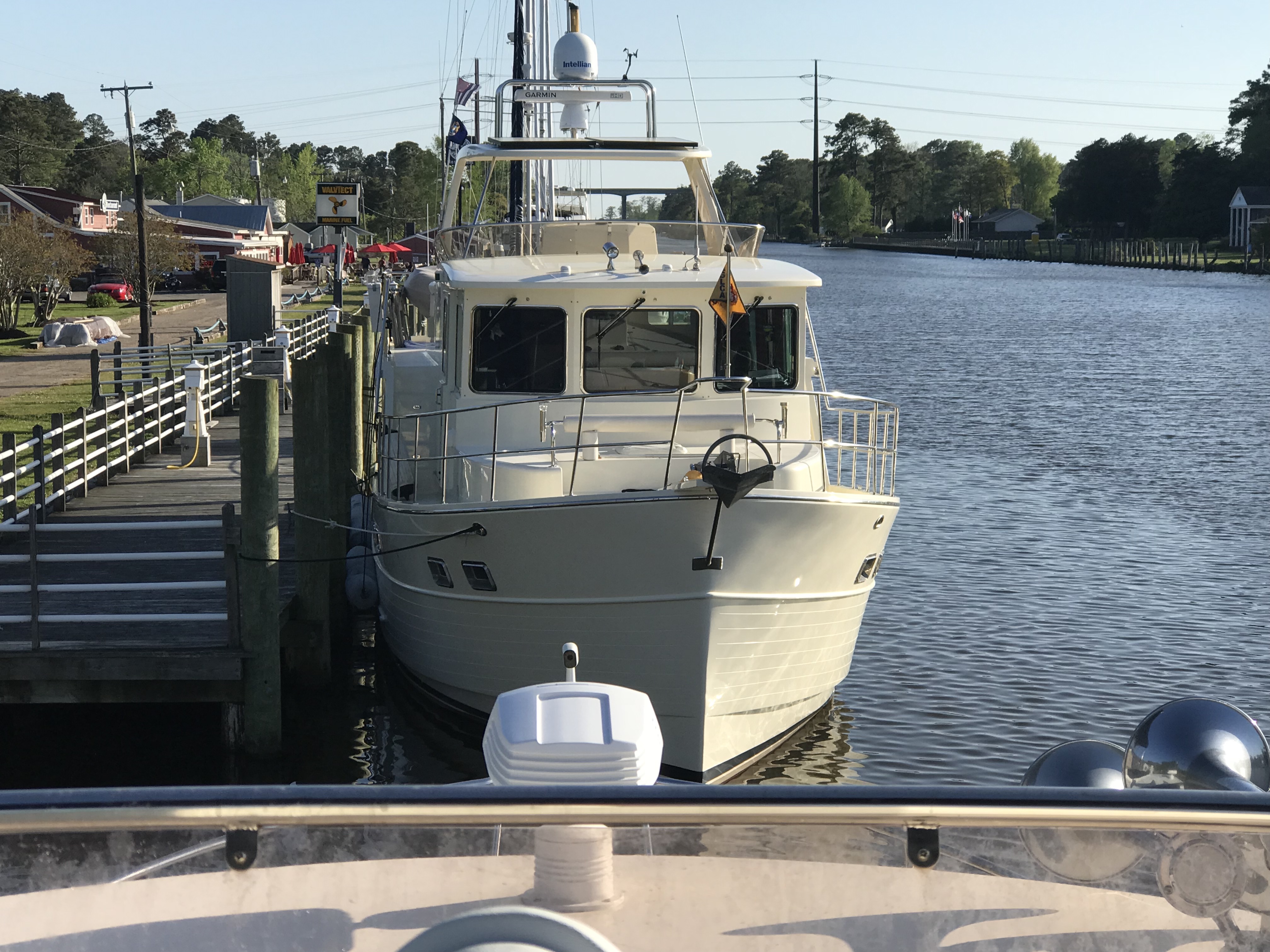
MV Meanders is a beautiful 49’ North Pacific yachts RPH trawler. She’s a bigger version of our boat with reverse raked PH windows. MV Meanders was recently sold to a nice couple named Tom & Nancy who stopped to say “hi” when they saw our NP43 fueling up on the docks. Meanders was previously owned by friends of ours, Andy & Marty. Andy was my boat broker and took me for my first ride in their NP43. I was smitten. I setup the MarineTraffic alert when Andy & Marty were living aboard their boat and traveling to many different ports. At that time, I was working and enjoyed getting alerts about all the interesting places they were visiting. I would think to myself.. “soon that will be Kelly & I and the dogs”.

Meanders
MV Meanders a 49′ NP RPH docked off our bow in Coinjock, NC

We had to delay our departure momentarily to allow for a passing tug pushing not one but two barges. We don’t want to be in the way of something like this.

Tug 2 barges 3
Tug Pushing 2 Barges up the ICW

As we traveled down the ICW were chasing a 1935 boat called “MV NAN” out of Osterville, MA. A beautiful old boat that hails out of a marina that we have visited once or twice.

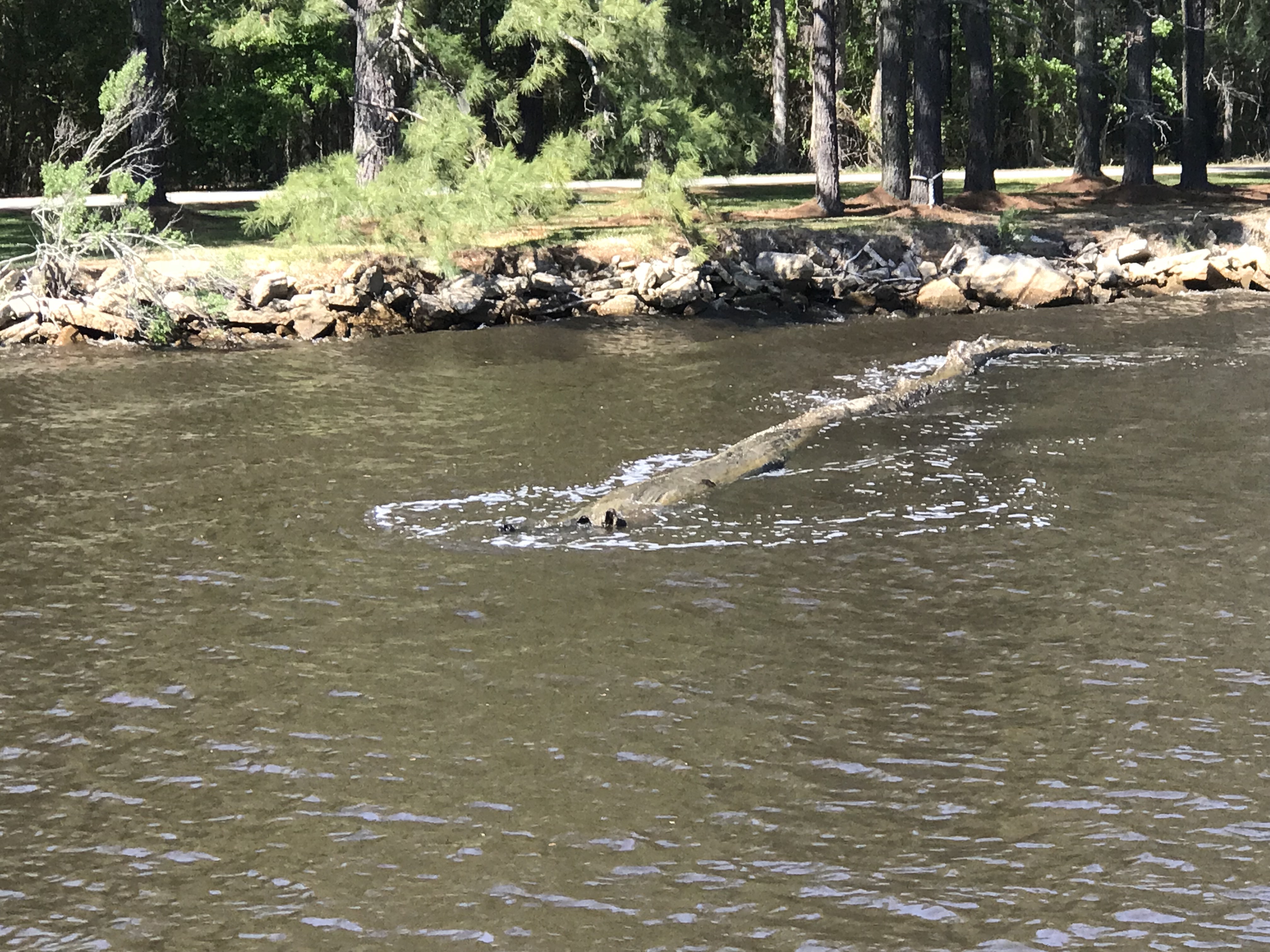
At the helm, I was using my iPhone’s charting app to measure distances to restricted bridges and locks. Many bascule, lift or swing bridges only operate at certain times like “top of the hour” or on the “half hour”. You need to measure the distance to the next bridge opening and adjust your speed to arrive on time. If you don’t you’ll find yourself treading water till the next opening. As I looked up from my iPhone, I saw this log floating down the river and had to swerve to avoid hitting it. iPhones make it even easier to run into a hazard on the ICW.

Hazzard Log 4
Hazards to Navigation are everywhere in the ICW

Just before arriving at Top Rack Marina you pass this school bus hanging precariously over a precipice. They put a sign in the window that says, “Fire Rescue Training in Progress”. I imagine they added that after someone called 911 to say that “a school bus was about to fall into the ICW!”

Fire Rescue 2
Fire & Rescue Training Using a School Bus About to Plunge into the ICW

Soon we were at Top Rack Marina and enjoying a well deserved dinner at the Amber Lantern Restaurant. What great food this restaurant has. Kudos to the Chef.

AmberLantern
Amber Lantern Bar

When we awoke in the AM we could not depart due to an emergency! We were out of dog food! I hailed an Uber with the app and raced off to the local Petco. Dogs fed; we untied and headed North to Norfolk, VA.

Coming into Norfolk you feel small compared to the many warships lining the channel.

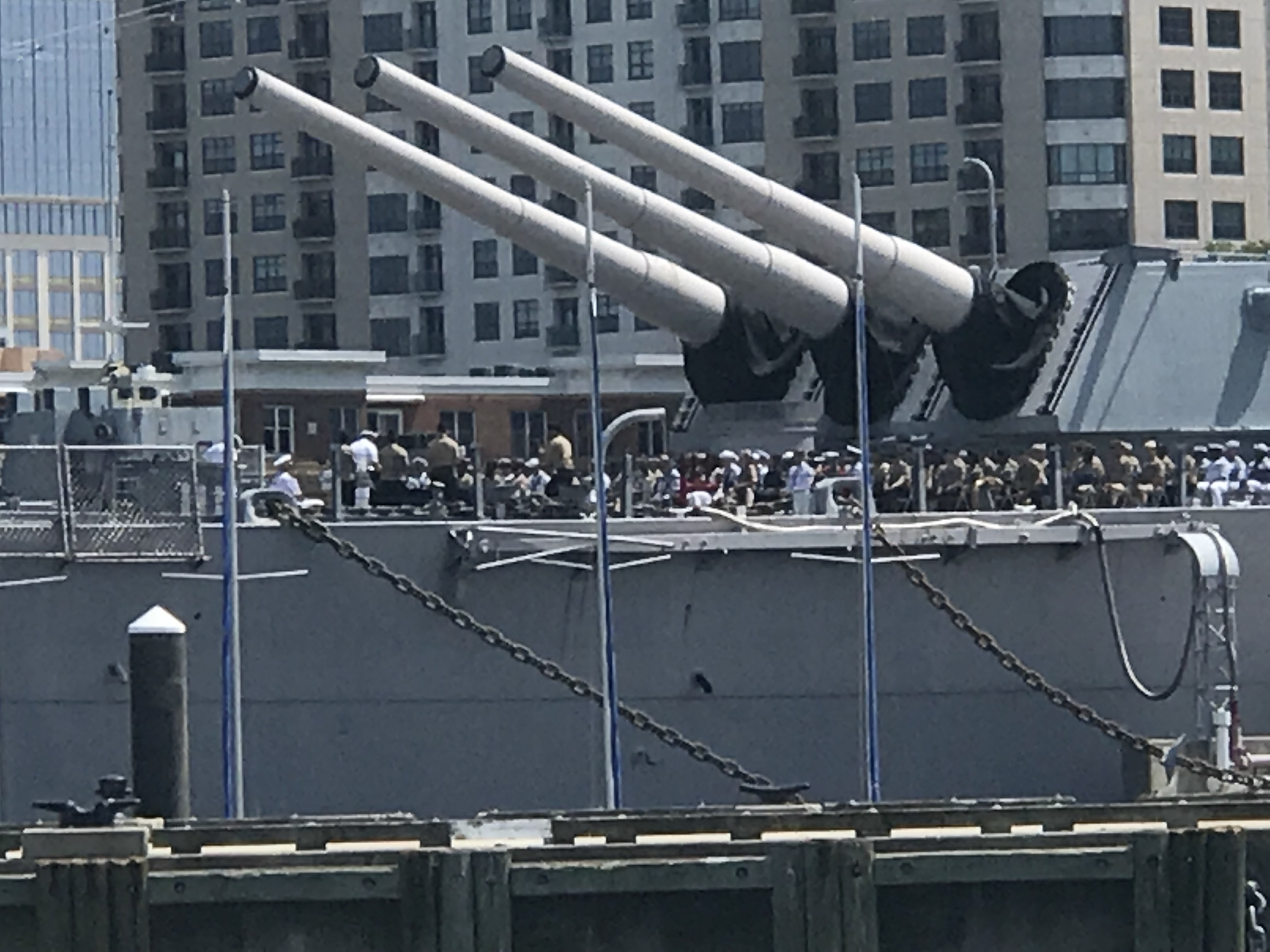
How cool is it to have a Navy ceremony seated beneath the “Big Guns”?

Navy Ceremony 2
Navy Ceremony – Battleship Wisconsin?

I always admire this thing as if it was a cool sculpture of sorts.

Star Wars 2
Star Wars?

One large container ship appeared to be washing their anchor. I wish I had a dedicated anchor wash system. Sometimes when our anchor comes up, it can be covered in muck from the sea bottom.

Anchor Wash 3
Anchors Getting Washed

We exited Norfolk harbor and pointed the boat up the coast. The weather was supposed to be 2-4 ft with 20kt winds.

We soon realized that the waves which were on our beam were far larger than predicted and made for a miserable ride. When we arrived at our planned anchorage which was just inside the “Great Machipongo Inlet”.  We had only to cross over the bar shoal at the entrance. By now the waves had built into large breaking waves that were pushing us from behind toward the bar. As we progressed slowly over the bar I watched the depths with dread. 10’, 9’, 8’, 7, 6’!!! When I saw 5.7, we did an immediate hard spin and raced back out to sea the way we came in. You don’t want to run aground in breakers 30 miles from anyone.

As the spray from the waves washed over the pilothouse, Kelly & I had an emergency discussion about what to do?

We had 4 Options:

  1. Hold the bow into the large waves until the tide rises and attempt to cross the bar again. It would probably be dark before we got enough lift from the tide.
  2. Continue North 70+ miles to Ocean City, MD. I was exhausted and did not think I could make it another 10 hours into the night.
  3. Continue North 30+ miles to the MARS anchorage. Zero protection against the large waves would have made for an unbearable night on anchor and the next day was predicting 25 kt winds and larger waves.
  4. Return the 30+ miles back the way we came and tuck around Fisherman’s Island and into Chesapeake Bay to find an anchorage.

We chose option 4. This was hard for me because I often say to Kelly,  “I hate moving backward or retracing steps”. I think this comes from a combination of being A.D.D and always not wanting to go backwards for something that you forgot and just a desire to never see the same scenery twice. Always seeing something new brings happiness.

As we made our way back into the bay, the sea began to soften and the ride became smoother.

Cape Charles Sunset 4
Sunset off Fisherman’s Island, VA

We selected an anchorage called Sunset Grille Anchorage. As we approached it was very overcast and dark. Radar pings were showing two docks extending far out from shore on either side of our intended anchorage spot.  If we didn’t approach from exactly perpendicular to the shore we’d have slammed into these pilings on this dark night. Thankfully we have radar and a remote searchlight to identify hazards the radar pings.

We anchored and tried to get some sleep.

1AM and the boat was ROCKING. The wind had picked back up and the current had aligned us so the waves were on our beam. The boat was rocking violently. So much so that eventually, I had to start the boat and pull anchor and leave into the blackness. It’s always better to stay on anchor than attempt to navigate an unfamiliar harbor on a black night. But spend 4 hours in a boat that is rocking like an amusement ride and you’ll take your chances underway.

The wind had picked up and we were on the wrong side of a 20 mile fetch of water that was now battering us with large waves. We fought our way to the calmer side of the bay and then turned North looking for an anchorage that would give us protection against the strong Southerly wind and waves. We motored our way to Godfrey Bay and anchored in a calm protected bay, safe from the day’s harsh weather. It was only 11AM and I could barely keep my eyes open even with the 3 cups of coffee I had pumped into myself.

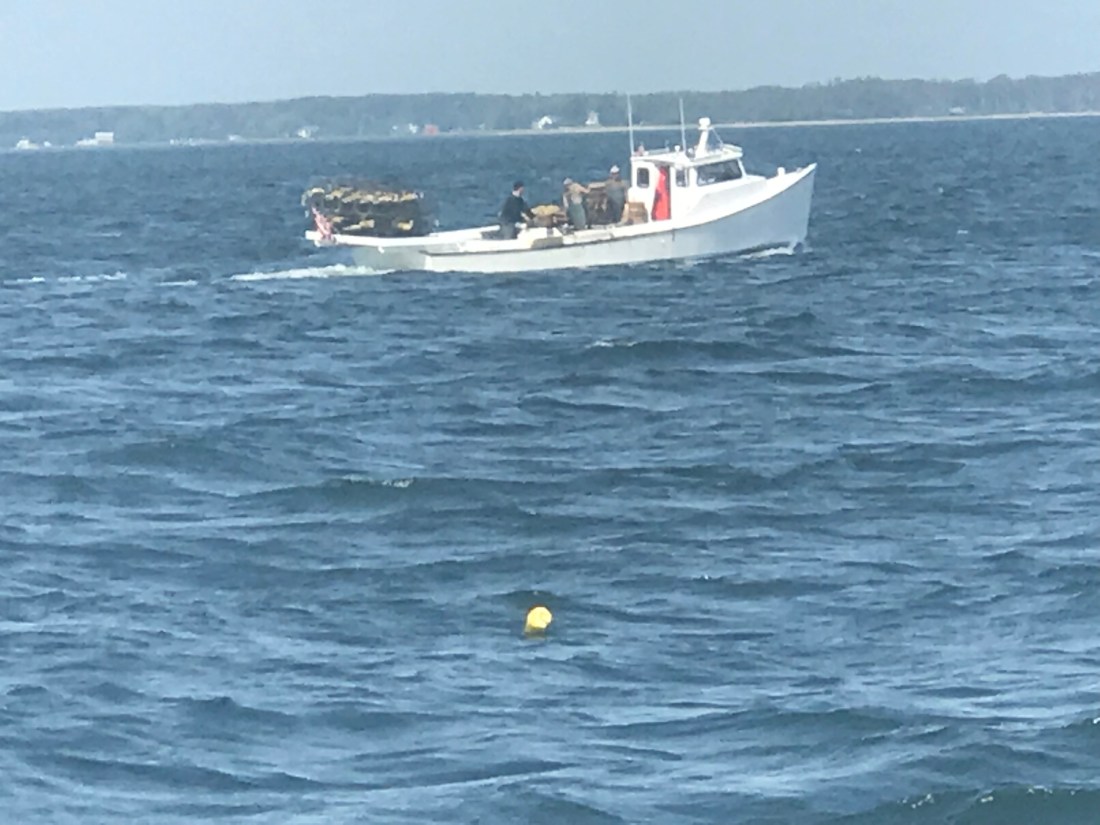
As we entered the anchorage, we passed this classic Chesapeake crab boat.

Crabber 20
Looks like a painting I’d hang on my wall

Now peacefully on anchor. We are plotting a new course that takes us up the Chesapeake Bay.

We’ll traverse the C&D canal and then have to sail down Delaware Bay, round Cape May and go North up the coast toward NYC.

Entering the ICW

Norfolk Leg
Route from The Great Machipongo Inlet to Top Rack Marina, Chesapeake, VA

Well we woke up early and left The Great Machipongo Inlet. The dolphins once again escorted us out and I turned South with the sun streaming in the port side pilothouse windows so hard I had to close the curtains and use the radar alone to tell what was on that side of the boat.

The sea was as flat as a model’s tummy so I lowered the RPMs on the diesel to get 2 MPG rather than 1 MPG. Simply by slowing the boat 1.3 knots we double our fuel efficiency! Don’t you wish that were the case for your car?

Thimble Shoal Light - Norfolk VA
Thimble Shoal Light

In a few hours we had snuck through the Chesapeake Bay Bridge Tunnel, past Thimble Shoal lighthouse and we were approaching Norfolk Navel Station.


What an amazing sight to get to these American Navy ships up close.

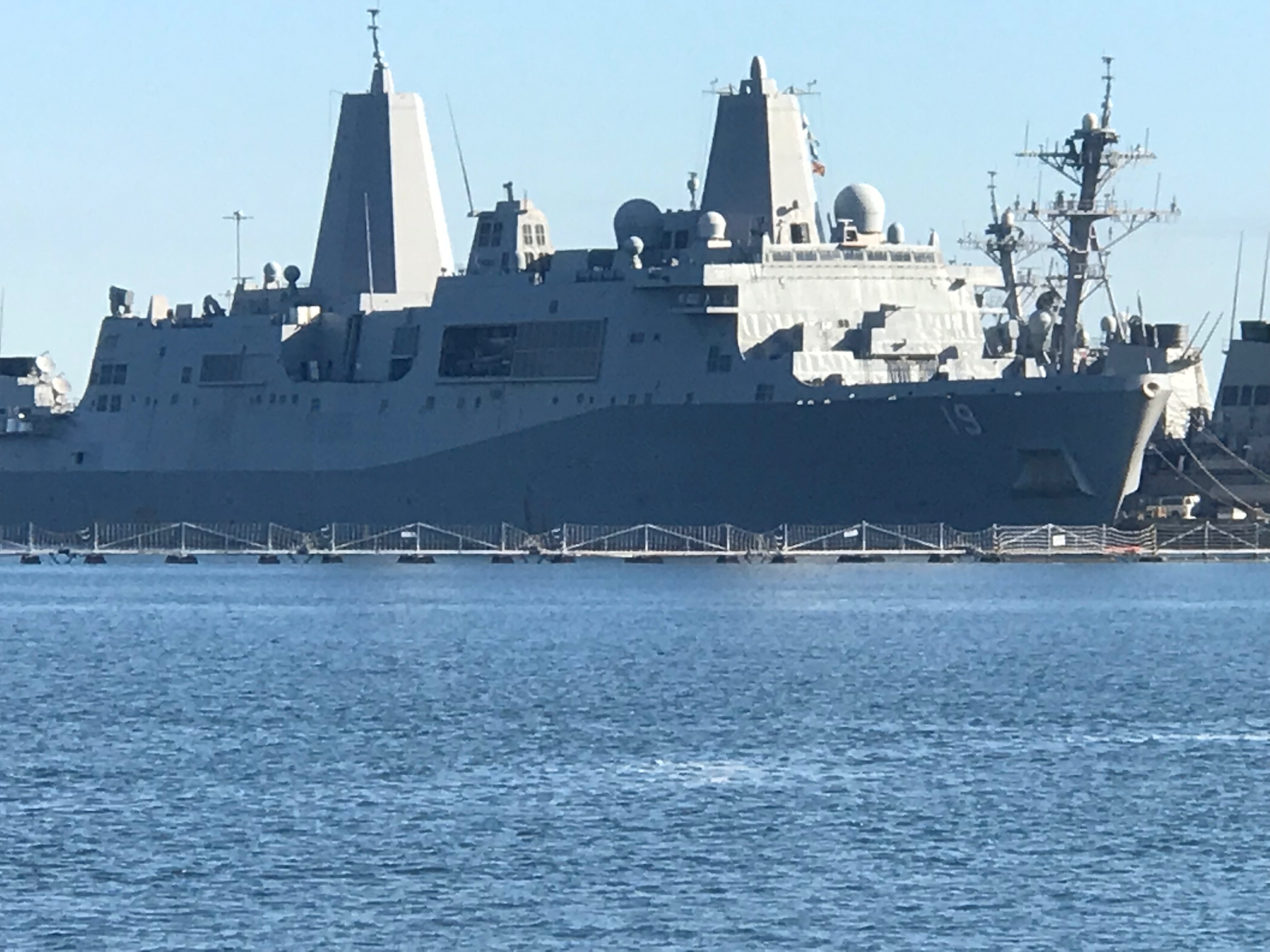
Warship 19
USS Mesa Verde (LPD 19) – Amphibious Transport Dock Ship

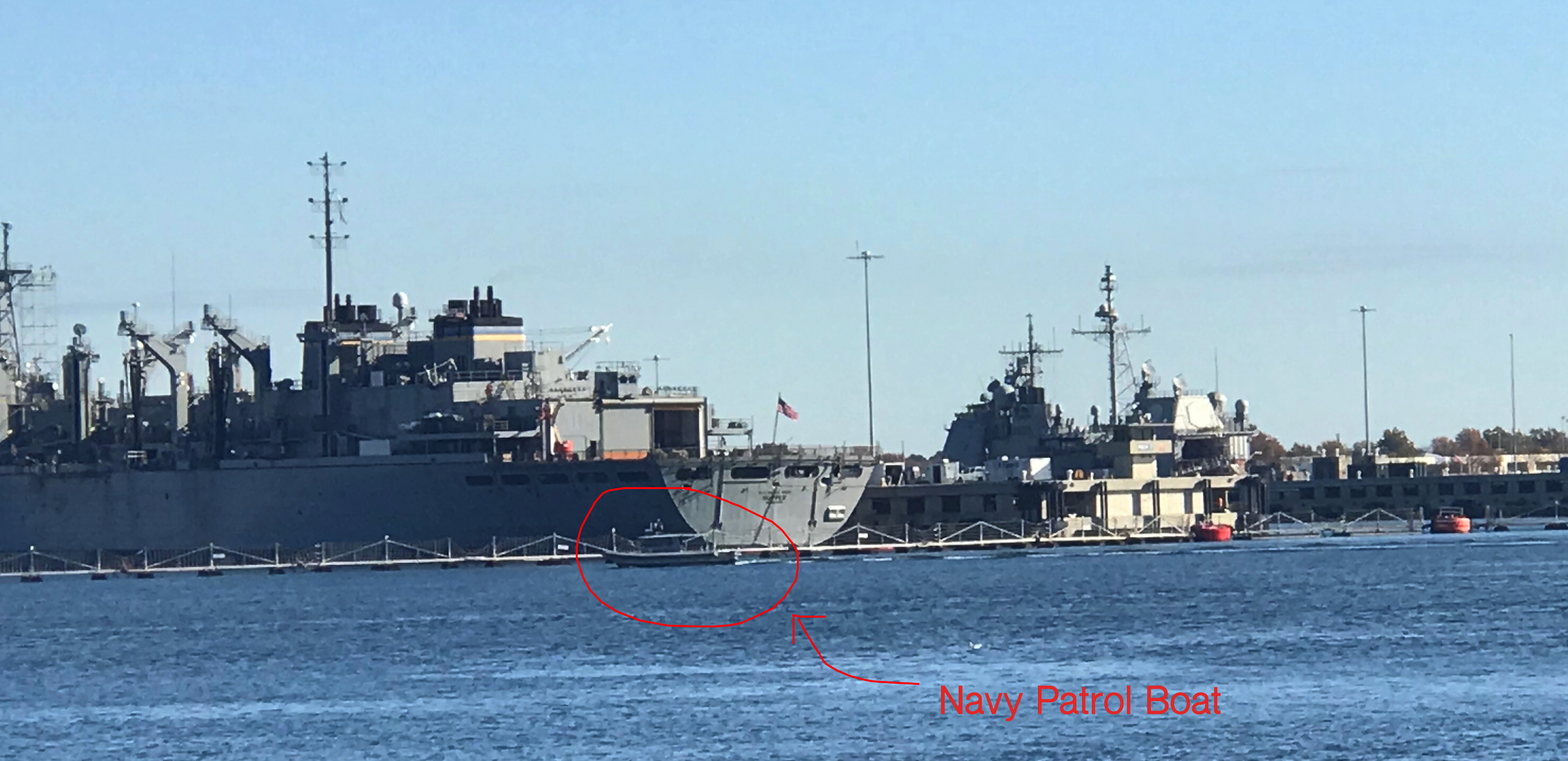
You can see the barrier fence that they stretch across the opening and that fence line is protected by a Navy Patrol boat with a machine gun on the bow.

Navy Patrol boat

A local news story revealed just a few months ago there were six bomb threats called in to the naval station and you can call NCIS if you know anything. I wonder if you can call and ask for “Leroy Jethro Gibbs” or “Tony DiNozzo”?

Jethro and Tony

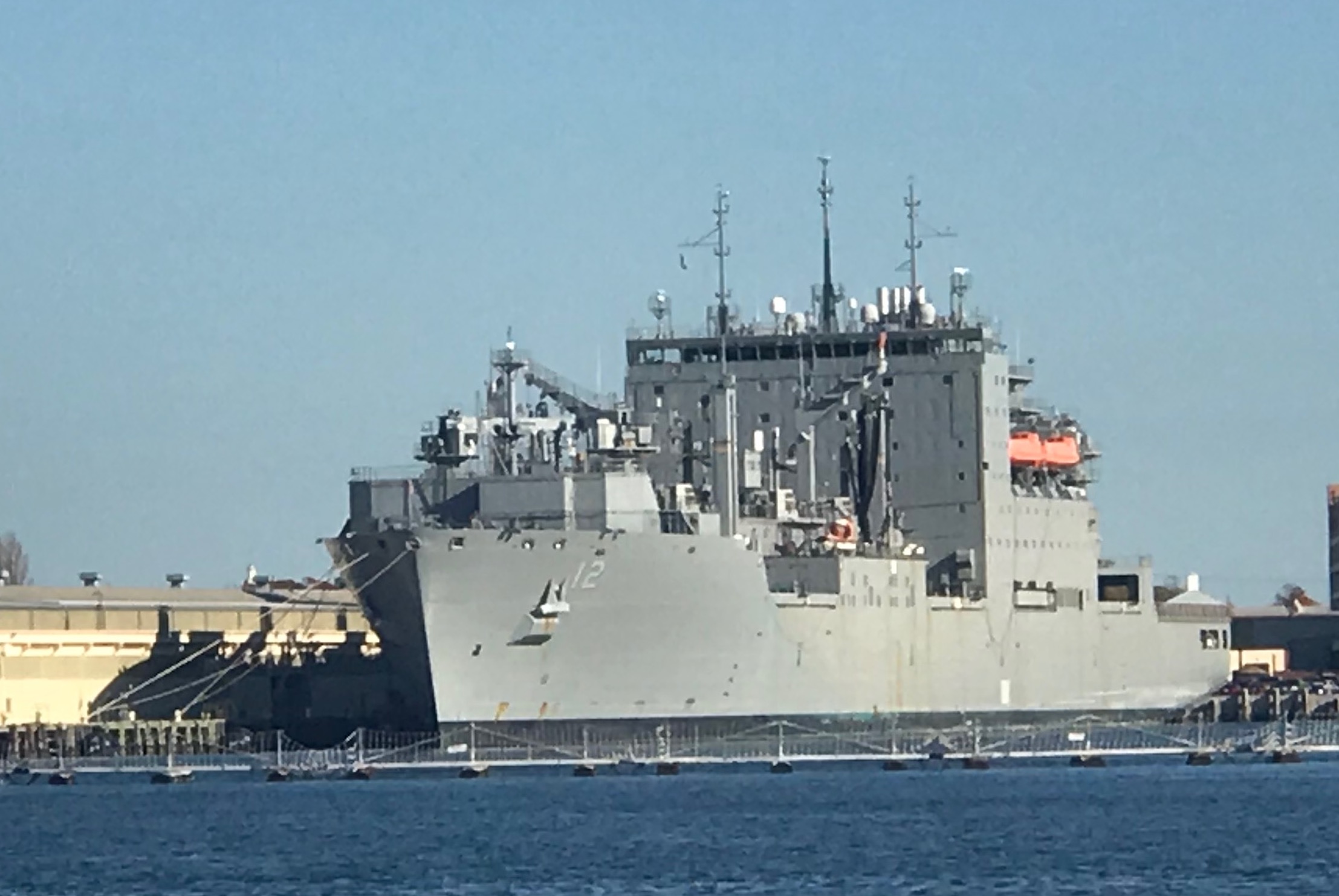
USNS William McLean (T-AKE 12) - Military Sealift Command
USNS William McLean (T-AKE 12)
– Military Sealift Command

USS Leyte Gulf (CG-55)
USS Leyte Gulf (CG-55) – Ticonderoga-Class Guided Missile Cruiser

USS San Jacinto CG-56
USS San Jacinto (CG-56) –  Ticonderoga-Class Cruiser

MH-53E Sea Dragon
MH-53E Sea Dragon Buzzed Us From Overhead

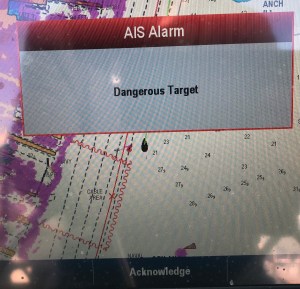
Dangerous Target
AIS (Automated Information System) Alarm on my Chartplotter warning of other AIS traffic that has a narrow CPA (Closest Point of Approach)

As the Sea Dragon buzzed us my navigation system popped up forcing me to ACKNOWLEDGE the fact that there was a “Dangerous Target” nearby. The Helicopter was not alone and there were a pair of jets making that deafening sound that seems to well up from a simple background rumble to a roar.

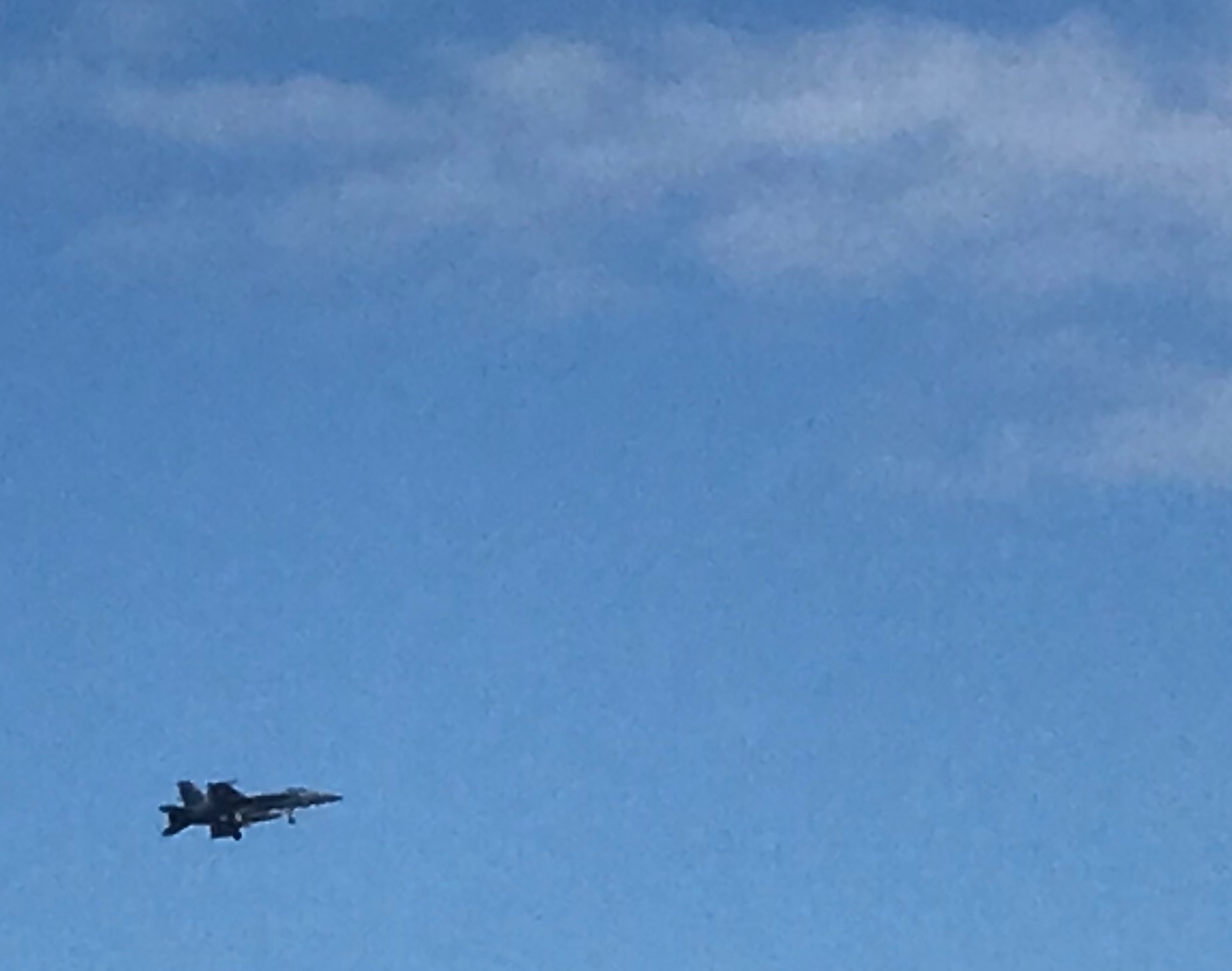
Jet
McDonnell Douglas F/A-18 Hornet – Screeching Across the Sky

I believe that is a McDonnell Douglas F/A-18 Hornet? Maybe one of our military aficionados will comment if I got any of this incorrect?

DryDock 2
Norfolk Virginia Dry Dock


Dry dock ship
I Believe this is the Stern of a Amphibious Transport Ship?

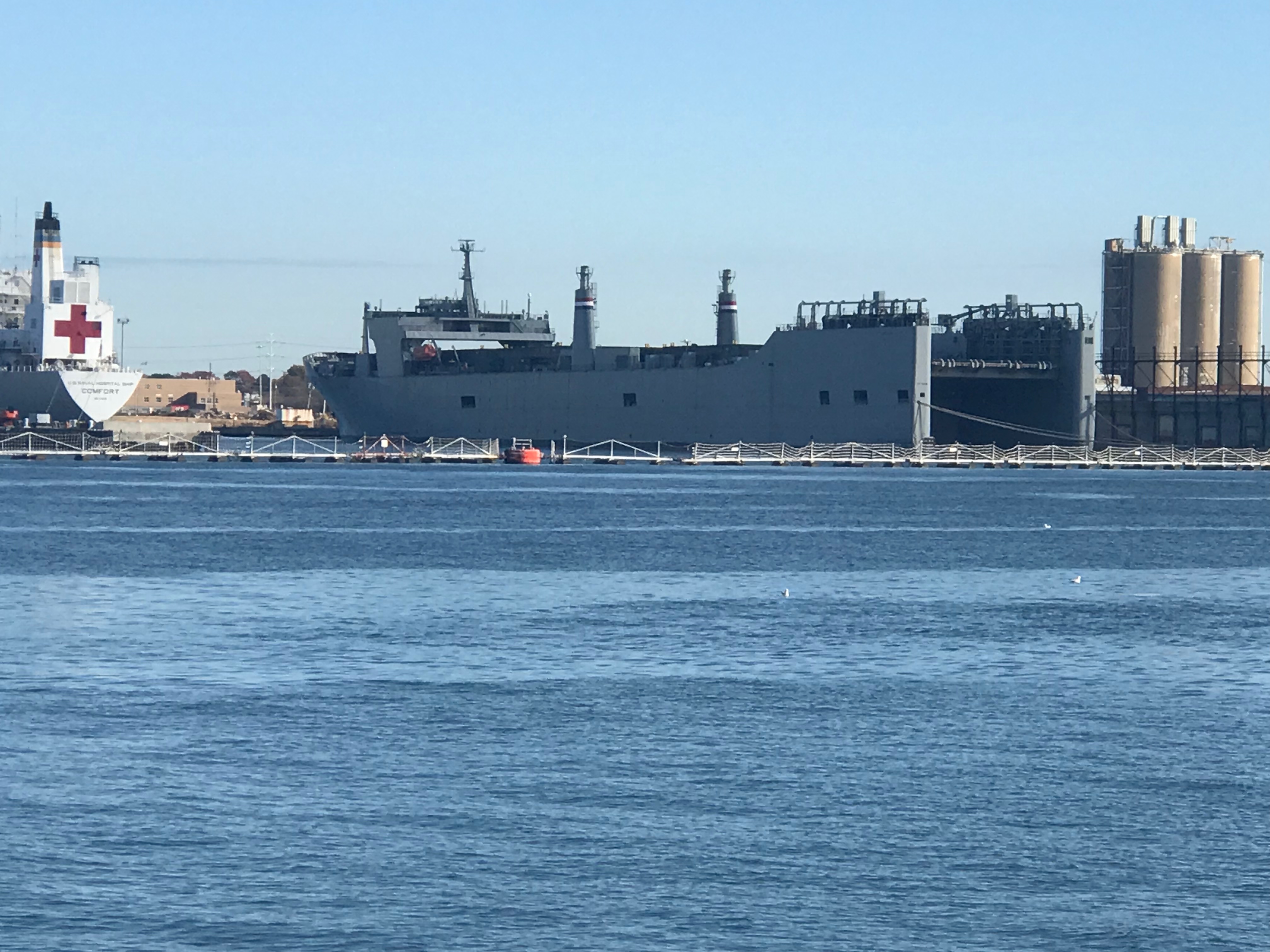
Medical Ship
USS Jason Dunham (DDG-109) – Arleigh Burke-Class Destroyer Alongside The Hospital Ship Comfort

The Hospital Ship Comfort made it’s way down to Puerto Rico as part of the relief efforts.

News Story about Hospital ship and it’s relief efforts.

So after navigating past all the warships and being careful to keep our distance it’s on to the Norfolk International Terminals and the Virginia Port Authority.

Star Wars
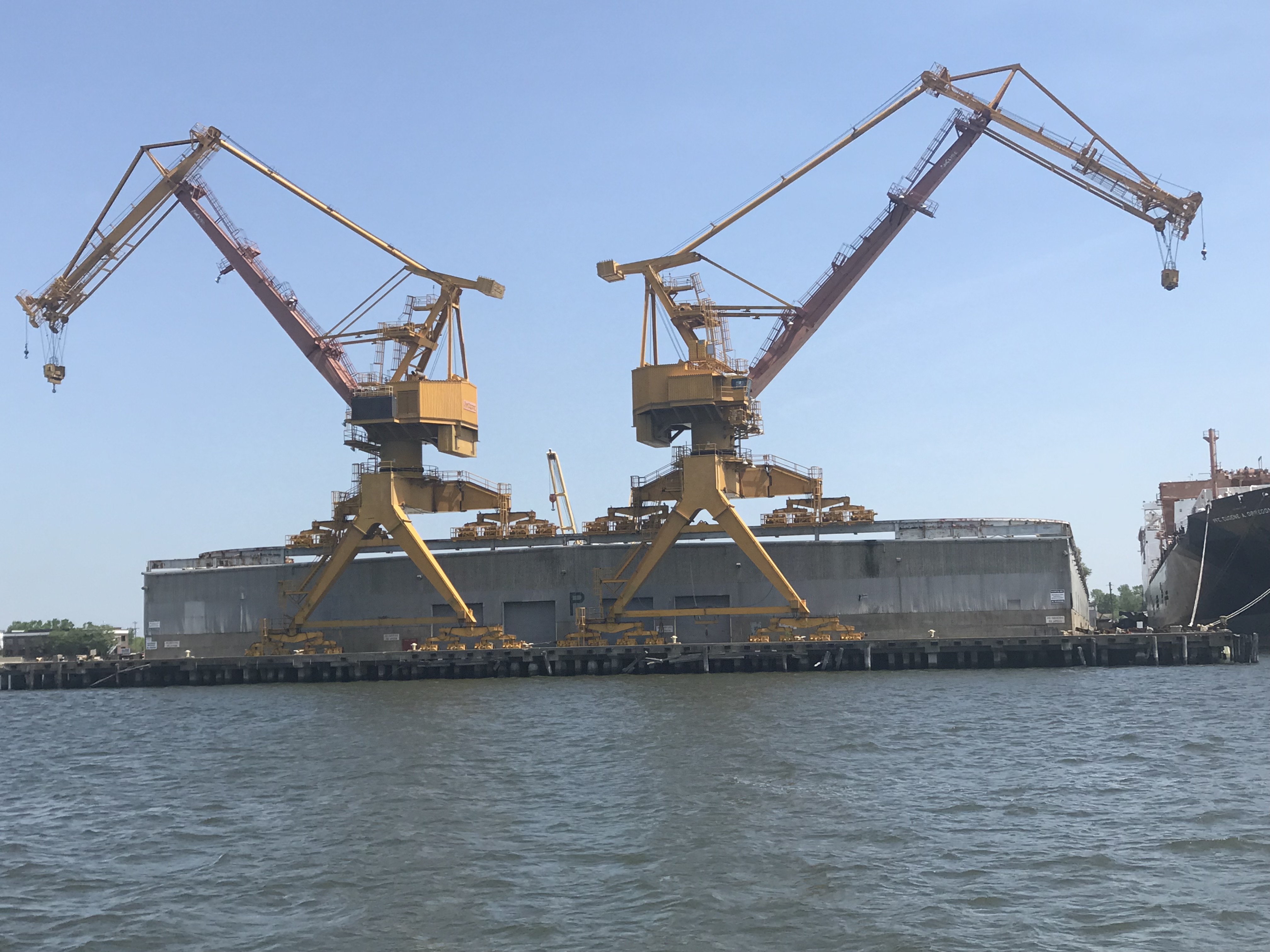
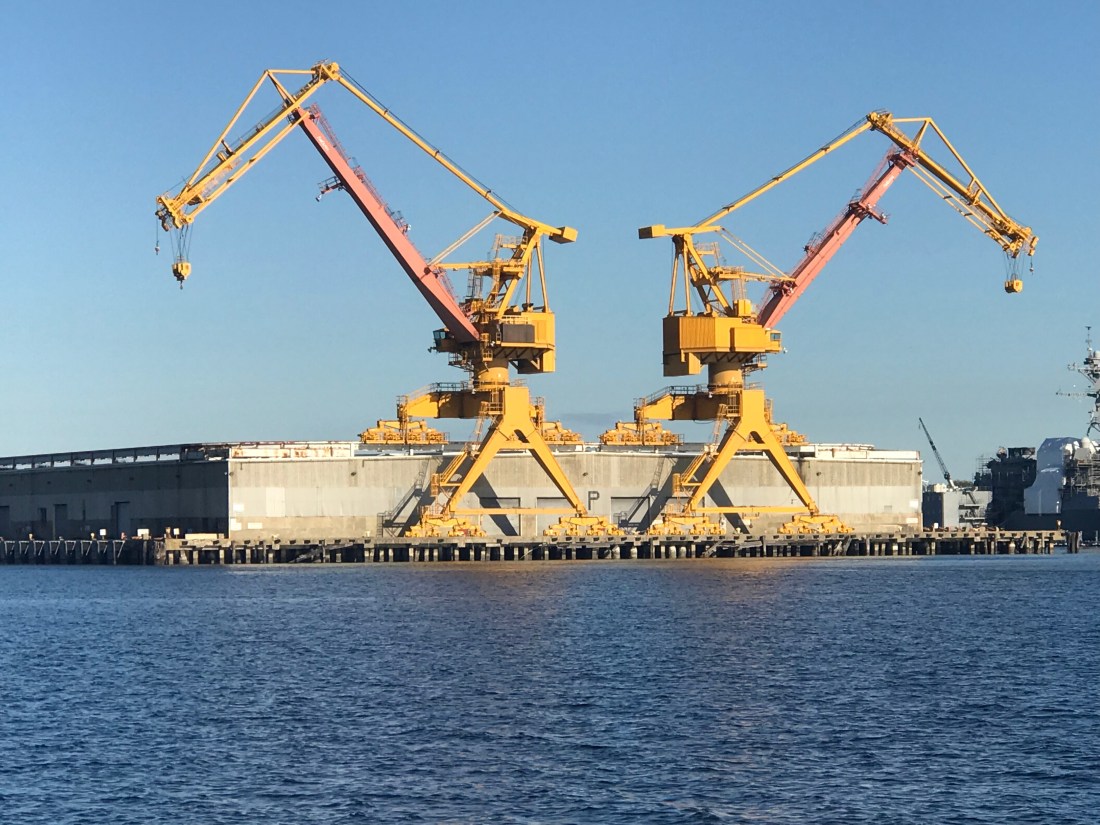
Star Wars AT-AT Walkers were all I could think about.

Crane
Large Cranes Loom Overhead

Hapag-Lloyd Passing By
Hapag-Lloyd Container Ship Passing By

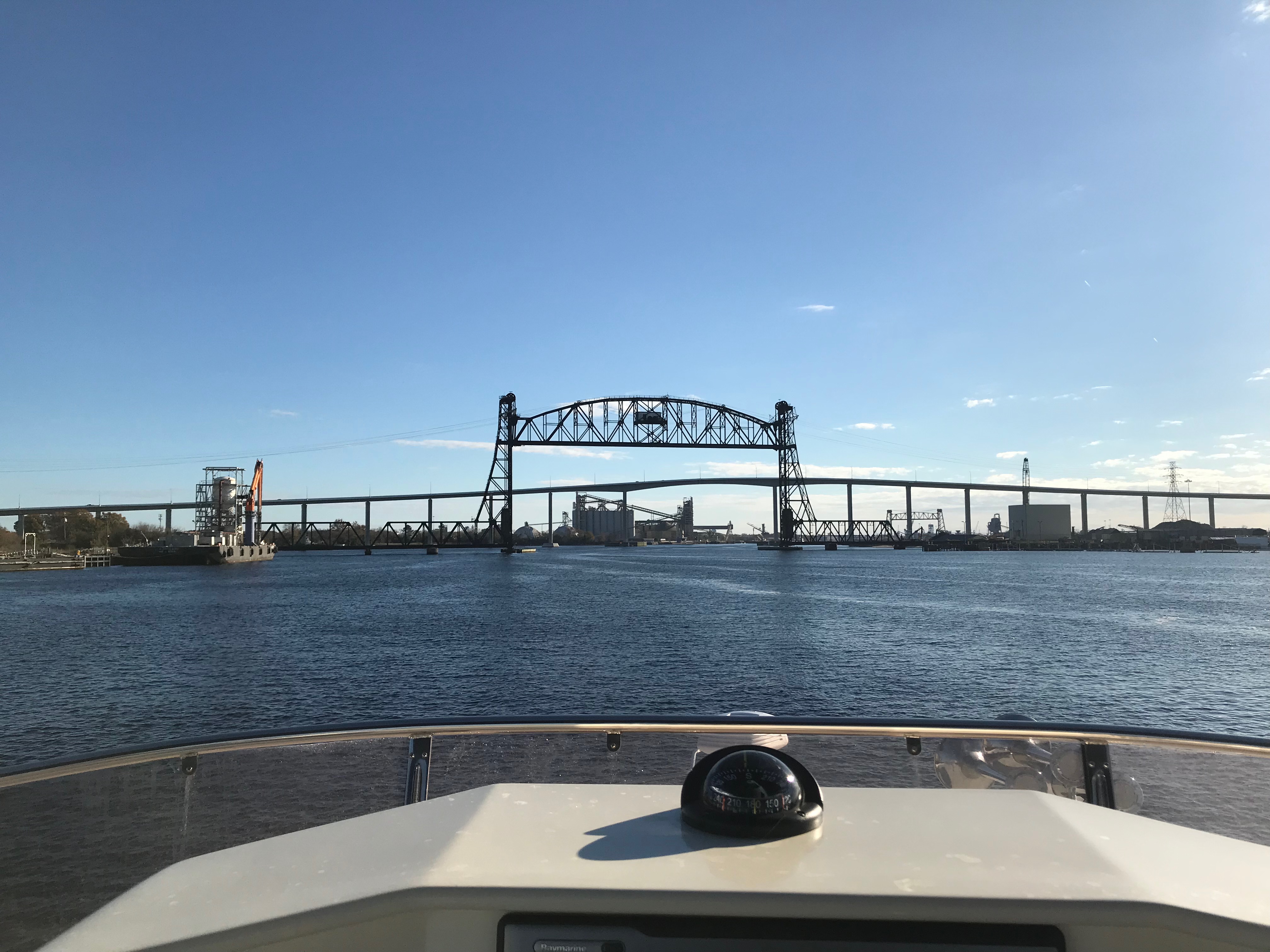
North PBL RR Bridge and Jordan Fixed Bridge
North PBL RR Bridge and Jordan Fixed Bridge, ICW’s First Set of Bridges – Many More to Come

Norfolk Southern Railway Bridge 36 Feet
Norfolk Southern Railway Bridge @36 Feet – Room to Spare

Paddle Wheel James C Echoles 2
Paddle Wheel James C Echoles 2 Passing us By

You can’t help but notice that everywhere along the shore seems posted “WARNING – US Government Property – Restricted Area – KEEP OUT”

Tower
US Gov Manned Towers with searchlights Guard Wharf Entrances

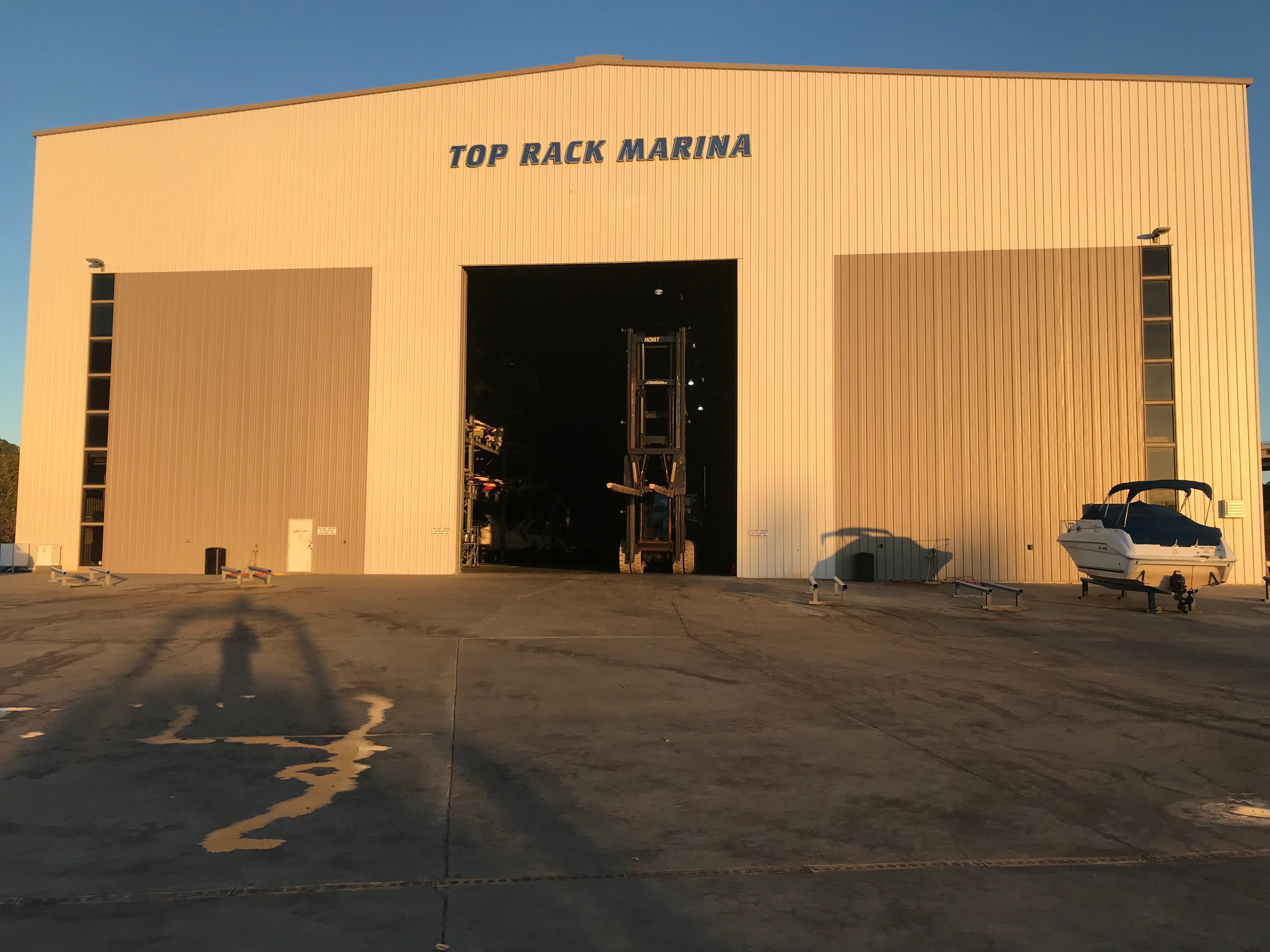
Finally, we arrived at our chosen destination, Top Rack Marina.

Top Rack Marina setting sun
Top Rack Marina in the Setting Sun

I promise to post more about this terrific marina and the on site restaurant called the Amber Lantern that we plan on having dinner at tonight.

Great Machipongo Inlet – Anchored For the Night

This morning started with a great breakfast on the griddle. I have always loved breakfast  diners so having a griddle onboard is perfect for corned beef hash with eggs on buttered toast, cheese and BBQ sauce. I love this exact breakfast and for me, it’s cook, eat, repeat day after day. Why change what makes you happy?

Breakfast 1
I need the egg rings because as the boat rocks the eggs would run away

We did not leave our anchorage till almost 10AM and while I was still dying to drop the dink and make a run around the island to find the wild ponies, I told myself I’ll come back for the ponies!

So I weighed anchor and got underway. The trip was a simple one, South down the coast. I had plotted a short 37 nautical mile course that took me from Chincoteague Island to the Great Machipongo Inlet in Virginia. Even with the late start I was not in danger of having the sun set on me so I slowed down and trolled a line…

Trolling 1
Deep dive bill mackerel lure @5.8 knots – me thinks 4 knots would be better.

My Dad took me fishing off Sandy Neck beach as a child.  I recall sitting by the Colman lantern and just loving it as beetles and moths bombed in from the darkness only to slam into the lantern and spin around in the sand. When I got older, Dad entered me in the MBBA’s (Mass Beach Buggy Association) casting tournaments on Scusett Beach. My Dad would let me use his prized 13′ surf rods with weighted sinkers. He would show me how to put everything I had into the perfect cast and how to release the line at the perfect flex point in the rod. I  won trophies and was hooked. My first summer girlfriend came after winning a trophy 😉 We flew kites, it was pretty simple back then.

If I wasn’t fishing on the beach, I was down the Cape Cod Canal as a 20-something fishing for stripers with Timmy & Tommy or Greg (AKA. Maca, Gratty and Rooster). Growing up, we never called each other by our given names.. I’m assuming it’s like that everywhere. Anyway… I outfitted Simple Life with plenty of rods and fishing gear for times like this cruising down the coast. Problem is.. I never seem to catch anything.. It’s kind of a running joke. I need to up my fishing game. Anyone want to come South and show me some pointers? I could use some. My friend John has a great Cabo sport fishing boat and if I was not so preoccupied with taking my own boat out, I’d have spent more time learning on his. Well, needless to say.. No fish.. But I’m committed to catching something great SOON!

On our way into Machipongo Inlet we were visited by dolphins. It did not take them long to come over and start rubbing our bow.


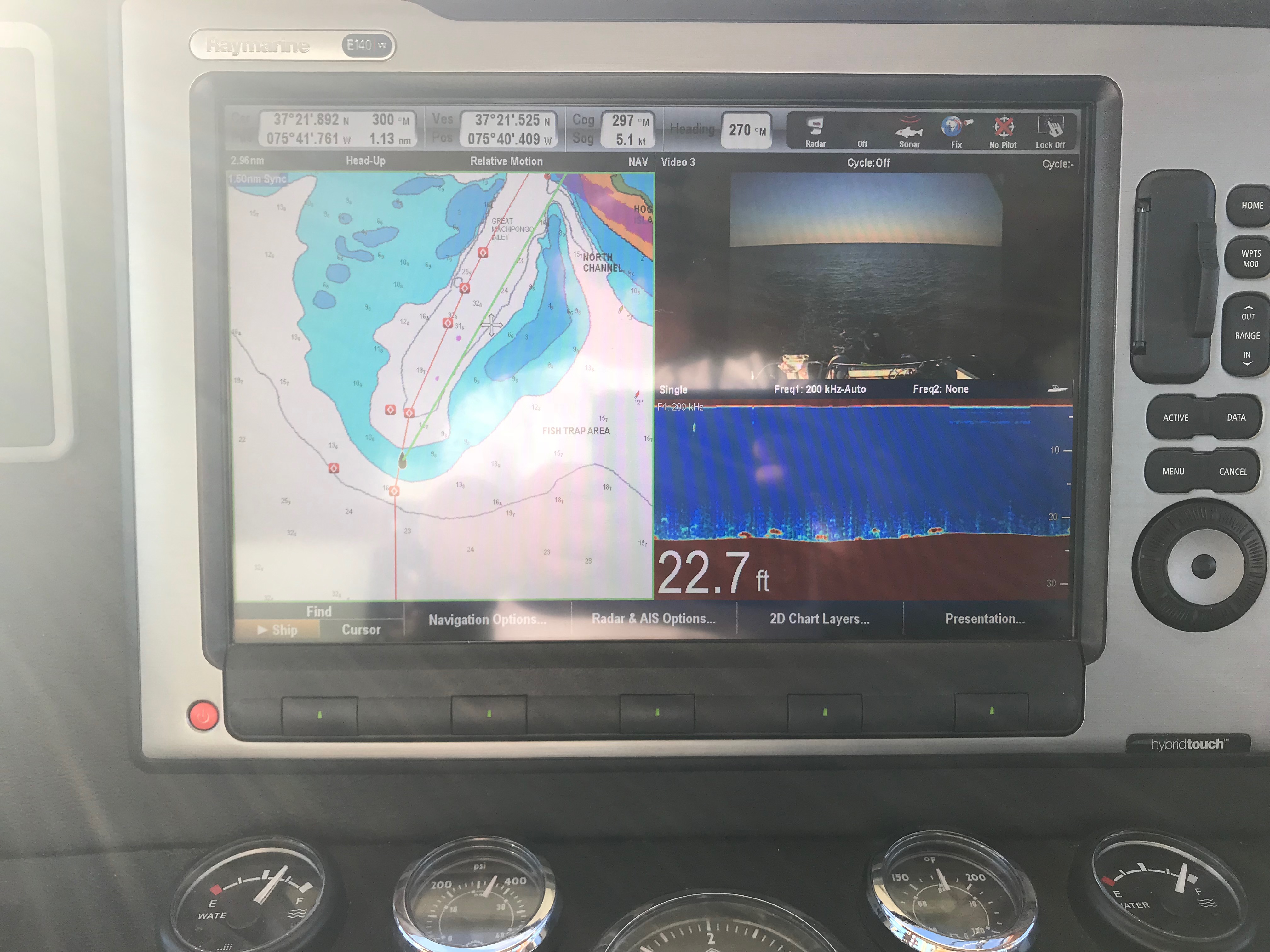
I reconfigured my Raymarine E140 chartplotter’s page to display 3 different windows. I chose a half window of charts, a two quarter windows, one of a camera feed behind me and one of the depth sounder readout (see pic).  I did this because as I am traversing these tricky Atlantic inlets which are full of shoals and sandbars, it makes you want to see the depth trend. I mean having a history of the last few seconds of bottom depth gives you a much better clue that you are running up the slope of a shoal. While the water around the shoal may be deep as you approach,  you can see the steep upward angle of the sea floor. When I was entering the Great Machipongo Inlet there is a horseshoe shaped bar that blankets the inlet.  (see pic below)

Sandbar1

I plotted a course (the red line) that allowed me to approach straight on through the deeper sections and wasn’t really surprised that the depths did not match my 2012 Navionics chart chip bathometric data.

I use many charting tools to navigate and the chart chip in my chartplotter has data from 2012. So believe it or not.. I’m staring at my iPhone NOAA raster charts which are more up to date as I enter.. That said,  the GPS location accuracy of an iPhone is not the same as my Raymarine GPS. You really have to be careful when you enter an Atlantic inlet like this .. Look at all the green (land that is exposed at low tide). While I came in at high tide and it was water everywhere, just wait till low tide 😉

Great Machipongo Inlet

Well I read all the Internet reviews I could (only 2 of them) to gain some kind of local knowledge before entering this inlet. One review said it was horrible and the other said it was OK. So far I have no complaints. After all look at this sunset video I took once I anchored. It’s just peaceful in here.

I’ll end with this sunset video. There is something great about finishing a journey, dropping the hook and enjoying an IPA & sunset. I think it’s what humans were supposed to do.. OK after cavemen figured out the whole boating thing.

https://youtu.be/9P-T2ckm-wEe